The escalation of the Iran-Israel conflict into a sustained kinetic engagement in early 2026 has transformed the "Kurdish Question" from a localized ethnic struggle into a critical variable in regional power projection. While the United States and Israel view the Kurdish populations in Iraq, Syria, and Iran as natural logistical and paramilitary partners, any formal alignment is governed by a rigid cost-benefit framework. This calculus is defined by three systemic pressures: the requirement for a reliable ground proxy to bypass Iranian "strategic depth," the existential security requirements of Turkey, and the internal factionalism of Kurdish political entities.
The Tri-Frontier Utility Model
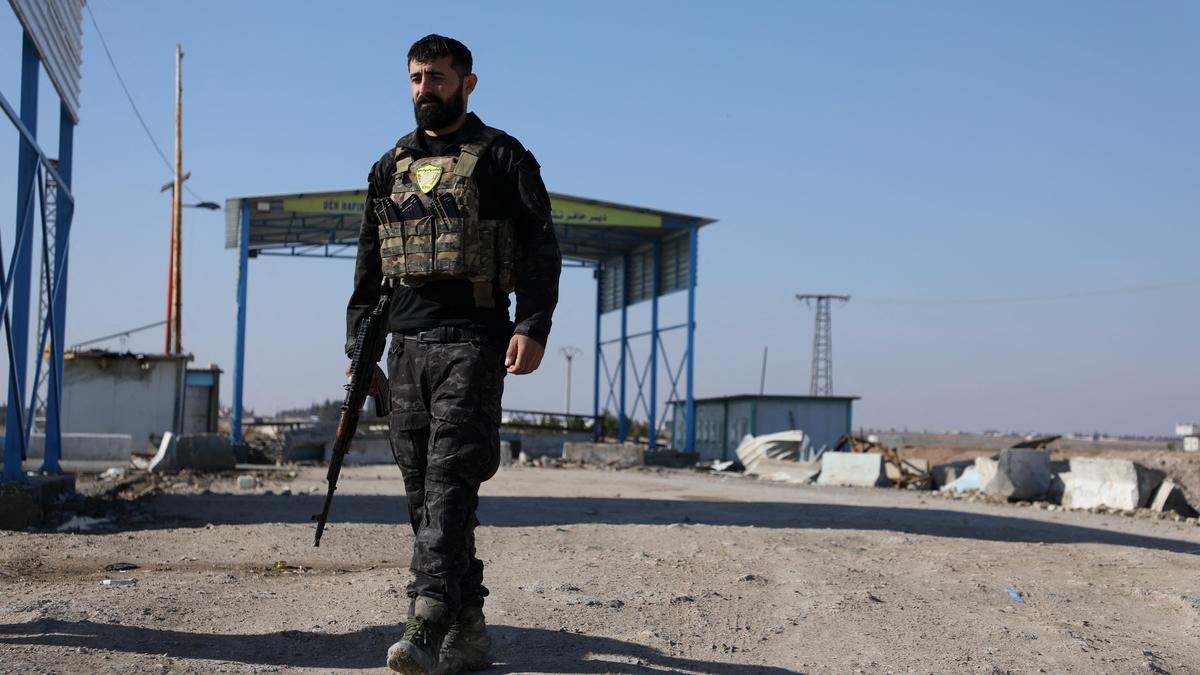
The strategic value of Kurdish forces—specifically the Peshmerga in Iraq, the Syrian Democratic Forces (SDF) in Syria, and various Iranian Kurdish opposition groups (KDPI, PAK, PJAK)—is determined by their positioning across the "Axis of Resistance."
In the current theater, Kurdish utility functions through three primary mechanisms:
- Logistical Denial: Kurdish-controlled territories in Northern Iraq and Northeastern Syria serve as the primary land bridge blocking Tehran’s overland access to Damascus and Beirut.
- Intelligence Granularity: Unlike satellite surveillance, Kurdish networks provide human intelligence (HUMINT) within Iranian border provinces such as Kurdistan and West Azerbaijan, which are traditionally opaque to Western agencies.
- Paramilitary Attrition: As seen in the recent "Epic Fury" operations, Kurdish groups can engage Iranian security forces in low-intensity conflict, forcing the Islamic Revolutionary Guard Corps (IRGC) to divert resources from its western missile batteries to internal pacification.
The Turkish Constraint: The Cost of Empowerment
The primary bottleneck for any US-Kurdish alignment is the "Ankara Redline." Turkey views any expansion of Kurdish military capability—regardless of the target—as a direct threat to its territorial integrity. The US strategy must therefore balance the operational gains of arming Iranian Kurds against the risk of a total breakdown in the NATO southern flank.
The Buffer Zone Dilemma
Ankara’s "Permanent Administrative Presence" strategy in northern Syria and Iraq functions as a prophylactic against Kurdish statehood. If Washington provides advanced anti-tank or air-defense systems to Kurdish groups to combat Iranian influence, the secondary effect is the neutralization of Turkish tactical advantages. This creates a zero-sum environment where:
- Action: US bolsters SDF or KDPI capabilities.
- Reaction: Turkey increases kinetic pressure on Kurdish infrastructure or pivots toward a tactical entente with Tehran to preserve the status quo of the borders.
The second limitation is the internal friction between the Kurdistan Democratic Party (KDP) and the Patriotic Union of Kurdistan (PUK). The KDP, led by the Barzani family, maintains a pragmatic, business-first relationship with Ankara and has historically been more amenable to Western intelligence cooperation. The PUK, centered in Sulaymaniyah, maintains deeper ties with Tehran out of geographic necessity. This split prevents the Kurds from acting as a monolithic strategic bloc, allowing Iran to use "salami slicing" tactics—pressuring one faction to undermine the other.
The Iranian Sovereignty Trap
From a data-driven perspective, the 2026 conflict has highlighted Iran’s vulnerability to ethnic fragmentation. With approximately 10% of its population being Kurdish, Tehran views US support for groups like the PAK as an attempt at "controlled disintegration."
The Mechanistic Response of the IRGC
Tehran’s response to Kurdish mobilization follows a predictable escalation ladder:
- Cross-border Artillery: Targeting bases in the Kurdistan Region of Iraq (KRI) to demonstrate the Iraqi government’s inability to protect its own territory.
- Proxy Activation: Utilizing the Popular Mobilization Forces (PMF) in Iraq to seize "disputed territories" such as Kirkuk, thereby cutting off Kurdish oil revenue.
- Domestic Securitization: Implementing a total military lockdown of western Iranian provinces, which serves the dual purpose of preventing a Kurdish uprising and hardening the border against Israeli infiltration.
The Strategic Pivot: Precision vs. Proliferation
The current US administration’s strategy under Trump 2.0 has shifted toward a "transactional-tactical" model. This replaces long-term nation-building with short-duration, high-impact partnerships. The deployment of CIA-led programs to arm Iranian Kurds is not intended to build a Kurdish state, but to create a "second front" that forces the IRGC to look inward during Israeli airstrikes.
This approach carries a high probability of abandonment once the immediate objective—regime degradation in Tehran—is achieved. The "Cost Function" for the Kurds is the risk of being left as a target for a resurgent or vengeful Iranian state, or an emboldened Turkish military, without a permanent US security guarantee.
The immediate tactical play for the US-Israel axis is the cultivation of a "Kurdish Wedge" in the Zagros Mountains. By providing real-time intelligence and limited standoff weaponry to Iranian Kurdish insurgents, they can effectively blind Iranian early-warning radar systems located in the western highlands. This does not require a full ground invasion but relies on the Kurds' ability to execute high-value sabotage.
The success of this strategy hinges on whether the US can offer Turkey sufficient concessions elsewhere—potentially in the form of F-16/F-35 procurement or silence on Syrian territorial shifts—to allow a temporary Kurdish military expansion against the Iranian regime. Without this diplomatic "buy-off," the Kurdish variable remains a liability that could trigger a wider conflict between NATO allies.
Would you like me to analyze the specific economic impact of the KDP-Ankara oil pipeline disruptions on the 2026 regional energy market?