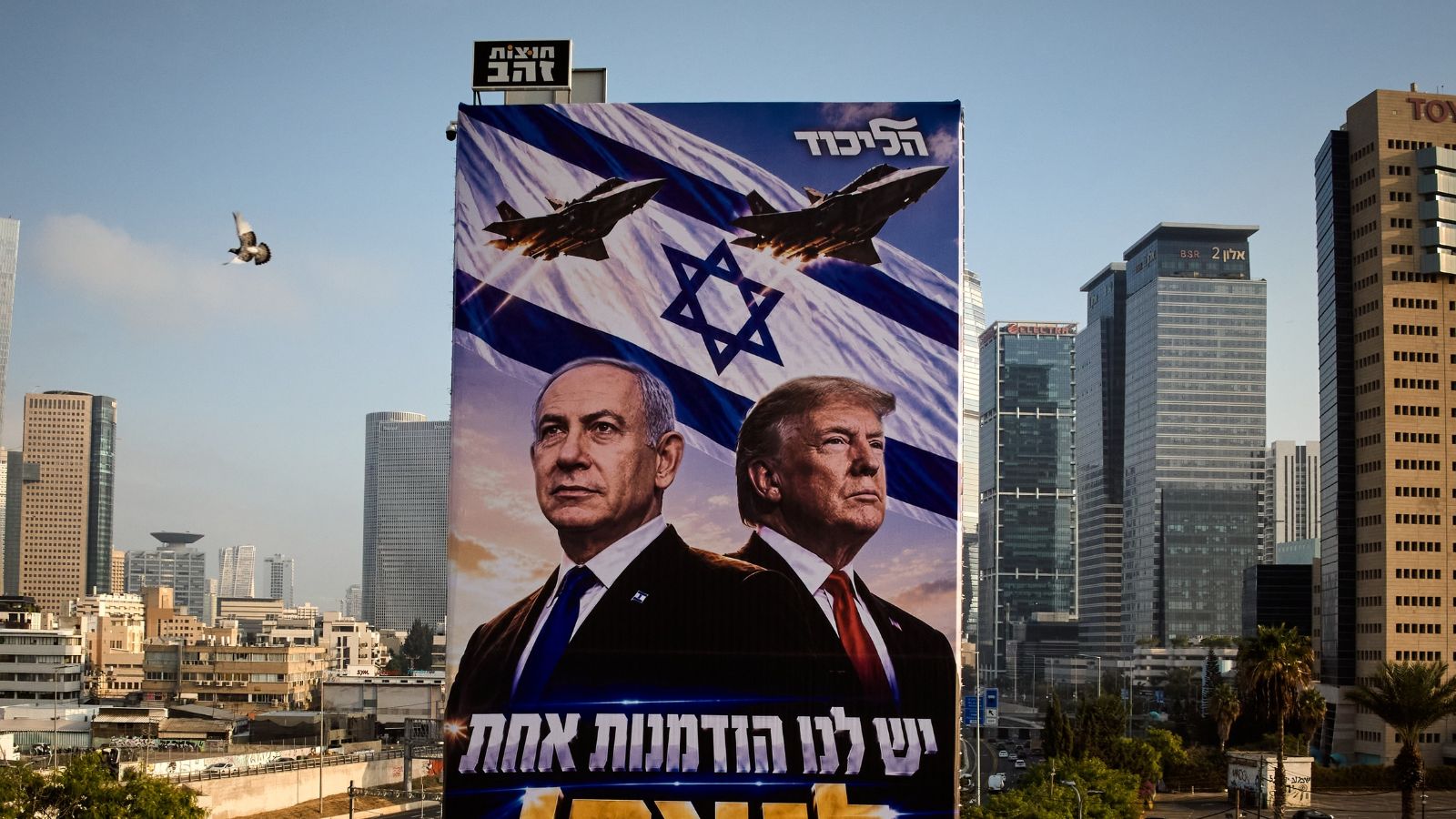
Assessing the assertion that Israel's continued existence is a direct consequence of specific United States executive actions against Iran requires stripping away political rhetoric and applying rigorous counterfactual analysis. To evaluate whether the policies enacted between 2017 and 2021 prevented an existential collapse of the Israeli state, analysts must decompose the claim into three distinct operational variables: the degradation of Iranian economic capacity via sanctions, the disruption of asymmetric command-and-control networks through targeted kinetic strikes, and the restructuring of regional diplomatic alignments. Examining the causal chain across these three mechanisms reveals that while American intervention altered the cost-benefit calculus of Iranian expansionism, attributing the survival of a nuclear-armed, conventionally dominant state solely to a four-year policy window violates the foundational principles of structural realism and military balance-of-power theory.
The Structural Fallacy of Single-Variable Causality
In international relations theory, state survival is rarely determined by a single external intervention unless the threatened state lacks indigenous defensive capacity. Evaluating the survival of Israel during the late 2010s demands an audit of the baseline military equilibrium in the Levant prior to the 2018 United States withdrawal from the Joint Comprehensive Plan of Action (JCPOA). At that juncture, Israel possessed an overwhelming qualitative military edge (QME) over every regional adversary, underpinned by an undeclared nuclear deterrent, multi-layered integrated air defense systems (Arrow, David's Sling, Iron Dome), and a high-technology conventional force capable of deep-strike power projection. Recently making headlines in related news: Why a Midterm Blue Wave Rarely Predicts the Next President.
When political actors claim that a specific policy prevented national annihilation, they are advancing a strong counterfactual hypothesis: In the absence of Action X, Outcome Y (state destruction) would have occurred. To validate this hypothesis, one must demonstrate that Iran possessed both the immediate capability and the suicidal intent to execute a decisive, state-ending strike against Israel, and that American actions alone removed that capability.
A rigorous examination of the operational theater disproves the premise of imminent collapse: Further details regarding the matter are detailed by The Washington Post.
- Conventional Asymmetry: Iran lacked an expeditionary air force or armored capability capable of breaching Israeli borders. Its power projection relied entirely on proxy militias—Hezbollah in Lebanon, Hamas in Gaza, and Shia militias in Iraq and Syria—and ballistic missile arsenals.
- Deterrence Equilibrium: While Iranian proxy networks posed a severe threat of attrition and civilian disruption, attrition is distinct from existential erasure. Under the logic of mutually assured destruction, an all-out Iranian effort to obliterate Israeli population centers would have triggered a retaliatory strike capable of destroying Iran's critical infrastructure and regime survival.
- Indigenous Israeli Interdiction: Throughout the Syrian Civil War, the Israel Defense Forces (IDF) conducted hundreds of unilateral airstrikes—known as the "Campaign Between the Wars"—specifically designed to interdict Iranian weapons transfers and prevent the entrenchment of Islamic Revolutionary Guard Corps (IRGC) bases along the Golan Heights. These operations occurred independently of direct US kinetic involvement.
The claim of unilateral salvation conflates the reduction of regional pressure with the prevention of total destruction. American policies shifted the operational environment, yet they operated atop an already formidable Israeli security architecture.
Deconstructing the Three Pillars of the Maximum Pressure Doctrine
To understand what American intervention actually accomplished, we must isolate the three primary mechanisms deployed against Tehran between 2017 and 2021 and measure their precise second-order effects on Israeli security.
1. Economic Attrition and the Liquidity Bottleneck
The withdrawal from the JCPOA in May 2018 and the subsequent reimposition of secondary sanctions—designated as the "Maximum Pressure" campaign—targeted Iran's primary revenue stream: hydrocarbon exports. By threatening third-party financial institutions and energy importers with exclusion from the US financial system, Washington drove Iranian crude oil exports from roughly 2.5 million barrels per day down to under 400,000 barrels per day by 2020.
This created an acute liquidity bottleneck within the Iranian domestic economy, triggering hyperinflation and currency devaluation. From a security perspective, the strategic objective was to starve the IRGC Quds Force of the hard currency required to fund, arm, and train its regional proxy network.
The mechanism functioned with measurable friction. Hezbollah, which relies heavily on direct financial transfers from Tehran, faced documented budget shortfalls, forcing the organization to implement austerity measures, reduce fighter stipends, and curtail certain social welfare programs in Lebanon. However, economic attrition did not equate to operational paralysis. Asymmetric warfare is remarkably cost-effective compared to conventional defense. Maintaining a stockpile of unguided rockets and precision-guided munition (PGM) conversion kits requires a fraction of the capital needed to operate advanced missile defense batteries. While sanctions constrained Iran's macro-budget, the regime prioritized military and proxy funding over domestic welfare, ensuring its core deterrent capabilities remained intact.
2. Kinetic Decapitation and the Disruption of Tacit Knowledge
The January 2020 drone strike in Baghdad that killed Qasem Soleimani, commander of the IRGC Quds Force, represents the most significant kinetic variable in this equation. Evaluating the impact of this strike requires looking beyond the immediate psychological shock and analyzing its effect on organizational theory and network centrality.
Soleimani functioned as a critical single point of failure within Iran's regional architecture. He was not merely a military commander; he was a diplomatic envoy, a logistical coordinator, and the personal guarantor of alliances among fractious militia leaders across Iraq, Syria, Lebanon, and Yemen. His authority rested on decades of accumulated tacit knowledge and personal relationships that could not be codified in a standard military manual.
Removing a high-centrality node from a decentralized network imposes severe transaction costs on the adversary:
- Coordination Latency: Soleimani's successor, Esmail Qaani, lacked the linguistic fluency in Arabic and the deep personal rapport with non-Iranian proxy leaders that Soleimani possessed. This degraded the speed and cohesion of cross-border operational planning.
- Restoration of Escalation Dominance: Prior to January 2020, Iran operated under the assumption that the US threshold for direct kinetic retaliation against senior Iranian officials was prohibitively high. The strike shattered that assumption, forcing Tehran to recalibrate its risk tolerance and adopt a more cautious posture regarding direct provocations against US and allied assets.
- Internal Reorientation: The strike forced the IRGC to divert cognitive and operational bandwidth toward internal counter-intelligence and force protection, temporarily slowing its external offensive momentum.
Despite these clear operational gains for US and Israeli security, the strike did not dismantle the physical infrastructure of the "Axis of Resistance." The missile factories, underground tunnels, and supply routes remained operational, demonstrating that while decapitation strikes degrade leadership efficiency, they do not eliminate systemic capabilities.
3. Diplomatic Realignment and the Abraham Accords
The third mechanism was geopolitical rather than purely coercive. The brokering of the Abraham Accords in 2020—normalizing relations between Israel and the United Arab Emirates, Bahrain, Sudan, and Morocco—altered the diplomatic geometry of the Middle East.
Historically, Arab states conditioned formal peace with Israel on the resolution of the Israeli-Palestinian conflict. The Accords bypassed this orthodoxy by aligning states around a shared threat perception: Iranian regional hegemony. By formalizing diplomatic, economic, and intelligence ties, these agreements provided Israel with strategic depth, overflight rights, and overt security cooperation with Gulf states situated directly across the Persian Gulf from Iran.
This alignment complicated Iranian strategic planning by moving Israeli intelligence and defensive monitoring capabilities closer to Iranian territory. Yet, the Gulf states involved in the Accords were never military belligerents against Israel in the modern era, nor did they possess the military capacity to rescue Israel in the event of a catastrophic war. The Accords enhanced regional intelligence sharing and economic integration, serving as a force multiplier for containment rather than an existential shield.
The Unintended Consequences and Strategic Blowback
A complete analytical audit must account for the negative externalities generated by these policies. In complex adaptive systems like international security, aggressive interventions rarely produce linear, unmitigated benefits.
The most consequential blowback of the 2018 JCPOA withdrawal was the collapse of international constraints on Iran's nuclear program. Under the 2015 agreement, Iran's uranium enrichment was capped at 3.67%, its stockpile was reduced by 98%, and International Atomic Energy Agency (IAEA) inspectors maintained intrusive, continuous monitoring of its facilities. Following the US exit and the failure of European signatories to shield Iran from secondary sanctions, Tehran systematically breached these limits.
By 2021 and continuing into the mid-2020s, Iran expanded its enrichment capacity to 60% purity—a short technical step from weapons-grade (90%)—and deployed advanced centrifuges at hardened underground sites like Fordow. Consequently, Iran's "breakout time"—the period required to produce enough fissile material for a single nuclear weapon—compressed from approximately twelve months under the JCPOA to a matter of weeks.
This creates a profound strategic paradox:
- Short-Term Tactical Relief: Maximum pressure and kinetic strikes degraded Iran's conventional proxy financing and disrupted its regional command structure between 2018 and 2020.
- Long-Term Existential Risk: The abandonment of the nuclear accord accelerated Iran's transition into a threshold nuclear state, arguably bringing Tehran closer to an actual existential capability against Israel than it had been prior to 2017.
Furthermore, the economic devastation wrought by sanctions hollowed out Iran's middle class—the primary demographic driver of domestic political reform—while enriching the IRGC, which controlled the black-market smuggling networks required to bypass trade restrictions. Instead of forcing the regime to capitulate or triggering democratic collapse, sanctions consolidated hardline control over the Iranian state apparatus.
Separating Political Narrative from Operational Reality
When evaluating grand strategic claims, analysts must separate domestic political signaling from objective military metrics. Stating that a specific leader's actions single-handedly preserved a nation's existence serves a clear political function: it simplifies a complex, multi-decade security struggle into a binary narrative of absolute success versus absolute catastrophe.
In reality, Israeli national security is a multi-variable function dependent on continuous technological innovation, domestic mobilization, intelligence superiority, and sustained, bipartisan American military aid—most notably the 10-year, $38 billion Memorandum of Understanding signed in 2016, which guaranteed Israel access to advanced platforms like the F-35 Joint Strike Fighter and ongoing missile defense co-development.
The actions taken between 2017 and 2021 undeniably inflicted severe tactical and economic costs on the Islamic Republic. They demonstrated a willingness to break long-standing diplomatic taboos and re-establish kinetic deterrence when proxy provocations escalated. However, treating these measures as the sole barrier preventing Israel's destruction ignores Israel's own formidable military capabilities, overlooks the enduring resilience of Iran's asymmetric network, and discounts the severe long-term risks created by the unconstrained expansion of Iran's nuclear enrichment infrastructure.
Strategic Framework for Evaluating Future Deterrence
Policy analysts and defense planners assessing the US-Israel-Iran triad moving forward must abandon binary, personality-driven narratives in favor of structural metrics. Future stability in the Levant and the Persian Gulf depends on executing three concrete operational shifts:
- Re-establishing Technical Nuclear Constraints: Any viable long-term security architecture must prioritize verifiable caps on Iranian uranium enrichment and centrifuge deployment. Economic sanctions alone have proven insufficient to halt technical nuclear progression; coercion must be paired with clearly defined, enforceable diplomatic off-ramps that restore intrusive IAEA monitoring.
- Integrating Regional Air and Missile Defense: Rather than relying on episodic kinetic decapitation strikes, defense posture must focus on a unified, multi-national sensor and interceptor grid linking Israel, Gulf Cooperation Council states, and US Central Command. Neutralizing the effectiveness of Iranian ballistic missiles and one-way attack drones at the point of launch or mid-course removes Tehran's primary asymmetric lever.
- Targeting Supply Chain Chokepoints Over Macro-Sanctions: Broad economic sanctions inflict maximum pain on civilian populations while leaving military-industrial supply chains intact. Enforcement mechanisms must shift toward granular interdiction of dual-use microelectronics, guidance systems, and propulsion components required for Iran's drone and missile manufacturing base.
True deterrence is never achieved through a single executive action or isolated strike; it is maintained through the continuous, disciplined alignment of technological superiority, regional coalition-building, and credible escalation management.