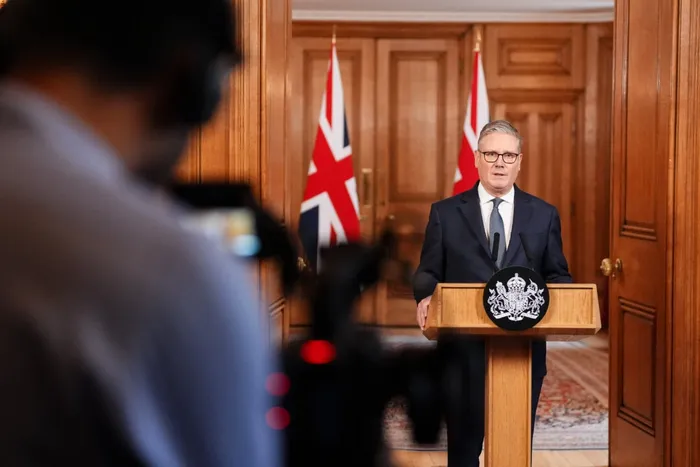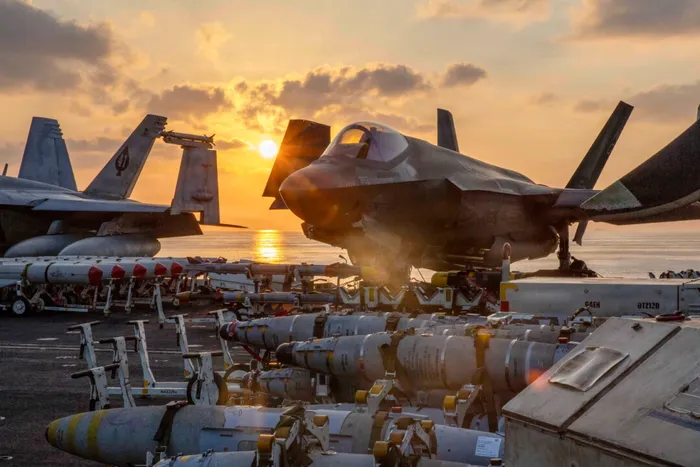
The comparison between Keir Starmer and Winston Churchill by Donald Trump is not a mere rhetorical flourish or a historical critique; it is a calculated deployment of Strategic Archetyping designed to devalue the United Kingdom’s current bargaining position. By framing the British Prime Minister’s decision-making regarding Iran through the lens of "Churchillian" resolve, Trump highlights a fundamental shift in the Transatlantic alliance from a partnership of shared ideological risk to a transaction-based security model.
The rift centers on the refusal of the UK to participate in specific kinetic actions against Iranian targets, an event that exposes the structural divergence between London’s commitment to "international law-based order" and Washington’s—specifically the MAGA wing’s—preference for "unilateral deterrence." This friction is best understood through three distinct analytical pillars: The Sovereignty Paradox, The Escalation Ladder of Secondary Effects, and The Erosion of Special Status.
The Sovereignty Paradox: Domestic Mandates vs. Global Alliances
The core of the disagreement lies in the conflicting mandates of two leaders operating under different political timelines. Starmer, leading a Labour government focused on domestic economic stabilization, views military intervention through a lens of legal justification and long-term risk mitigation. This is the Institutionalist Constraint. For Starmer, the "Churchill" benchmark is a trap; Churchillian rhetoric in the 21st century carries the baggage of the Iraq War, which decimated the UK’s appetite for Middle Eastern entanglement without a clear UN mandate.
Trump’s critique operates on a different logic: The Strongman Heuristic. In this framework, the value of an ally is measured by their willingness to project force without the delay of multilateral consensus. When Trump claims Starmer is "no Churchill," he is signaling that the UK has transitioned from a "Lead Partner" to a "Follower Nation" in the American security architecture. This creates a bottleneck in diplomatic relations:
- The Legitimacy Gap: Starmer requires a legal "silver bullet"—clear proof of an immediate threat or a direct violation of international law—to authorize strikes.
- The Capacity Constraint: Post-Brexit Britain lacks the naval and aerial density to sustain independent operations in the Persian Gulf without total U.S. logistical integration.
- The Rhetorical Wedge: Trump uses the comparison to Churchill—a figure who is more popular in American conservative circles than in contemporary British leftist politics—to alienate Starmer from the very voters he needs to maintain a stable coalition.
The Escalation Ladder of Secondary Effects
The decision to abstain from strikes is often portrayed as a lack of "courage," but a data-driven analysis suggests it is a calculated avoidance of The Cost Function of Proxy Warfare. For the UK, the risks of hitting Iranian targets are not contained within the military theater; they bleed into the domestic economy and civil society.
The UK’s refusal to participate is a recognition of the Asymmetric Vulnerability that Britain faces compared to the United States. While the U.S. is largely energy-independent and geographically insulated, the UK remains sensitive to energy price shocks and the potential for domestic civil unrest or "lone wolf" retaliatory actions on its soil.
The Trade-Off Matrix: Intervention vs. Restraint
- Intervention Costs: High probability of maritime insurance hikes in the English Channel and North Sea, increased radicalization risk in urban centers, and the definitive collapse of the JCPOA (Iran Nuclear Deal) remnants.
- Restraint Costs: Loss of "Priority Access" to U.S. intelligence silos, public reprimand from potential future U.S. leadership, and the perception of weakness among IRGC (Islamic Revolutionary Guard Corps) strategists.
Starmer’s calculation is that the marginal utility of a single round of airstrikes is lower than the cumulative risk of being dragged into a multi-front conflict where the UK would have zero control over the exit strategy. Trump’s critique ignores this calculus, focusing instead on the symbolic capital of "strength."
The Erosion of Special Status: Transactionalism Over Tradition
The "Special Relationship" is being stress-tested by a transition from Traditional Atlanticism to Strategic Transactionalism. Under the traditional model, the UK and U.S. operated with a shared cultural and historical shorthand. Under the transactional model favored by Trump, the relationship is a series of "zero-sum" trades.
If the UK does not provide military "value-add" in the Middle East, the U.S. has less incentive to provide "value-add" in trade negotiations or intelligence sharing. The Churchill comparison serves as a public audit of this value. By stating Starmer is not Churchill, Trump is effectively devaluing the UK’s primary export to Washington: Geopolitical Legitimacy.
Historically, the UK provided a "veneer of multilateralism" to American foreign policy. Without this, the U.S. must act alone or with less prestigious partners. Starmer’s refusal suggests that the UK no longer sees the "Special Relationship" as worth the price of unconditional military support. This creates a Diplomatic Liquidity Crisis, where both nations find themselves with fewer options for collective action.
The Mechanism of Deterrence Breakdown
Deterrence relies on the credibility of the threat. When a major ally publicly breaks from the superpower, the Deterrence Signal is diluted. This is the "logic of the pack." If the pack is divided, the target (Iran) perceives a lower threshold for aggression.
Trump’s public shaming of Starmer accelerates this breakdown. It tells Tehran that the Anglo-American axis is fractured. However, the fracture is not caused by Starmer’s "weakness," but by the divergence of national interests. The U.S. goal is regional dominance and the containment of Iranian influence to protect the Petrodollar and Israeli security. The UK goal is regional stability and the prevention of a refugee crisis or energy spike that would derail its fragile economic recovery.
These goals are no longer perfectly aligned. The "Churchill" reference is an attempt to shame the UK back into alignment, using a historical ghost to haunt a modern pragmatist. It fails because Starmer is solving for a different set of variables than Churchill was in 1940. Churchill was solving for Existential Survival; Starmer is solving for Economic Sustainability.
Strategic Recommendation: Navigating the Post-Churchill Era
For the UK government, the path forward requires a shift from "Rhetorical Atlanticism" to "Functional Europeanism." Since the U.S. under a potential second Trump term will demand a level of military subservience that Starmer’s domestic mandate cannot support, the UK must diversify its security dependencies.
- Integration of European Defense Hubs: Move beyond the "Five Eyes" reliance and deepen kinetic military cooperation with France and Germany, who share the UK’s risk profile regarding Iran.
- The "Middle Power" Pivot: Accept the downgrade from "Junior Superpower" to "Lead Middle Power." This involves focusing on maritime security and cyber-defense—areas where the UK has a comparative advantage—rather than broad-scale regional interventions.
- Strategic Ambiguity: Refuse the binary choice between "Churchillian Hero" and "Weak Ally." The UK must develop a doctrine of Selective Engagement that prioritizes British interests over the maintenance of an increasingly expensive and one-sided "Special Relationship."
The era where the UK could be expected to provide the moral and military "sidecar" to American foreign policy is ending. The friction between Starmer and Trump is the first significant data point in a new decade of Transatlantic decoupling. The strategic play for London is not to win the Churchill comparison, but to make the comparison irrelevant by building a security framework that does not rely on the whims of a transactional Washington.
Would you like me to analyze the specific economic impact of UK-Iran trade sanctions on the London financial district to further quantify these risks?