The security architecture of West Asia is currently undergoing a violent recalibration that threatens to bypass existing diplomatic safeguards. While institutional statements often emphasize "deep concern" or "restraint," these terms fail to capture the underlying mechanics of the escalation. The current conflict is not a series of isolated events but a systemic failure of deterrence, driven by a shift from proxy-based friction to direct state-on-state kinetic engagement. To understand the trajectory of this region, one must analyze the structural breakdown of the previous status quo, the economic vulnerabilities of the maritime corridors, and the specific failure points of international mediation.
The Triad of Regional Destabilization
The volatility in West Asia functions through three distinct yet interlocking layers of conflict. Each layer operates on a different timeline and involves different sets of risks.
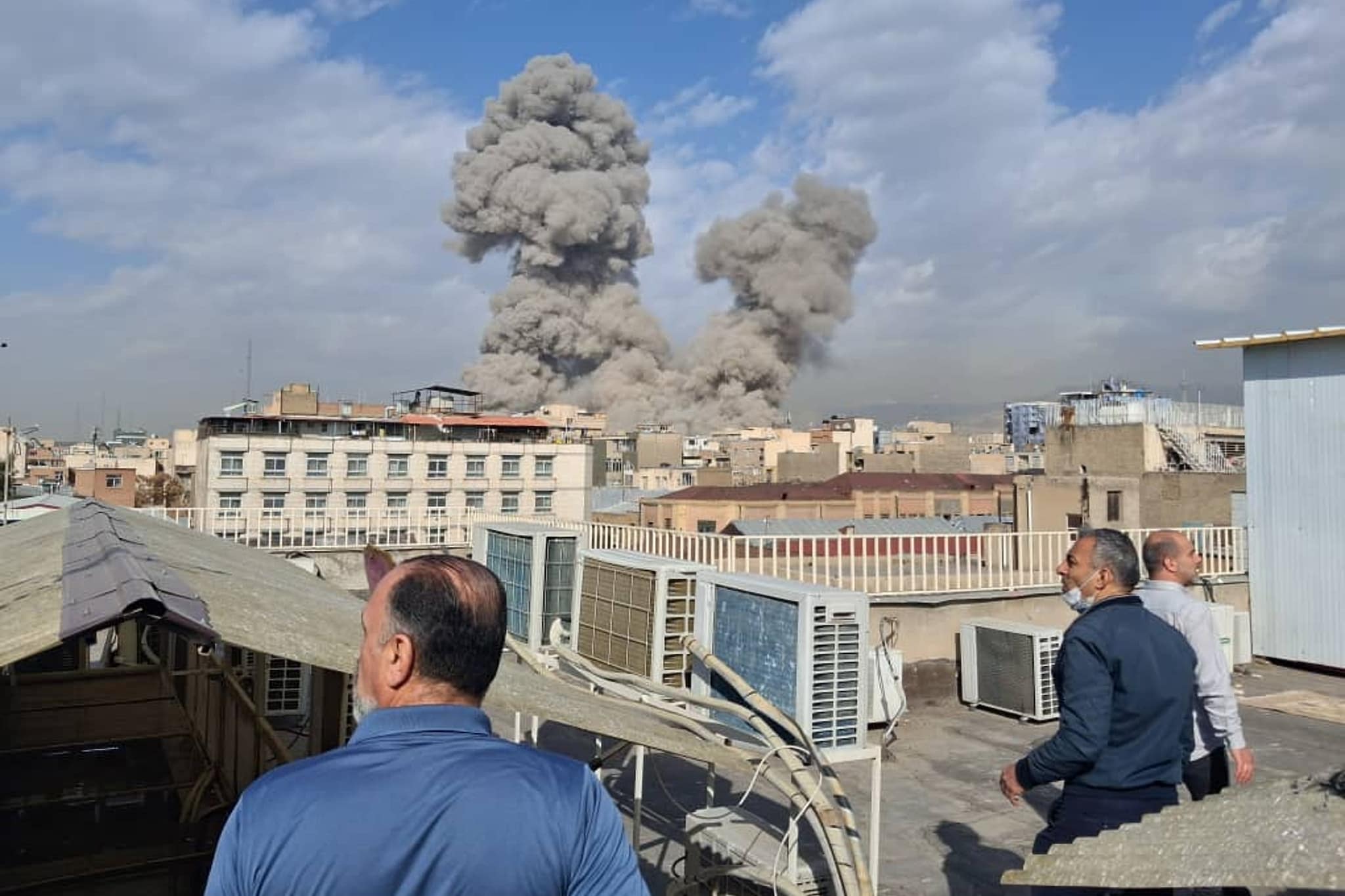
- The Kinetic Layer: This involves immediate military exchanges, missile trajectories, and ground incursions. The primary risk here is "escalation by miscalculation," where a tactical success (like a high-value target neutralization) triggers a strategic catastrophe because the opponent’s threshold for a non-response has been breached.
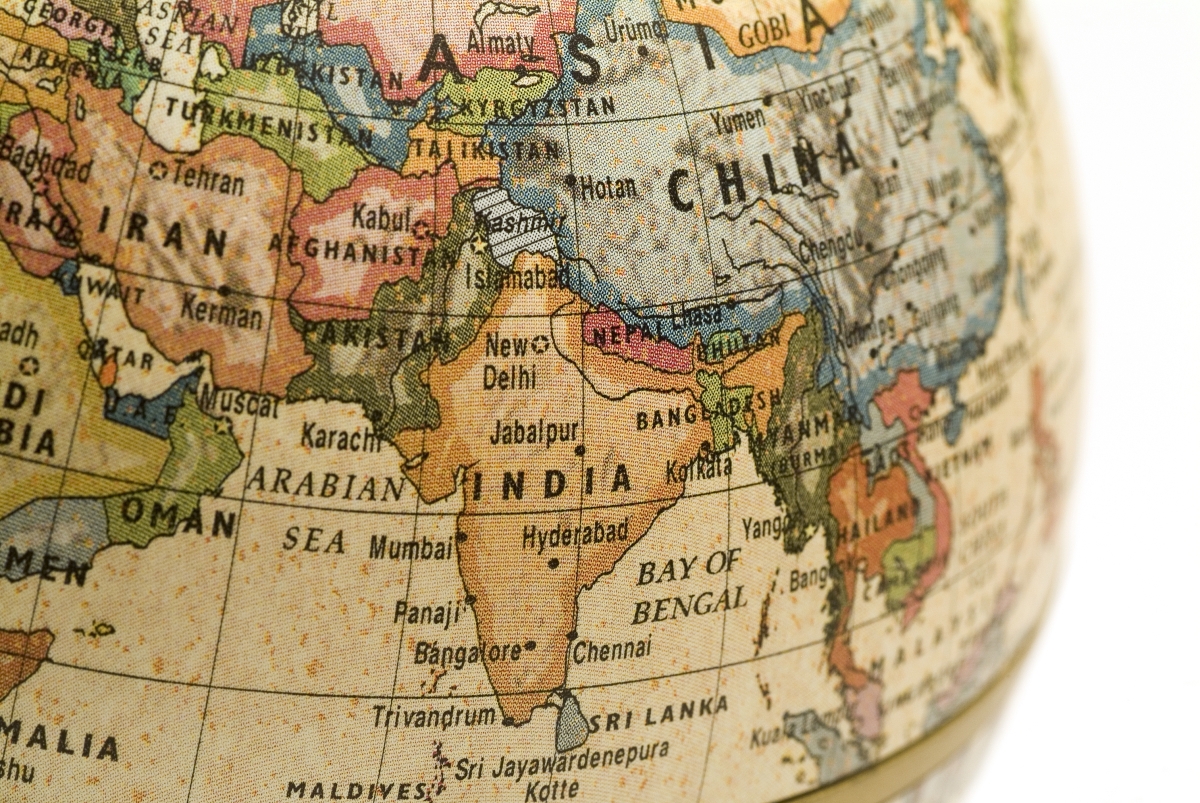
- The Logistical-Economic Layer: This is centered on the Bab el-Mandeb Strait and the Strait of Hormuz. Because 12% of global trade and significantly higher percentages of energy exports pass through these chokepoints, local kinetic activity has a multiplier effect on global inflation and maritime insurance premiums.
- The Normative-Diplomatic Layer: This represents the collapse of the "rules-based" negotiation framework. When state actors move from behind-the-scenes signaling to overt ballistic missile attacks on sovereign territory, the diplomatic cost of returning to a "ceasefire" state increases exponentially.
The Breakdown of Deterrence Theory
In classical deterrence, the cost of an attack is intended to outweigh any potential gain. In the current West Asian theater, this logic has inverted for several key participants. For non-state actors and certain regional powers, the "cost of inaction"—which includes loss of domestic legitimacy or perceived weakness in their ideological bloc—has become higher than the "cost of conflict."
This creates a Positive Feedback Loop of Escalation:
- Action A: State X conducts a targeted strike to restore deterrence.
- Reaction B: State Y responds with a larger volley to prove that State X’s strike failed to deter them.
- Result: The baseline for "normal" violence shifts upward, making a return to the previous peace impossible without a decisive military resolution or a total systemic exhaustion.
The "deep concern" voiced by external ministries reflects an awareness of this loop but offers no mechanical friction to stop it. Without a credible "Off-Ramp Protocol"—a set of pre-negotiated concessions that allow both parties to claim a symbolic victory—the only logical end to this cycle is a total war of attrition or a regime-altering event.
Maritime Vulnerability and the Chokepoint Tax
The impact on global trade is often discussed in vague terms, but the mechanism is precise. When transit through the Red Sea is threatened, shipping companies face a binary choice: pay the "war risk" premium or divert around the Cape of Good Hope.
The diversion around Africa adds approximately 10 to 14 days to a standard voyage from Asia to Northern Europe. This delay is not merely a matter of time; it is a massive consumption of global shipping capacity. If 15% of the global fleet is stuck on longer routes, the effective supply of shipping containers drops by a corresponding margin, driving up "spot rates" for even those routes not directly affected by the conflict.
This "Chokepoint Tax" functions as a regressive tax on global consumers. For developing economies, particularly those in South Asia and East Africa, the increase in landed costs for fertilizers and fuel can lead to immediate domestic food insecurity. This creates a secondary layer of instability: external geopolitical shocks translating into internal civil unrest.
The Failure of Multi-Polar Mediation
Historically, a single hegemon could enforce a regional "freeze." Today, West Asia is a graveyard of uni-polar influence. The mediation efforts are fragmented across several competing blocks:
- The Traditional Western Bloc: Focused on maritime freedom and the preservation of the post-WWII security alignment.
- The Regional Realists: Middle-market powers trying to balance economic modernization with the necessity of containing radicalism.
- The Revisionist Powers: Actors who view regional chaos as an opportunity to diminish Western influence and secure new spheres of influence.
This fragmentation ensures that there is no "honest broker" acceptable to all sides. When one party proposes a ceasefire, it is viewed by the other as a tactical maneuver to re-arm. The lack of a shared factual baseline regarding "security" means that negotiations are often dead on arrival.
Structural Requirements for De-escalation
For any "call for peace" to be more than a rhetorical exercise, it must address three structural requirements:
1. The Proportionality Metric
Parties must agree on what constitutes a "proportional" response. Currently, there is a total disconnect between how different actors quantify a strike. One side may count lives lost, while the other counts the symbolic value of the target. Without a synchronized metric, every response will be perceived as an escalation by the opposing side.
2. Verified Buffer Zones
Rhetoric about "restraint" is useless without physical separation. The history of the region shows that peace only holds when there is a physical barrier or a third-party monitored zone that prevents accidental contact between opposing infantries.
3. Economic Interdependence as a Constraint
The only long-term brake on military ambition is the threat of total economic isolation. However, as long as energy markets remain tight, several actors in the conflict remain "too big to sanction." Their integration into the global energy supply provides a shield that allows them to pursue kinetic goals with relative impunity.
The Strategic Path of Minimum Regret
Observers and analysts should stop looking for a "peace deal" and start looking for "containment thresholds." The most likely scenario is not a grand bargain, but a series of "frozen" micro-conflicts.
Investors and policy planners must operate under the assumption that the "Pre-2023" stability is gone. The new baseline is one of permanent high-tension, where the risk of ballistic exchange is a standard variable in any regional economic model.
The immediate strategic priority for external powers—including India, the EU, and the US—is the hardening of alternative trade routes and the diversification of energy sources away from the immediate kinetic zones. Reliance on the "stability" of the Straits is no longer a defensible strategy. The focus must shift from attempting to "solve" the historical animosities of the region to "insulating" global systems from their inevitable eruptions.
Future engagement must prioritize the creation of a "Maritime Security Coalition" that operates independently of the political grievances on the mainland. If the sea lanes cannot be decoupled from the land wars, the global economy will remain a hostage to the tactical decisions of local commanders.
The final move for any rational state actor in this environment is the aggressive buildup of strategic reserves—both in energy and grain—to survive the periods when the "Chokepoint Tax" becomes a total blockade. Expecting diplomacy to succeed where deterrence has failed is a high-risk gamble that the current data does not support.