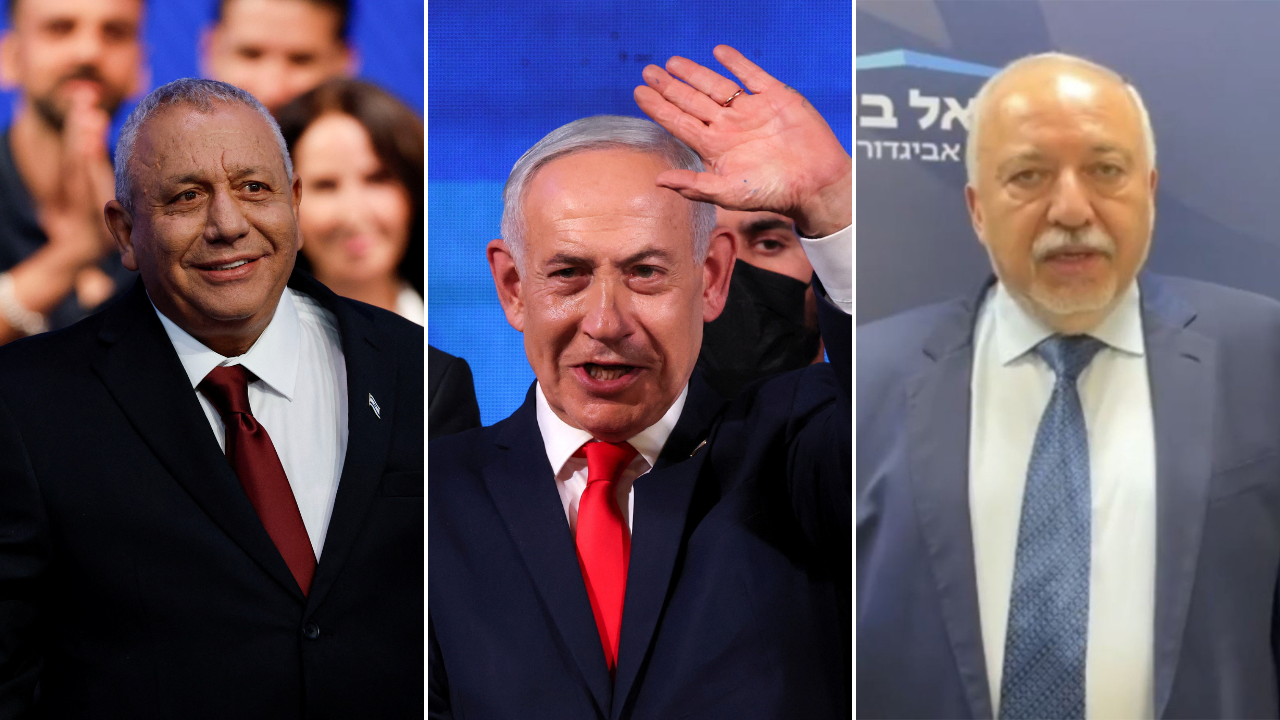
The fluorescent lights in the Knesset corridors buzz at a frequency that gets behind your eyes by three in the morning. If you have ever spent a night waiting outside a closed committee room in Jerusalem, you know the smell—stale cardamom coffee, damp wool coats, and the sharp, metallic tang of exhaustion. Inside those rooms, history rarely sounds like speeches. It sounds like the scrape of a heavy leather chair being pushed back, followed by a long, suffocating silence.
Right now, that silence belongs to Gadi Eisenkot.
To understand why Benjamin Netanyahu is reaching across the aisle—again—to pull a former military chief into his inner circle, you have to stop looking at seat counts and start looking at the geometry of survival. Politics in Jerusalem is often described as a chess match, which is a flattering lie told by people who have never watched a street fight in the rain. It is not chess. It is a series of desperate grabs for handholds on a cliff face while the rock crumbles beneath your boots.
Netanyahu’s boots are slipping. His coalition, stitched together from ultra-Orthodox factions and far-right nationalists, holds a parliamentary majority on paper, yet governs like a house whose floorboards have rotted through. Every budget vote becomes a hostage negotiation. Every military decision is filtered through the ideological demands of ministers who have never commanded a battalion, let alone an army.
So the Prime Minister looks toward the opposition benches. He looks at Eisenkot.
The Weight of an Empty Chair
Let us strip away the punditry and picture a hypothetical Tuesday evening in Kirya, the military headquarters in Tel Aviv. Imagine the war cabinet room—not as a grand hall of state, but as a windowless bunker smelling of dry-erase markers and cold air conditioning. Around the table sit men who measure their lives in news cycles and polling margins. Then there is the empty chair where a man like Eisenkot used to sit.
Eisenkot is not a charismatic orator. He does not set television studios ablaze with viral soundbites. When he speaks, his voice carries the flat, unhurried cadence of the Golani Brigade—a man who spent forty years walking through mud and listening to radios crackle in the dark.
In December 2023, that voice broke in a way no political rival could ever replicate. His youngest son, Gal, a 25-year-old master sergeant, was killed by a tunnel shaft explosion in northern Gaza. Months later, his nephew, Maor Cohen Eisenkot, fell in the same war.
When Eisenkot joined Netanyahu’s emergency government in the raw, bleeding weeks after October 7, he did not come to save the Prime Minister’s career. He came because the house was on fire and he knew how to hold a hose. Eight months later, in June 2024, he walked out alongside Benny Gantz, accusing Netanyahu of subordinating national survival to political self-preservation.
That walkout left a wound that has never scabbed over. For millions of Israelis—and for skeptical allies in Washington—Eisenkot’s departure stripped the government of its last remaining shock absorber. Without him, Netanyahu stands alone with his ideological flank, every decision suspect, every delay interpreted as a bid to keep his coalition intact for one more week.
Why a Prime Minister Needs His Fiercest Critic
To grasp the mechanics of Netanyahu’s unity gambit, think of a ship captain trying to sail through a hurricane with a mutinous crew. The crew wants to steer toward the rocks because their constituents believe the rocks are sacred. The captain knows the ship will sink, yet he cannot throw the crew overboard without losing command of the vessel. His only hope is to drag a trusted navigator onto the bridge—someone the outside world respects, someone whose mere presence tells the harbor master that the captain hasn't lost his mind.
That is the role Netanyahu wants Eisenkot to play.
By floating overtures for a broad unity government—whispered through backchannels, leaked to sympathetic columnists, framed as a patriotic necessity in a time of existential threat—Netanyahu is attempting to solve three crises with a single phone call:
- Neutralizing the Far-Right Veto: With a centrist heavyweight inside the tent, ministers like Itamar Ben-Gvir and Bezalel Smotrich lose their ability to topple the government over ceasefire terms or post-war governance plans. Their threats become empty noise.
- Buying Diplomatic Oxygen: International capitals have grown weary of assurances that evaporate between Friday afternoon and Sunday morning. Eisenkot’s signature on a strategic framework carries a weight that Netanyahu’s no longer does.
- Splitting the Opposition: Benny Gantz and Gadi Eisenkot run together under the National Unity banner, yet they are fundamentally different animals. Gantz is a consensus-seeker who has already been burned twice by Netanyahu’s broken promises. Eisenkot is a strategist who despises wasted motion. If Netanyahu can drive even a hairline fracture between them, the opposition’s momentum collapses.
It is a seductive theory. It is also deeply flawed, because it assumes Eisenkot has forgotten how the last movie ended.
The Anatomy of a Broken Promise
Trust in Israeli politics is not a renewable resource; it is more like porcelain. Once shattered, you can glue the pieces back together, and from across the room the vase might even look whole, but you can never pour water into it again.
Consider what happened the last time a centrist general stepped across that threshold. In 2020, Benny Gantz broke his central campaign pledge—never to sit under an indicted prime minister—in the name of fighting the COVID-19 pandemic. He accepted a rotation agreement written into Basic Law, fortified with every legal safeguard a team of constitutional lawyers could devise. Netanyahu found the loophole anyway. He refused to pass a state budget, triggering automatic elections before Gantz ever got near the Prime Minister’s chair.
Eisenkot watched that unfold from the sidelines before he ever entered politics. Then he lived through his own version of it inside the war cabinet.
During his months at the table, Eisenkot pushed relentlessly for a clear strategic endgame: a hostage deal paired with a regional diplomatic framework that would prevent Israel from bleeding out in an endless war of attrition. Time and again, he watched proposals stall. He watched cabinet leaks undermine negotiating teams in Cairo and Doha. He realized he was not steering the ship; he was sitting in the window seat so passengers would think the plane had a co-pilot.
Why would a man who already paid the highest conceivable price for his country’s security lend his name, his grief, and his remaining credibility to a government he believes is driving toward a cliff?
The Seductive Trap of Duty
Yet here is the part that keeps political strategists awake at night, and the reason you cannot dismiss Netanyahu’s gambit out of hand.
Men like Eisenkot are wired differently from career politicians. If you tell a career politician that joining a government will ruin their polling numbers, they will lock the door and swallow the key. If you tell a former Chief of Staff that soldiers are dying because the cabinet lacks adult supervision, they will hesitate. They will look at their shoes. They will ask what the terms are.
Duty is a leash, and Netanyahu knows exactly how to tug on it.
Let us imagine a quiet conversation between Eisenkot and a trusted advisor in a cramped office in Ramat Gan. No cameras. No aides taking notes. Outside, traffic hums along the Ayalon Highway.
The advisor lays out the cold math: If you go back in, you validate him. You rescue him from his own coalition. You hand him two more years in power while your own voters feel betrayed.
Eisenkot listens, his hands folded on the desk. He knows the math is right. He has seen the polls showing his own popularity plummeting the moment rumors of unity talks surface. Yet another calculation runs beneath the surface—the one that haunted him in the bunkers of Tel Aviv. What if a hostage deal sits within reach, blocked only by two ministers who threaten to collapse the coalition? What if a wider regional escalation can be averted, provided someone in the room is willing to say no to bad options and absorb the political shrapnel?
This is the invisible stake at the heart of the story. The headlines frame it as a palace intrigue—a battle of egos between a veteran survivor and a stoic general. Beneath the headlines sits a brutal moral dilemma: when does refusing to compromise become an abdication of responsibility, and when does compromising become complicity?
What Actually Happens If He Says Yes—Or No
Suppose Eisenkot decides the risk is worth taking. What would it actually require for him to cross the aisle?
He would not accept a ceremonial portfolio or a seat in a sprawling thirty-minister cabinet where real decisions are made in side rooms before the meeting even starts. For Eisenkot to enter, he would demand a stripped-down war cabinet with binding authority, a formal sidelines role for the coalition’s ideological hardliners, and an explicit, dated roadmap for both hostage negotiations and a defined electoral horizon.
Netanyahu cannot give him that without detonating his current government on the spot.
If the Prime Minister strips power from his far-right partners to make room for Eisenkot, those partners will walk out before the ink dries. Suddenly, Netanyahu is no longer presiding over a broad unity government; he is leading a fragile minority coalition wholly dependent on the very man who believes Netanyahu should leave office. The trap snaps shut on the hunter.
And if Eisenkot refuses? Then the pressure builds inside the existing coalition until something gives. Either Netanyahu bends to his hardliners—deepening Israel’s diplomatic isolation and prolonging military entanglement—or the coalition fractures from within, sending the country to an election where Eisenkot and Gantz stand on the outside, unstained by the last stretch of governance.
The Reckoning in the Corridor
I remember standing outside a Knesset committee room late one winter night years ago, watching two rival lawmakers share a paper cup of lukewarm water by the vending machines. Inside the chamber, they had spent three hours calling each other traitors to the nation’s future. Out in the fluorescent glare of the hallway, neither of them looked like a titan. They looked like tired old men trying to remember where they had parked their cars.
Politics eventually strips away every grand illusion until only character remains.
Benjamin Netanyahu has spent his life proving he can outmaneuver anyone in a tactical sprint. He can read a room faster, pivot harder, and survive crises that would bury ten ordinary leaders. But you cannot outmaneuver grief, and you cannot spin a man who has already buried his son under the flag you ask him to salute.
Gadi Eisenkot knows what the inside of that cabinet room looks like. He knows the temperature of the air, the rhythm of the delays, and the exact weight of the silence when a hard decision gets pushed to next week. Whether he stays on the opposition benches or demands the keys to the building as his price of entry, one thing has already changed forever: the general is no longer asking for a seat at the table.