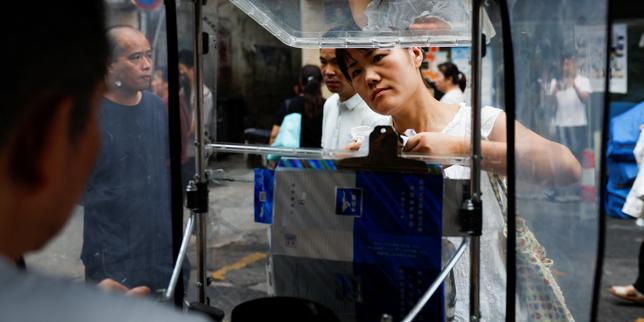
The neon of Shenzhen does not flicker. It hums with a cold, constant frequency that seems to vibrate straight through the concrete and into the marrow of your bones. At two in the morning, the noodle shops are empty save for the ghosts. These are not apparitions of smoke and memory, but young men and women in oversized hoodies scrolling through smartphone screens with a mechanical exhaustion that feels almost religious.
They are looking for work. Again.
On paper, the grand machinery of the world's second-largest economy is humming right along. The quarterly reports arrive wrapped in the crisp certainty of municipal percentages. Growth is targeted. Targets are met. The spreadsheets glow in sleek conference rooms across Beijing and Shanghai, bearing neat rows of digits that suggest a steady, predictable climb toward tomorrow. But numbers have a peculiar habit of lying when they are asked to carry the weight of human desperation.
Consider a hypothetical young graduate named Lin. He spent four grueling years memorizing the intricacies of civil engineering at a university in Wuhan, fueled by the ancient promise that a degree is a golden key. When he graduated, he did not find a drafting table or a hard hat waiting for him. He found a digital queue.
Lin is part of a generation that was told to study hard, stay quiet, and trust the architecture of the state. Now, he sits in a cramped shared apartment the size of a walk-in closet, competing with millions of other exhausted phantoms for delivery gigs that pay pennies per mile. The official unemployment metrics tell us one story. Lin's empty bank account tells another.
There is a widening chasm between the boardroom reality and the pavement reality. For decades, the engine of modern progress roared forward on the back of cheap manufacturing and explosive real estate expansion. Cranes filled the skyline like a forest of iron. Every young person who packed their bags and left the dusty villages for the glittering coastal cities found a job waiting on an assembly line or a construction site. That era is over. The towers are built. The factories are automating faster than a human hand can solder a microchip.
When the traditional pillars of labor begin to crumble, the state does what large systems have always done. It changes the definition of the problem.
Official calculations regarding joblessness in urban centers often quietly omit the millions of migrant workers who simply pack up and return to their rural homes when the city stops calling their names. If you are not actively registered as unemployed in a designated urban district, do you exist to the statistician? The spreadsheets say no. The quiet despair in the village square says otherwise.
We see this friction manifested in surreal cultural symptoms. Across the internet, young people have stopped pretending. They do not strive anymore. They practice what has been named lying flat. They refuse to buy homes, refuse to marry, and refuse to participate in the frantic rat race that promised them stability and delivered burnout. Why kill yourself for a corporation that views you as replaceable disposable code when you can survive on the bare minimum and preserve what little dignity you have left?
This is not laziness. This is a strike of the spirit.
Economists call it structural friction. They talk about skills mismatches and the painful pivot from a manufacturing economy to a high-tech service sector. They use words like rebalancing and optimization. But these clinical terms sanitize the human cost. A twenty-three-year-old art history graduate turned night-shift courier is not an optimized resource allocation. He is a tragedy of wasted human potential.
The mismatch is profound. Universities churn out millions of white-collar graduates every single year, while the economy desperately needs technicians, specialized machinists, and advanced engineers. Yet even the high-tech sector, once an infallible sponge for ambitious minds, has slammed the brakes. Regulatory clampdowns on tech giants and a bruising property crisis have choked off the venture capital that once fueled endless hiring sprees. The golden geese are being rationed.
Walk through the tech hubs of Zhongguancun at dusk, and you will feel the sudden drop in temperature. The venture capital cafés that once buzzed with the frantic energy of twenty-something founders pitching apps that would change the universe are now quiet. The espresso machines are turned off early. The investors are cautious, risk-averse, and terrified of regulatory shadows.
When capital hides, workers starve. Not literally—this is not a famine of crops, but a famine of purpose.
The hidden danger of chronic underemployment is not just economic stagnation. It is the slow, corrosive erosion of trust. When a generation realizes that the social contract was written in disappearing ink, the psychological foundation of society shifts. You cannot build a sustainable consumer-driven economy on the backs of a populace that is too terrified to spend a single yuan because tomorrow might bring another layoff notice.
The statistical mirage is comforting to those who draft the five-year plans. It allows for smooth press conferences and confident declarations of resilience. But economics is ultimately a study of human choices, not abstract formulas. And the choices being made on the ground right now speak of profound hesitation.
Lin turns off his phone screen. The harsh blue light dies, leaving him in the absolute dark of his tiny room. Somewhere down in the street, a delivery moped sputters and stalls, its headlight cutting a weak beam through the Shenzhen fog before fading into the night.