Silence.
In northern Sinaloa, along the dusty stretches of Highway 15 where the Sierra Madre Occidental begins its jagged climb toward the sky, silence is rarely peaceful. It is heavy, metallic, and taut, like a wire pulled a fraction of an inch past its breaking point.
When Mexican security forces finally closed their hands around Fausto Isidro Meza Flores—the man known from the dirt roads of Guasave to the paneled courtrooms of Washington D.C. simply as "El Chapo Isidro"—the headlines across the globe treated it like a clean, surgical victory. A press release. A mugshot. A tally of decades-old indictments finally finding their target.
They missed the point entirely.
To understand what happened in the hours after the helicopters lifted off, you have to stop looking at the map as a collection of states and borders, and start looking at it as a pressure cooker. For nearly twenty years, while the world obsessed over the theatrical escapes of Joaquín Guzmán and the bloody civil wars of his sons, Meza Flores was the quiet architect of the north. He was the ghost who kept the lid bolted down. And the moment Mexican authorities pulled him out of the hills, the steam didn't just escape. It blew the roof off.
The Anatomy of a Powder Keg
Consider a hypothetical scenario—a composite drawn from the lived reality of thousands of families living between Los Mochis and Guasave right now. Meet Mateo. Mateo isn't a sicario, a chemist, or a politician. He runs a modest auto-repair shop three blocks off the main boulevard, the kind of place where the concrete floor is stained black with thirty years of transmission fluid and the radio always plays regional banda at a low hum.
On a Tuesday morning, Mateo is beneath a 2012 pickup truck, wrestling with a rusted exhaust manifold. His phone buzzes on the workbench. Then his cousin’s phone buzzes. Then the shop next door pulls down its corrugated steel shutters with a violent, rattling crash.
There is no tornado siren in Sinaloa. There is only the WhatsApp voice note—trembling, whispered, forwarded forty times in ninety seconds. They took Isidro. Get inside. Do not drive toward the highway.
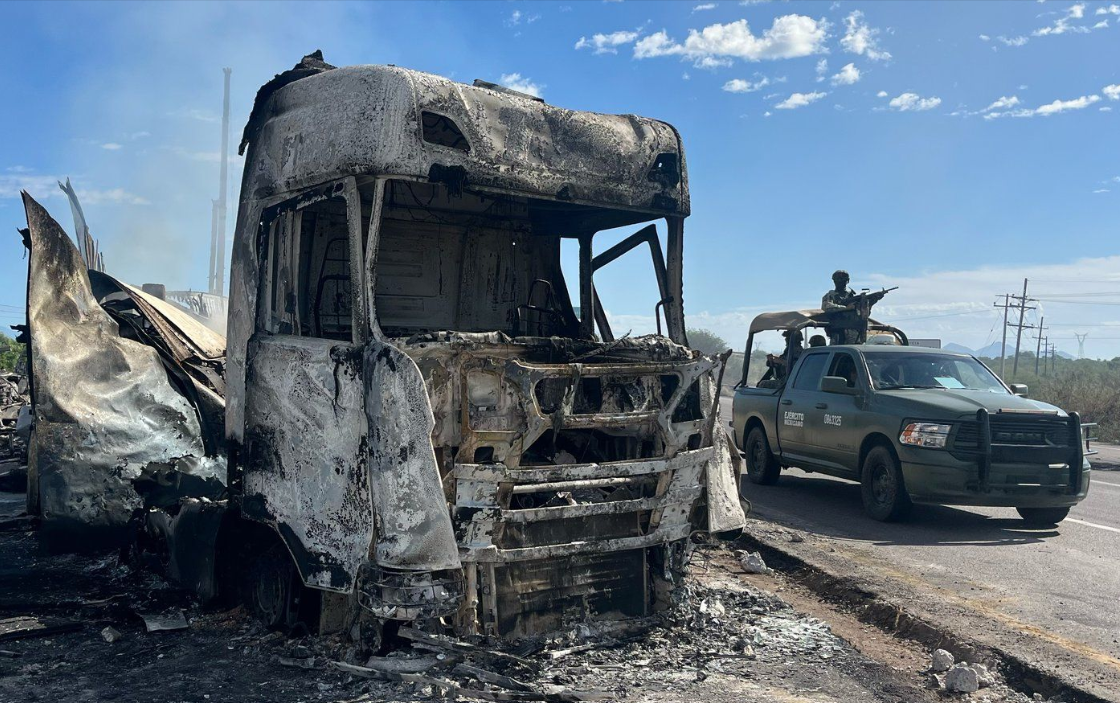
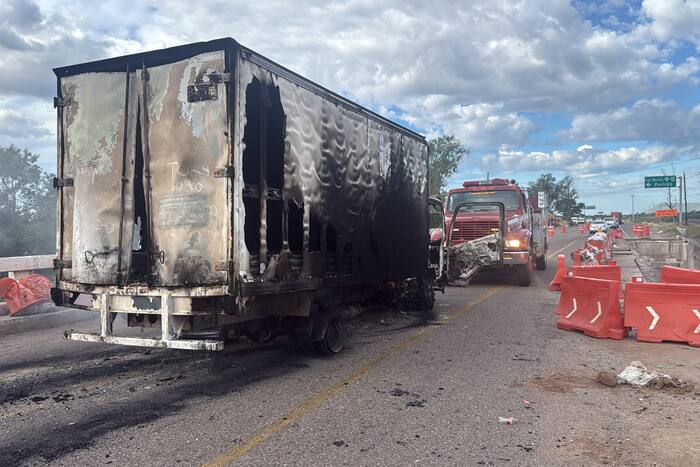
Within twenty minutes, the city vanishes. The taco stands are abandoned with meat still sizzling on the plancha. Public buses stop dead in the middle of intersections, their drivers sprinting toward concrete storefronts. Then comes the sound that every child in northern Mexico knows by heart before they learn to tie their shoes: the dry, flat crack-crack-crack of high-caliber rifles echoing off cinderblock walls, followed by the black, oily plumes of burning semi-trucks dragged sideways across the asphalt to block military convoys.
This is the immediate, visceral price of the "kingpin strategy"—a doctrine that looks brilliant on a Pentagon whiteboard and feels like the end of the world when you are crouched behind a stack of Michelin tires praying a stray 7.62 round doesn't punch through the drywall.
Who Was the Man Behind the Myth?
To grasp why the removal of one fifty-something fugitive could paralyze an entire region, you have to unlearn everything Hollywood has taught you about cartel bosses. Fausto Isidro Meza Flores did not wear gold-plated pistols or post videos with pet tigers on social media.
Born in 1982 in the small municipality of Guasave, he came of age in the shadow of the Beltrán Leyva Organization, a syndicate that once operated as the ruthless enforcement arm and blood-bound ally of the Sinaloa Cartel. When that alliance shattered in 2008—sparking one of the most ferocious underworld bloodbaths in modern Mexican history—most of the old guard were killed, captured, or extradited.
Meza Flores survived. He didn't survive by being the loudest man in the room; he survived by being the most disciplined.
Think of the criminal underworld of northern Mexico not as a single corporation, but as a feudal patchwork of warring baronies. While the Sinaloa Cartel’s dominant factions fought endlessly over Culiacán and the southern corridors, Meza Flores carved out an autonomous fiefdom in the north. He built what federal prosecutors in the United States would later call the Meza Flores Transnational Criminal Organization—a lean, hyper-efficient pipeline moving heroin, methamphetamine, cocaine, and fentanyl from the Pacific coast straight through Nogales and Tijuana into American veins.
For years, the FBI kept him on their Ten Most Wanted Fugitives list, dangling a five-million-dollar reward that nobody dared collect. Why? Because in Guasave and the surrounding agricultural valleys, Meza Flores was not merely feared; he was an institution. He maintained an uneasy, heavily armed equilibrium. Rival factions knew that crossing into his territory meant instant, overwhelming retaliation. Local authorities knew the invisible lines they could not cross.
He was a tyrant, certainly. His organization left countless unmarked graves in the red clay of the foothills. Yet in the twisted logic of narco-governance, his absolute control created a perverse kind of predictability. People knew the rules.
The Physics of a Vacuum
Here is an uncomfortable truth that policy analysts in Washington and Mexico City rarely admit aloud: when you remove the apex predator from a fractured ecosystem, you do not get peace. You get a feeding frenzy.
To see why, imagine a heavy stone holding down a coiled steel spring. The stone is ugly. The stone is dangerous. Everyone agrees the stone needs to be removed. But if you lift that stone without having a mechanism to safely decompress the spring, the energy doesn't disappear—it whips outward, smashing everything within reach.
That is precisely what ignited across Sinaloa following the detention of El Chapo Isidro.
The violence that erupted wasn't merely an emotional tantrum by loyal gunmen trying to rescue their boss, though narcobloqueos—those fiery roadblocks designed to stall armored military vehicles—are standard operating procedure during high-profile arrests. The deeper, far more terrifying tremors came from the realization that the northern corridor was suddenly unguarded.
Sinaloa was already bleeding from the inside out. For months prior to Meza Flores’s capture, the state had been locked in a brutal fratricidal war between Los Chapitos—the sons of Joaquín Guzmán—and La Mayiza, the faction loyal to Ismael "El Mayo" Zambada, whose own dramatic arrest on U.S. soil shattered a decades-old pact. Culiacán had become a ghost town after sunset. Businesses were shuttered; hundreds were dead or disappeared.
Through all of that chaos, Meza Flores’s northern stronghold had acted as a buffer zone—a heavily fortified wall keeping the worst of the southern inferno from swallowing Guasave and Los Mochis whole.
When Mexican marines and army special forces finally breached his perimeter and took him into custody, that wall evaporated overnight. Suddenly, lieutenants within Meza Flores’s own ranks had to decide whether to hold the line or cut deals with outside invaders. Meanwhile, opportunistic rivals saw a golden, once-in-a-generation chance to seize the lucrative northern smuggling routes and Pacific ports.
What the Press Releases Leave Out
I still remember the first time I walked through a town twenty-four hours after a major cartel arrest. The smell stays in your nasal passages for days—a nauseating cocktail of melted rubber, diesel soot, and the sweet, copper tang of spilled blood baking in the afternoon sun.
On television, the government spokesperson stood behind a podium flanked by flags, reading statistics off a teleprompter. A decisive blow against organized crime. A triumph for the rule of law.
Down on the street, the rule of law looked like an elderly woman sweeping shattered windshield glass off her front porch with a straw broom, her hands shaking so violently she couldn't hold the handle steady. It looked like twenty-two-year-old boys with hollow eyes and tactical vests lying motionless beside burned-out Ford Raptors. It looked like a hospital emergency room running out of O-negative blood before midnight because a stray bullet tore through a family sedan on the way home from a birthday party.
We have a habit, when discussing the drug war, of speaking in abstractions. We talk about "supply chains," "fentanyl precursors," "bilateral security cooperation," and "kingpin decapitation." Those words are clean. They don't bleed. They allow us to nod approvingly at a headline over morning coffee and feel as though progress is being made.
The reality is messier, darker, and infinitely harder to stomach.
The Mexican government faced immense pressure—both domestically and from an increasingly impatient Washington—to prove it could dismantle the cartels at their highest levels. Capturing El Chapo Isidro was undeniably a massive tactical feat. Intelligence agencies spent years tracking his ghost-like movements through the rugged terrain of the Sierra Madre, piercing layers of counter-surveillance, bribed lookouts, and impenetrable mountain geography. By every traditional metric of law enforcement, the operation was a masterpiece.
And yet, ask a schoolteacher in Guasave whether she feels safer today than she did the morning before the raid. Ask a produce farmer watching his harvest rot in the fields because truckers refuse to drive down Highway 15 for fear of being carjacked and burned.
The Cycle We Refuse to Break
There is a profound vulnerability in admitting that we don't have an easy answer to this. Anyone who tells you that simply arresting more bosses will end the bloodshed is either lying to you or hasn't been paying attention since 2006, when Mexico first declared an all-out military war on the cartels.
Look at the ledger of the last twenty years. Arturo Beltrán Leyva: killed. Joaquín Guzmán: imprisoned for life in Colorado. Ismael Zambada: in federal custody. Now, Fausto Isidro Meza Flores: detained.
Every single time a titan falls, the map fractures into smaller, more erratic, and infinitely more violent pieces. A single disciplined organization becomes three desperate splinter groups. When a cartel loses its central command, it also loses its central discipline. Young, hyper-violent mid-level commanders—men without the strategic patience of a Chapo Isidro—suddenly find themselves holding automatic weapons with nobody left to tell them no. Extortion skyrockets to replace lost smuggling revenue. Kidnappings multiply. The violence stops being targeted and becomes ambient, like fog rolling off the Pacific.
Consider what happens next in the shadows of northern Sinaloa.
Right now, in safe houses tucked behind high brick walls and mountain cabins shrouded in pine mist, men with bloodshot eyes and satellite phones are drawing new lines on old maps. Some are trying to stitch together what remains of the Meza Flores apparatus, placing a cousin or a trusted lieutenant at the head of the table before the blood dries on the pavement. Others are already negotiating their surrender to stronger factions, trading loyalty for survival.
And on the American side of the border, the chemical precursors keep arriving at the ports, the pill presses keep humming in clandestine garages, and the demand that funds the entire bloody enterprise remains untouched.
The Weight of the Morning After
Three days after the raid, the black smoke over the highways begins to thin. Tow trucks, escorted by armored Humvees mounted with .50-caliber machine guns, haul away the twisted, blackened skeletons of the burned-out trucks. Municipal workers shovel sand over the oil slicks.
Slowly, hesitantly, the steel shutters of the shops begin to roll back up, one screeching inch at a time.
Mateo unlocks the front door of his auto-repair shop. The air inside smells stale, trapped since Tuesday morning. He walks over to his workbench, picks up his wrench, and looks out toward the boulevard where a convoy of Mexican National Guard trucks is rolling past, young soldiers staring down the barrels of their rifles at every passing car, every rooftop, every dark doorway.
The ghost of the mountain is behind bars. The headlines have already moved on to the next crisis, the next election, the next scandal.
Mateo wipes a streak of grease from his forehead, steps beneath the chassis of the pickup truck, and listens—not to the radio, not to the traffic, not to the promises of distant capitals—but to the quiet, waiting for the next tremor to begin.