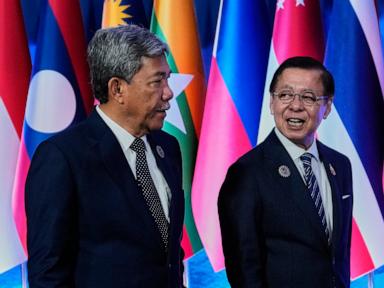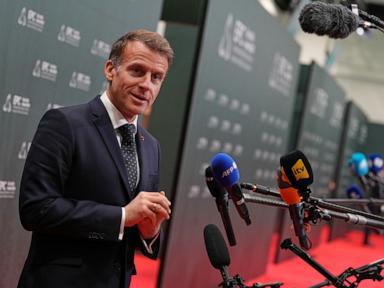
Humidity clings to your skin in Phnom Penh like a wet silk shirt, heavy with the scent of frangipani, diesel exhaust, and river mud. Inside the air-conditioned chill of the Peace Palace, however, the air is dry enough to crack your lips. Diplomats adjust their silk ties. Translators test their headsets in glass booths. Cameras click in rapid, rhythmic bursts as heads of state from across the globe shake hands beneath crystal chandeliers.
They are here for the 20th Francophonie Summit, a gathering of the Organisation internationale de la Francophonie, or OIF. On paper, this is a celebration of shared language, cultural solidarity, and economic cooperation among 88 member states and governments. It is a homecoming of sorts for Southeast Asia, the first time the summit has returned to the region since Hanoi hosted it in 1997. Cambodia, a nation that once bled under colonial rule and later survived the horrors of the Khmer Rouge, stands at the podium as a proud, modern host.
Yet beneath the polite applause and the carefully rehearsed speeches about digital innovation and youth entrepreneurship, a cold draft blows through the hall. Everyone in the room feels it. Nobody wants to name it first.
Because thousands of miles away from the Mekong River, in the mineral-rich hills of eastern Congo, guns are firing. And the blood spilling into that red earth belongs to the very nations sitting around this table.
The Illusion of a Shared Tongue
To understand why a diplomatic conference in Southeast Asia is threatening to tear itself apart over a war in Central Africa, you first have to discard the romantic myth of what the Francophonie actually is.
For decades, Paris and its allies sold the world a charming story. They framed the OIF as a kind of linguistic commonwealth—a cozy club bound together by Victor Hugo, croissants, and a mutual love for the French language. Think of it like an exclusive book club where the members happen to control trillions of dollars in trade and sit on the United Nations Security Council. In that version of the story, language is a bridge. It softens borders. It turns strangers into cousins.
I have sat in enough press rooms and diplomatic corridors to tell you that this version is a fairy tale. Language, especially a colonial language, is never neutral. It is a tool, a ledger, and sometimes a weapon.
When France, Belgium, and Canada established the modern architecture of the Francophonie in 1970, the demographic center of the French language still sat comfortably in Europe. Today, that map has been turned upside down. Roughly 60 percent of the world’s 321 million French speakers live in Africa. By 2050, projections suggest that number will climb past 80 percent, driven largely by booming populations in nations like the Democratic Republic of the Congo. Kinshasa, the chaotic, vibrant capital of the DRC, has already overtaken Paris as the largest French-speaking city on Earth.
Power follows people. Or at least, it is supposed to.
Consider a hypothetical young woman—let’s call her Clarisse—living in Goma, the provincial capital of North Kivu in the eastern DRC. Clarisse speaks French fluently. She studied it in school, uses it to text her friends, and listens to French-language radio to find out which roads are safe to travel on any given morning. To Clarisse, the diplomats sipping sparkling water in Phnom Penh are not distant bureaucrats. They are the people who claim to represent her linguistic family. Yet when she looks out her window, she sees displaced families sleeping under plastic tarps, fleeing an offensive by the M23 rebel group—a militia backed, according to United Nations experts, the United States, and the European Union, by neighboring Rwanda.
And Rwanda, led by President Paul Kagame, is not just a neighbor. It is a prominent member of the Francophonie. In fact, the current Secretary-General of the OIF, Louise Mushikiwabo, is Rwanda’s former foreign minister.
Pause and let that sink in.
The very person tasked with leading the global organization of French-speaking nations comes directly from the inner circle of a government accused of fueling a devastating proxy war against the largest French-speaking nation on the planet.
A House Divided Against Itself
Diplomacy relies on polite fictions, until the body count grows too high to ignore.
For years, the conflict in the eastern Democratic Republic of the Congo has been treated by the international community like a chronic, background illness—tragic, complicated, and perpetually pushed to the bottom of the agenda behind wars in Eastern Europe and the Middle East. Since late 2021, however, the resurgence of the M23 rebellion has shattered that complacency. More than seven million people are now internally displaced across the DRC. Entire towns have been swallowed by violence. The mineral wealth beneath the soil—cobalt, coltan, gold, tin—continues to flow outward into the global supply chain for smartphones and electric vehicles, while the people living above those mines bury their dead.
Congolese President Félix Tshisekedi has spent the last two years sounding the alarm in every international forum that will give him a microphone. His message is blunt: Rwanda is invading his country under the cover of a proxy militia, and the world is looking away. Kigali vehemently denies the accusation, arguing instead that Kinshasa is harboring the FDLR, a militant group linked to the perpetrators of the 1994 Rwandan genocide, and that Rwanda’s security measures are purely defensive.
It is an old, bitter feud with deep historical scars. And in Phnom Penh, that feud walked right through the front doors of the summit.
Look at the seating chart, and you can trace the fault lines of a collapsing consensus. On one side sits Kinshasa, demanding explicit condemnation of Rwandan aggression and concrete sanctions from an organization that claims to defend peace, democracy, and human rights. Remember, the OIF is not merely a cultural festival; its Bamako Declaration of 2000 explicitly binds member states to uphold democratic governance and territorial integrity. When military coups swept through Mali, Burkina Faso, and Niger over the past several years, the OIF swiftly suspended those nations, lecturing their juntas on the rule of law.
To Congolese officials, the double standard is blinding. How can an institution suspend West African nations for domestic political ruptures while remaining paralyzed—or worse, complicit—as a member state allegedly violates the borders of another member state?
Imagine you are a Congolese diplomat walking down the hallway of a Phnom Penh hotel. You pass the Rwandan delegation. You pass French officials who have spent the last decade quietly courting Kigali to repair relations strained since 1994, signing bilateral deals and backing Mushikiwabo’s re-election as OIF chief in 2022 despite fierce objections from Kinshasa. Every smile feels like a betrayal. Every hand extended in greeting feels stained.
Why Cambodia Matters More Than You Think
At first glance, holding this summit in Cambodia seems like an odd geographical detour. Why fly dozens of African, European, and North American leaders halfway across the world to a Southeast Asian kingdom where fewer than one percent of the population speaks French fluently today?
To answer that, you have to understand the quiet desperation of Western foreign policy in the Global South.
France’s traditional sphere of influence in Africa—long derided as Françafrique—is crumbling at historic speed. Over the last four years, French troops have been expelled from Mali, Burkina Faso, and Niger. Anti-French sentiment has become a potent political currency from Dakar to Niamey, fueled by decades of resentment over paternalistic policies, economic exploitation, and military interventions that failed to stop jihadist insurgencies. Russia’s Wagner Group (now rebranded as the Africa Corps) and Chinese infrastructure lenders have eagerly stepped into the vacuum.
Faced with this retreat in Africa, Paris has been scrambling to pivot toward the Indo-Pacific. By bringing the Francophonie Summit to Cambodia, France and its allies hoped to project global relevance, counter Chinese influence in Southeast Asia, and showcase a success story of post-conflict recovery. Prime Minister Hun Manet’s government welcomed the spotlight, eager to burnish Cambodia’s diplomatic credentials and attract investment from Europe and Canada.
It was supposed to be a masterstroke of soft power. A distraction from Paris’s bruised ego in the Sahel. A clean slate.
Instead, Africa followed France to Phnom Penh.
You cannot outrun your own history by booking a conference hall ten time zones away. The crisis in eastern Congo exposed the hollow core of the OIF’s mission. If the organization cannot mediate a war between two of its most consequential African members, what is the point of its existence? If its leadership is viewed as compromised by one side of a bloody conflict, how can it claim moral authority anywhere else—whether in Phnom Penh, Port-au-Prince, or Paris?
The Anatomy of Diplomatic Paralysis
Let us step back for a moment and examine the mechanics of how an international body like the OIF breaks down. It rarely happens with a dramatic, table-flipping walkout—though walkouts and boycotts have hung over this summit like storm clouds. More often, it happens through dilution.
In the weeks leading up to the gathering in Cambodia, behind closed doors in Paris and New York, teams of junior diplomats worked late into the night drafting the summit’s final communique. Every adjective in these documents is fought over like territory. Does the text "condemn" foreign interference in the DRC, or does it merely "express deep concern" over the security situation in the Great Lakes region? Does it name Rwanda, or does it hide behind passive verbs that assign blame to nobody at all?
Think of it like writing a family will while the heirs are still arguing in the hospital waiting room. Everyone wants the document signed before someone storms out, so the lawyers scrub away every sharp edge until the words mean nothing.
For the Congolese delegation, that linguistic gymnastics is an insult. When your citizens are being shelled in North Kivu, a carefully balanced paragraph expressing "concern" reads like a permission slip for the aggressor. At the previous Francophonie summit in Djerba, Tunisia, in 2022, President Tshisekedi boycotted the closing ceremony in protest over the summit's refusal to explicitly call out Rwanda. By the time the delegates gathered in Villers-Cotterêts, France, in 2024, Tshisekedi walked out early after French President Emmanuel Macron declined to name Rwanda in his opening address.
Now, in Cambodia, the bill for years of diplomatic evasion has finally come due.
African nations are watching closely, and they are split. Some states, wary of setting a precedent where regional security disputes hijack economic summits, urge quiet mediation through the African Union’s Luanda Process. Others, particularly those already skeptical of French-led institutions, see the deadlock as proof that the OIF is an obsolete relic—an expensive talking shop where European priorities take precedence over African lives.
The Invisible Stakes for the Rest of Us
It is tempting, sitting in a quiet living room in London, Toronto, or Chicago, to view a diplomatic rift inside a French-speaking club as an obscure foreign-policy footnote. Who cares if a few dozen ministers argue over a communique in Cambodia?
You should. And here is why.
First, look at the device you are reading this on. Inside your phone or laptop sits a tiny capacitor made from tantalum, refined from coltan mined in the hills of eastern Congo. The global transition to green energy—electric cars, wind turbines, grid-scale batteries—depends overwhelmingly on Congolese cobalt and copper. Stability in the Great Lakes region is not an abstract humanitarian wish; it is the literal foundation of the modern technological economy. When diplomacy fails in forums like the OIF, the vacuum is filled by illicit mining networks, armed militias, and geopolitical rivals who play by very different rules.
Second, watch what happens to the international order when institutions lose their credibility. We are living through an era of profound fragmentation. The post-Cold War consensus—the idea that multilateral organizations, shared rules, and diplomatic norms can prevent catastrophic conflict—is under relentless assault from Ukraine to Gaza to Sudan.
Organizations like the Francophonie were designed to be shock absorbers in that system. They exist to keep lines of communication open between the Global North and the Global South, to offer a space where smaller nations have an equal voice alongside major powers. When an institution like the OIF turns a blind eye to a major war within its own ranks to protect political alliances, it teaches the rest of the world a cynical lesson: rules only apply to the weak.
And finally, there is the human toll of abandonment. Go back to Clarisse in Goma. Or think of a schoolteacher in rural Cambodia, watching motorcades of black sedans speed past flooded rice paddies toward the Peace Palace. Both of them live in places that have been shaped—and scarred—by foreign empires. Both of them have been told that international cooperation is the path to dignity and peace. When the leaders inside those sedans spend three days debating commas and prepositions while villages burn, trust doesn't just erode. It dies.
What Happens When the Microphones Turn Off
I remember covering an international summit years ago where a senior diplomat accidentally left his microphone live during a coffee break. For ten minutes, the press room listened to him laugh with a colleague about how they had successfully watered down a human rights resolution so that a major trade deal could go through untouched. The laughter was casual, practiced, and utterly devoid of malice. They didn't see themselves as villains. They saw themselves as professionals doing their jobs.
That is the real danger hanging over Phnom Penh. Not hatred, not open hostility, but bureaucratic indifference dressed up in eloquent French.
France and its partners can salvage the credibility of the Francophonie, though the window is closing fast. Doing so requires abandoning the comfortable habit of neutrality when one member state is actively destabilizing another. It means acknowledging that the OIF cannot claim to champion democracy in West Africa while ignoring sovereignty in Central Africa. And it means recognizing that the center of gravity in the French-speaking world has permanently shifted southward—and that African grievances can no longer be managed with polite applause and photo opportunities.
Whether that reckoning happens in Cambodia remains painfully uncertain. Diplomatic habits die hard, especially when strategic interests, mineral contracts, and historical guilt are tangled together in the same knot.
Outside the Peace Palace, evening falls quickly over Phnom Penh. The heat finally breaks, replaced by a warm breeze off the Tonle Sap river. Inside the banquet hall, glasses of champagne are raised to toast solidarity, brotherhood, and a shared future in French. At the center of the table, the crystal catches the light, brilliant and fragile, while thousands of miles away in the dark hills of Kivu, another family packs whatever it can carry and begins to walk.