Ice does not care about geopolitics. It does not negotiate treaties, and it does not recognize the imaginary lines drawn by diplomats in distant capitals. It simply expands, crushes, and grinds. Yet, beneath the crushing weight of the polar sheet, concrete remembers.
Deep inside Greenland, where the horizon dissolves into a pale, blinding white that tricks the human eye into believing the earth has ended, an old ghost is waking up.
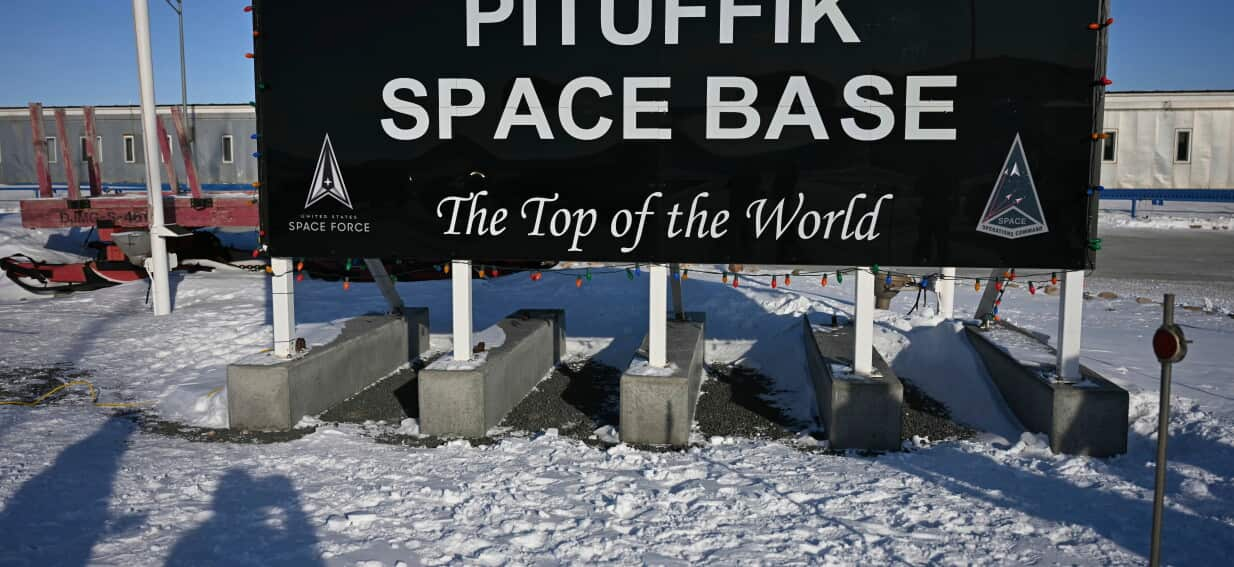
For decades, the winds howled unchecked across abandoned hangars and rusted Quonset huts at Thule and neglected radar sites scattered across the northern expanse. These were the relics of a paranoid era—the Cold War—when superpowers stared each other down across the frozen roof of the world, convinced that Armageddon would arrive via the shortest possible route over the North Pole. When the Soviet Union collapsed, the world exhaled. The ghost bases were left to the foxes, the snow, and the absolute silence of the Arctic night.
Until now.
Rumors have solidified into policy. New defense deals are taking shape in smoke-filled rooms and secure briefings, pointing toward a stark reality: the United States and its allies are moving to reactivate these long-dormant Arctic military footprints.
To understand why this matters, you have to stand on that ice. Imagine stepping out of a transport aircraft onto a landing strip carved directly into glacial till. The air hits your lungs like broken glass. It is so cold that moisture inside your nose freezes instantly. Your breath plumes and vanishes into a sky that changes color from bruised purple to blinding copper in a matter of minutes. In this environment, survival is not a political position. It is a daily negotiation with physics.
And the physics of global power have shifted.
As climate change fractures the northern ice caps, the Arctic is no longer a frozen fortress impassable to humanity. It is becoming a highway. New shipping lanes are opening up, slicing thousands of miles off transit times between Asia and Europe. Beneath those receding ice sheets lie vast, untouched reserves of rare earth minerals, oil, and natural gas. The great powers of the world are looking north not with curiosity, but with hunger.
When you look at a flat map of the world, you miss the truth of geography. You see Greenland tucked away near the top as an afterthought, a massive white island dwarfed by its neighbors. But look at a globe from the top down—from the perspective of a missile guidance system or a cargo freighter taking the great circle route. Greenland is the central pivot of the Northern Hemisphere. It is the geographic stopper in the bottleneck between the Atlantic and the Arctic oceans. Whoever holds the high ground of the north holds the strategic high ground of the entire planet.
This is why old runways are being cleared of snow. This is why concrete is being poured over cracked permafrost.
History has a cruel habit of repeating itself, but it usually changes costumes first. In the 1950s and 60s, the United States built secret cities beneath the Greenland ice sheet—projects like Camp Century, an underground labyrinth powered by a portable nuclear reactor designed to house hundreds of soldiers and launch intermediate-range ballistic missiles. It was a marvel of engineering born of absolute terror. Back then, the enemy was Moscow, and the fear was nuclear annihilation raining down from the stratosphere.
Today, the players have multiplied. Russia has spent years aggressively modernizing and reopening its own Soviet-era Arctic bases, staking claims to the seabed with planted flags and ice-breaking fleets. Meanwhile, China has declared itself a "near-Arctic state," investing heavily in scientific outposts, deep-water ports, and mining rights across the region.
The Arctic is crowded now. And crowded spaces breed tension.
When a superpower decides to reactivate a Cold War base in Greenland, it sends a shockwave through local communities. Consider the perspective of an indigenous fisherman in a small coastal settlement hundreds of miles from the nearest military installation. For generations, his family has hunted seal and narwhal through shifting leads in the sea ice. To him, Washington and Beijing are abstract concepts, as distant as the stars. But the hum of heavy transport planes overhead, the warming waters altering marine migration paths, and the sudden influx of foreign interest are very real.
The people of Greenland are caught in a gravitational pull they did not ask for. They are moving toward self-reliance and eventual independence from Denmark, yet their homeland is suddenly being eyed as the primary geopolitical chessboard of the twenty-first century. Sovereignty is a heavy mantle when everyone else wants to borrow your coat.
There is a profound irony in these developments. We spent the latter half of the twentieth century terrified that human conflict would melt the world through nuclear fire, only to watch the earth warm naturally, melting the ice barriers and opening up the very arena we swore we would never need to fight over again.
The deal to reopen these military outposts is not just about runways, radar arrays, or refueling stations. It is an acknowledgment that the buffer zones have vanished. The ends of the earth are now the middle of the action.
As the sun dips below the horizon for months of unbroken winter darkness, the lights will flicker back on in installations that haven't seen human life in a generation. Engines will roar against the gale. Radar dishes will sweep the starry sky, searching for signatures that do not belong.
Out on the ice, the wind keeps blowing, indifferent to the hurried diplomacy of men. But the silence of the Arctic is breaking, and the echoes will reverberate around the globe.