The sea does not care about borders. It swallows oil tankers, container ships, and fishing vessels with the exact same indifferent roar, churning them through the salt and the spray beneath skies that stretch out to nowhere. But far south of the African continent, down where the Indian Ocean begins to grow heavy and cold, another kind of phantom moves through the water. It carries no flag that tells the truth. Its name is painted over or obscured. Its transponder sits quiet, broadcasting nothing to the anxious eyes watching from coastal radar stations thousands of miles away.
Consider what happens when a vessel goes dark.
On a modern ocean, a ship without a signal is not just a missing dot on a screen. It is an anomaly, a deliberate erasure. For months, international authorities have tracked a shifting armada of tankers operating on the margins of legality. They drift across the globe like drifting ice, moving crude oil from sanctioned ports to waiting buyers, slipping through loopholes carved out by geopolitics and maritime insurance fraud. They are known, in the quiet parlance of intelligence analysts and naval commanders, as the shadow fleet.
And then, the French Navy moved.
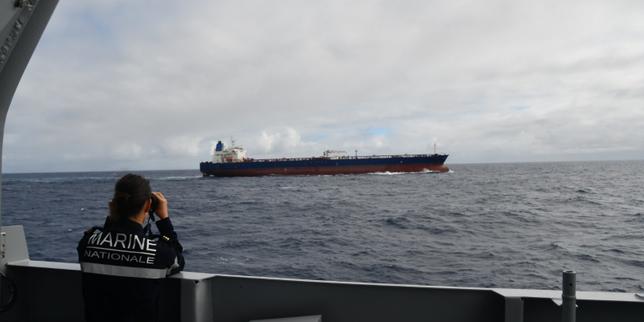
South of La Réunion, a volcanic French island rising sharply from the southern Indian Ocean, the sea erupted into a high-stakes ballet of steel and authority. The French armed forces intercepted a tanker suspected of belonging to this clandestine network. There were no dramatic explosions, no cinematic broadsides traded in the swells. Instead, there was the cold, methodical approach of a frigate cutting through the foam, the sudden rise of a fast interceptor boat, and the heavy thud of boots hitting a foreign deck.
To understand why this matters, you have to look past the bureaucratic language of sanctions and maritime law. You have to imagine standing on the bridge of that intercepted tanker as the gray hulls of the French military close in. The air smells of heavy diesel and salt. The crew watches through salt-streaked glass as armed commandos secure the ladders. In that exact moment, the invisible architecture of global trade collides with the hard edge of state sovereignty.
For years, the mechanics of evasion have been refined into a dark art. Ships turn off their Automatic Identification System transponders—their electronic heartbeat—while still within sight of land, sliding into maritime black holes where they conduct ship-to-ship transfers of crude oil under the cover of night. They swap flags like card sharpers changing decks, registering under minor maritime registries that ask few questions and check fewer documents. They are insured by shadowy entities with no visible assets, ready to vanish the moment an environmental disaster or a collision occurs.
When an oil spill happens off a pristine coastline, the public sees the black sludge washing ashore on white sand. But the true catastrophe of the shadow fleet happens in the dark, long before a drop hits the water. It is a slow, systemic erosion of the rules that keep the global commons from turning into a free-for-all. If nations cannot police the sea lanes, if rogue vessels can haul millions of barrels of oil past the statutory defenses of international law, then the entire concept of maritime order becomes a fiction.
The interception south of La Réunion was not merely a routine boarding. It was a shot across the bow of a global underground economy. France, possessing vast overseas territories scattered across the globe, maintains a unique stake in this oceanic chess match. Its Exclusive Economic Zones stretch across millions of square kilometers of water, making it an accidental custodian of immense maritime frontiers. When a suspected shadow tanker slips through these waters, it is trespassing on a fragile sovereignty.
The operation required precision. In the open ocean, weather is an unpredictable variable. A swell that looks manageable from the deck of a frigate can transform a boarding operation into a lethal hazard when men must leap from a rubber hull onto the slick, rolling steel of a moving tanker. Every motion must be calculated. Every second is measured against the risk of structural damage or environmental contamination.
Yet, the greater challenge is not physical. It is legal.
When you board a ship flying a flag of convenience, you step into a labyrinth of international maritime law. Which nation has jurisdiction? What constitutes probable cause on the high seas? The diplomats and legal teams working behind the scenes in Paris and Brussels face a chessboard just as complex as the one the naval officers navigate in the southern Indian Ocean. Every seizure is scrutinized, every document interrogated for forged stamps and fraudulent registry numbers.
Think about the crew on that intercepted vessel. For many of them, this is simply a job, a grueling months-long contract far from home, working on aging hulls that should have been scrapped years ago. They may know little of the complex web of shell companies registered in tax havens that actually own the steel beneath their feet. They see only the immediate horizon, the endless rotation of watches, and the looming shadow of an inspection that could derail their voyage and leave them stranded in legal limbo.
The public rarely sees these moments. We consume our energy and our news at the end of a long, invisible chain of logistics. We flip a light switch, we fuel our cars, we buy goods shipped across oceans, rarely pausing to consider the vast, restless medium through which it all travels. We assume the sea is orderly because maps are printed with neat lines and boundaries.
But the lines on a map are just ink. The reality is water, deep and indifferent, crossed by vessels that test the limits of what the law can reach.
The tanker south of La Réunion is now part of a growing dossier, a physical piece of evidence in a silent war fought across the world's oceans. Its detention sends a signal to every other dark vessel currently drifting somewhere between the Persian Gulf and the icy reaches of the southern hemisphere. It tells them that the invisibility cloak is wearing thin. It tells them that eyes are watching the radar screens, and that the gray hulls are still out there, waiting in the swell.
As the sun sets over La Réunion, painting the volcanic peaks in bruised shades of purple and gold, the ocean resumes its ancient rhythm. The waves roll on, indifferent to the laws of men, the politics of empires, or the ghosts that sail upon their backs. But beneath the surface, the balance has shifted just a fraction of a degree. The sea has not gotten any smaller. But the hiding places are starting to run out.