Walk down any old street in an eastern American town, and you will find the ghosts. They are not visible as apparitions, but as empty spaces in the canopy. Wide, sweeping gaps between maples and oaks where a massive, cathedral-like presence used to loom.
For generations, the American elm defined our streets. These trees were not merely plants; they were architectural partners. Their trunks rose straight and true before bursting outward into high, arching sprays of green that locked together overhead, turning ordinary dirt roads into soaring, cathedral naves of shade. Entire towns were named for them. Elmira. Elmhurst. Elm Street. Children learned to ride bicycles beneath their protective vaults, and communities gathered under their massive branches to escape the summer heat.
Then came the silence.
In the early decades of the twentieth century, an invisible invader arrived quietly inside a shipment of logs from overseas. It was a fungus, Ophiostoma ulmi, carried on the backs of tiny elm bark beetles. Dutch elm disease swept through the continent like a slow-moving wildfire. It did not negotiate. It did not spare the ancient giants that had stood for centuries. Within decades, over twenty million mature elms died. Their leaves browned and curled in the blistering July sun, their massive trunks went gray and brittle, and towns across the country watched their grand green ceilings collapse into skeletal remains.
Foresters panicked. Scientists sprayed chemical cocktails into the soil and onto the bark, hoping to poison the beetles before they could drill into the vascular tissue. It was a losing battle. The fungus clogged the tree’s water-transporting vessels from the inside out, choking the giant to death with its own sap.
We accepted the loss as a tragic inevitability. The majestic American elm became a relic of sepia-toned photographs and fading memories.
Until recently.
Deep inside controlled research laboratories and specialized forest plots, a quiet revolution has been taking shape. Biologists are doing something that sounds entirely counterintuitive, almost dangerous. They are using disease itself to save the species.
To understand how this works, we have to look at the invisible architecture of the tree. When a healthy American elm encounters the fungus, its immune response is often too slow or too weak. The invader surges through the water lines, and the tree reacts by aggressively blocking its own pipes to stop the spread. Ironically, this self-defense mechanism kills the tree faster than the fungus does; starved of water, the upper branches wither and die.
For years, scientists searched for elms that survived the initial epidemic. These rare survivors were not miracles of luck; they possessed genetic traits that allowed them to fight back. They could recognize the fungal threat early, mounting a defense without cutting off their own life support.
Yet, finding these resistant trees was only the first step. Breeding them for resilience took decades of meticulous hand-pollination. But nature moves slowly, and the threat of the fungus remains relentless.
This is where the viral twist enters the story.
(Note: The following biological mechanism is a real scientific strategy currently being studied, though framed here through the lens of its ecological implications.)
Just as humans use attenuated viruses in vaccines to teach our immune systems how to fight dangerous pathogens, scientists began looking at viruses that infect the fungus itself. Yes, a fungus can catch a cold.
Mycoviruses—viruses that specifically target fungi—can weaken the pathogen, stripping it of its deadly virulence. A fungus infected by a specific mycovirus becomes a shadow of its former self. It can still colonize the tree, but it lacks the chemical artillery required to kill a healthy, resilient elm.
Imagine a microscopic proxy war happening silently inside the living wood of a sapling. The tree’s enhanced immune system, bred from generations of survivors, locks horns with a weakened, virus-addled fungus. The pathogen loses its grip. The tree heals.
This dual approach—combining genetically resilient elm stock with biological control agents that disarm the fungus—has fundamentally shifted the odds. For the first time in nearly a century, we are no longer playing defense against an unstoppable ecological catastrophe.
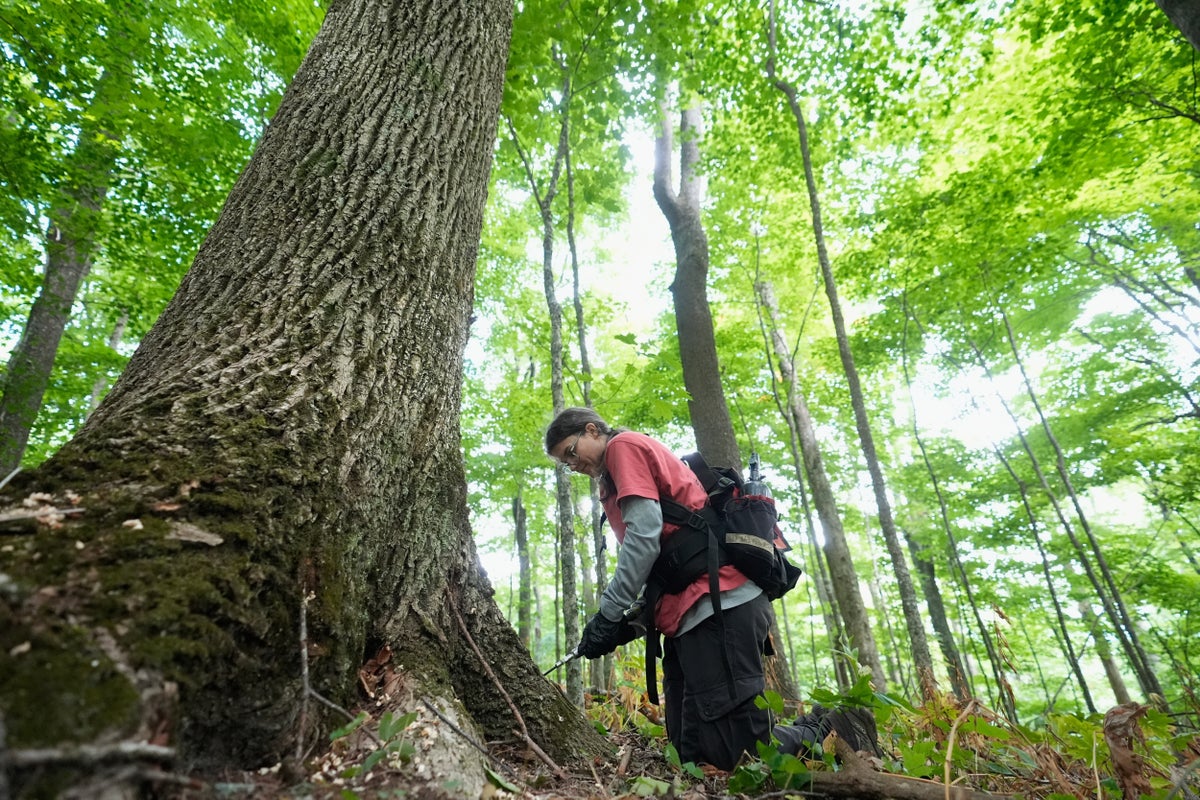
Walking through a modern experimental orchard today is an entirely different experience from looking at historical photographs of devastation. Rows of young, vibrant American elms stretch toward the sky. Their leaves are wide, serrated, and rich green. Their bark shows the characteristic ridges of maturity. They look ordinary, and that ordinariness is precisely what makes them miraculous.
Yet, bringing back the elm is not as simple as dropping a few saplings into the dirt and walking away. The landscape has changed. Suburban sprawl, altered hydrology, and shifting climate patterns mean these trees must grow in a world vastly different from the one their ancestors inhabited a century ago.
Consider what happens when a municipality decides to replant elms along a modern downtown corridor. The soil is often compacted, laced with road salt, and robbed of the complex fungal networks that wild trees rely on for nutrients. A resilient elm can fight off Dutch elm disease, but it still needs to survive urban neglect.
This is why modern arborists are working hand-in-hand with geneticists. They are not just looking for disease resistance; they are looking for urban grit. They want trees that can handle compacted earth, erratic rainfall, and cramped root zones without losing their structural integrity.
The stakes go far beyond aesthetics. When the elms died, entire ecosystems collapsed with them. Specialized insects that fed exclusively on the American elm vanished from local habitats. Birds that relied on those insects for food were forced to adapt or decline. The loss of the canopy changed the microclimate of entire streets, raising summer temperatures on asphalt by several degrees and altering stormwater runoff patterns.
Restoring the elm is a repair job on a torn ecological fabric.
When you stand beneath one of the few surviving ancient elms—the true giants that somehow dodged the blight—you feel a distinct sense of scale. You realize how short human memory is. We get used to barren skylines. We accept concrete canyons as the default state of our cities, forgetting that we used to live beneath living, breathing vaults of green.
The young trees growing in the research stations today will not reach their full, cathedral-like height in our lifetimes. Trees operate on a different temporal scale. They measure time in centuries, not decades.
The work being done in these laboratories is an act of profound optimism. It is an investment in a future we will never fully see. The scientists injecting fungal viruses into diseased bark, the field researchers tracking sapling survival rates through brutal winters, and the city planners carving out wider tree lawns in new developments are all engaged in a quiet pact with the unborn.
They are planting shade for people whose grandparents have not yet been born.
The ghost trees are beginning to fade, replaced not by memories, but by wood, leaf, and living sap. The cathedral ceiling is slowly, patiently being rebuilt from the ground up.