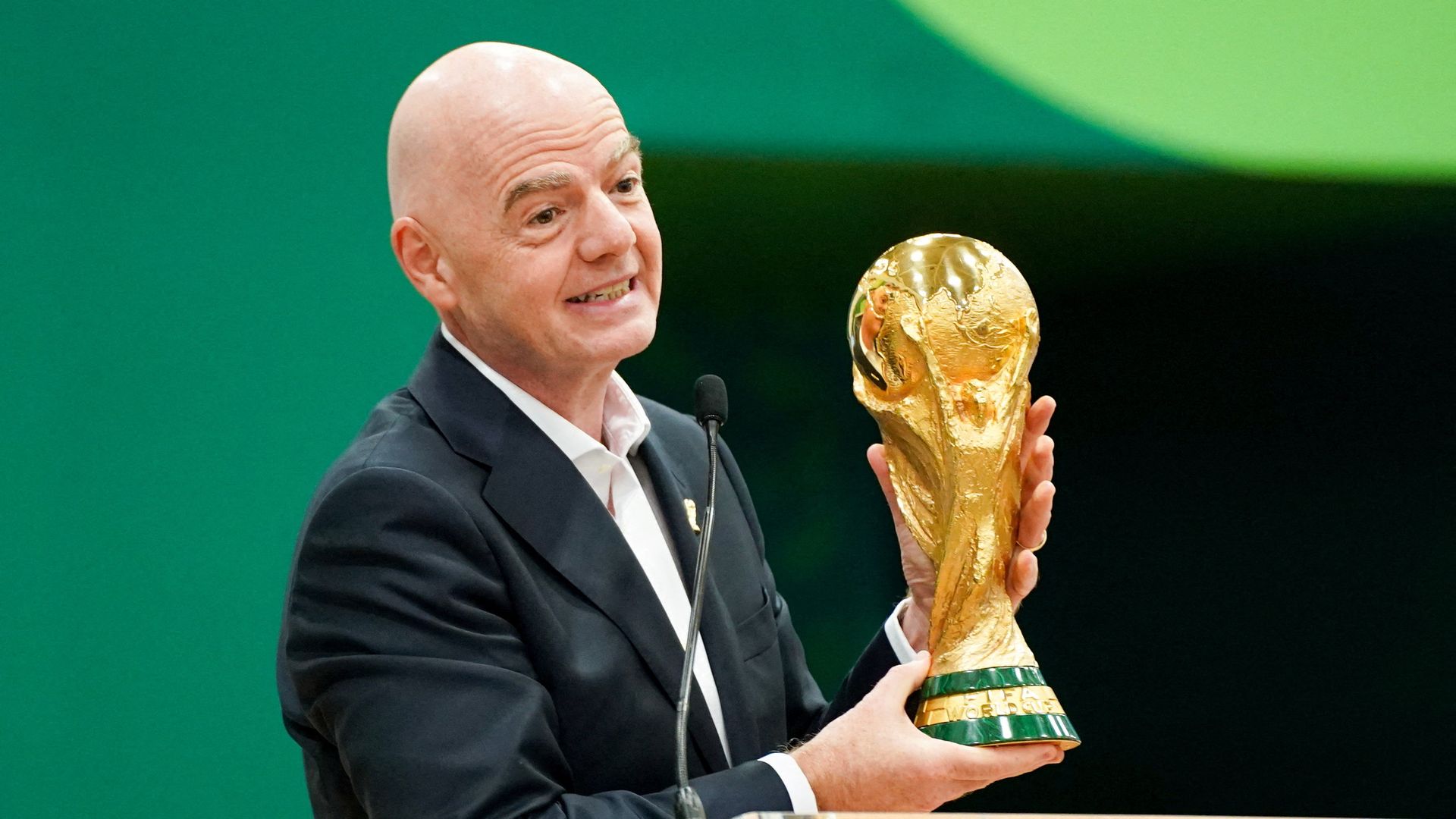
Sports administration is a dirty business. FIFA is an easy target. Gianni Infantino makes a convenient villain. When the FIFA president penned his infamous open letter accusing tournament critics of spreading hate, the media response was predictable. Pundits reached for their pre-written templates about corporate greed, human rights, and washed-out sports washing. They missed the mark entirely because they refused to look past their own reflection.
Here is the truth nobody in the press box wants to admit. Infantino is right. Not because FIFA is a beacon of moral clarity, but because the critics are operating on a staggering level of selective hypocrisy that destroys their own credibility.
I have spent years watching how mega-events are scrutinized. I have seen newsrooms dispatch dozens of journalists to write frantic daily exposés on tournament host nations while quietly ignoring the domestic labor violations, supply chain atrocities, and geopolitical alliances of the very Western countries those journalists call home.
Let us define terms. Hypocrisy in sports journalism is not merely a double standard; it is a systemic refusal to apply universal metrics of critique because a universal metric would indict the critics themselves.
The Geography of Outrage
The lazy consensus goes like this. Western nations hold a permanent moral monopoly on hosting global gatherings. If a tournament goes to Europe or North America, it is a celebration of culture. If it goes anywhere else, it becomes an inspection of conscience.
This framing falls apart under basic historical scrutiny. Every major sporting event built in the modern era comes with environmental scars, economic strain, and infrastructural waste. Yet, the volume of moral panic scales inversely with the distance from London, New York, and Geneva.
When structural problems arise in emerging markets, they are treated as unique moral failures of that specific society. When structural problems happen in Western host nations, they are framed as unfortunate logistical anomalies. That is not human rights advocacy. That is cultural chauvinism wrapped in a press credential.
Critics love to talk about the beautiful game belonging to the fans. Which fans? The ones who can afford a transatlantic flight, a luxury hotel, and a four-thousand-dollar hospitality ticket? Or the billions of people across the Global South who finally get to see the world's biggest show on their own doorstep?
Dismantling the Boycott Fantasy
Let us look at the tactical advice floating around editorial boards. Boycott the tournament. Turn off the television. Refuse to engage.
It sounds principled. It is actually useless.
Boycotts in modern interconnected economies do not punish corrupt bureaucrats. They punish athletes who spent a lifetime training for a four-year window. They punish local hospitality workers who rely on tourism revenue. They punish ordinary citizens who want nothing more than to experience the shared joy of a global spectacle.
Imagine a scenario where every major European broadcaster actually pulled the plug on a World Cup because of political objections. Do you think Infantino loses sleep? Do you think the commercial partners cancel their contracts? No. The tournament happens anyway, the stadiums fill up with local and regional fans, and the Western media apparatus simply cuts itself out of the conversation, reducing its own global relevance to zero.
Real change does not happen by plugging your ears and screaming from a distance of five thousand miles. It happens through friction, exposure, and accountability that includes the governing bodies and the participating nations simultaneously.
The Economics of Scale
Critics point to the billions spent on stadiums and infrastructure as a waste of public funds. They are right about the waste. They are wrong about who invented it.
Mega-events are financial money pits. Athens, Beijing, Rio, and Johannesburg all learned this the hard way. London and Sochi did too. The Olympics and the World Cup are structural economic burdens disguised as parties.
Yet, the outrage machinery only wakes up when the host country does not align with traditional Western geopolitical interests. When a Western democracy spends twenty billion dollars on a tournament that leaves half-empty stadiums to rot, it is called investment in urban renewal. When anyone else does it, it is economic vandalism.
We need to stop pretending that FIFA invented the white elephant stadium. The model was perfected decades ago by Western cities chasing municipal prestige. If you want to fix the economics of global sports, start by banning public subsidies for stadiums everywhere, starting in your own backyard.
The Real Problem With FIFA
Infantino is not a saint. The governance structure of football is opaque, overly centralized, and prone to political maneuvering. The expansion of the tournament format is driven entirely by revenue maximization disguised as inclusion.
These are legitimate battles worth fighting. But when critics dilute these structural arguments with pearl-clutching about cultural norms and selective outrage, they give FIFA an easy escape hatch. They allow Infantino to frame himself as a defender of the developing world against arrogant Western moralizers.
And you know what? That framing works because there is enough truth to it to resonate with billions of people who are tired of being lectured by people who have never set foot outside their capital cities.
Stop letting bad critics off the hook just because their targets are worse. Demand intellectual consistency. Demand that the people writing the headlines apply the same standard to their own governments, their own supply chains, and their own cultural institutions that they demand of a Swiss football bureaucrat.
Until the press corps cleans up its own backyard, every moral crusade they launch is just noise.
Turn off the outrage machine. Watch the games. Hold everyone accountable, starting with the ones holding the pens.