Silence.
For anyone who has spent the last decade watching the rise of live-streaming culture, silence is the most terrifying sound in the room. In the hyper-accelerated economy of Twitch, YouTube, and TikTok, noise is currency. Chaos is retention. A room full of screaming teenagers, flashing LED lights, and relentless chat notifications is the lifeblood of a modern media empire.
Until the lawyers get involved.
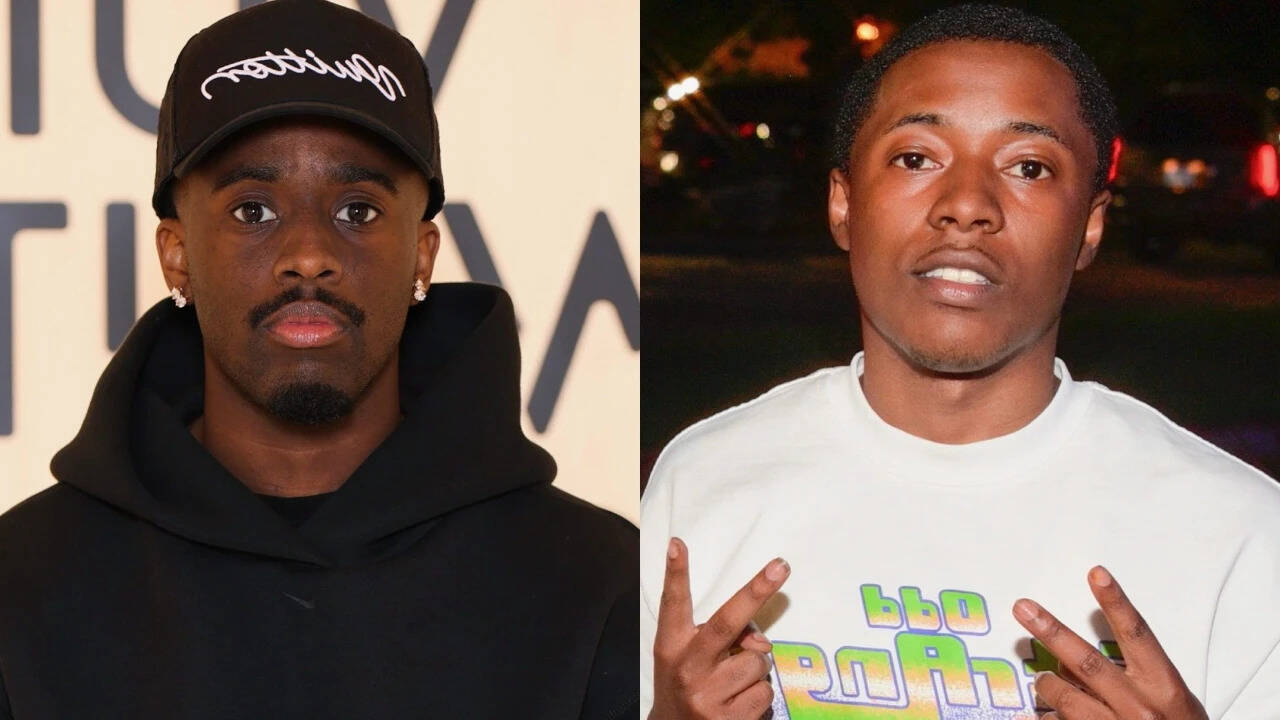
When news broke that Kai Cenat—one of the most dominant, relentlessly energetic forces in modern digital entertainment—had issued a formal cease-and-desist to combat online allegations, the internet did what it always does. It fractured. On one side of the digital town square, legal documents were being drafted to stop the bleeding of a multi-million-dollar reputation. On the other, his longtime collaborator and friend, Reggie, dropped a brand-new music video, projecting art, rhythm, and creative momentum into the exact same feed.
To a casual observer scrolling past a dry news ticker, these two events look like disconnected bullet points in a standard creator-economy roundup. A legal threat here, a creative release there. Business as usual.
Look closer, though. Look past the headlines and into the mechanics of how modern fame actually works, and you will see something far more fragile. You will see a fundamental collision between two incompatible worlds: the lawless, rumor-fueled coliseum of the internet and the cold, rigid architecture of traditional legal protection.
The Architecture of a Digital Witch Hunt
To understand why a massive creator reaches for a cease-and-desist letter, you have to understand what it feels like to live inside a glass house while millions of strangers throw stones.
Consider a hypothetical scenario, just to feel the weight of the room. Imagine you are twenty-four years old. Three years ago, you were filming skits in a cramped bedroom with a cheap ring light and a borrowed microphone. Today, you employ dozens of people. Major corporate sponsors wire millions of dollars into your accounts based on a single metric: trust. Not the quiet, institutional trust of a legacy television network, which can survive a scandal behind closed doors and PR statements. No, your currency is parasocial trust. Millions of people believe they know you because they watch you eat breakfast, sleep, laugh, and lose your temper in real time.
Now, imagine waking up to a trending hashtag attached to your name.
The allegation doesn't need a court filing to ruin you. It doesn't need physical evidence, cross-examination, or a verified source. It only needs a clip taken out of context, a cryptic thread posted by an anonymous account at three in the morning, and an algorithm designed to reward outrage over accuracy. Within four hours, three million people have seen the accusation. Within six, brands are calling your manager. Within eight, the comment sections are no longer debating whether the rumor is true; they are debating your punishment.
I have sat across from creators during these exact moments. You can see the physical toll immediately. The hands shake slightly around a lukewarm coffee cup. The eyes constantly dart to a second screen where the subscriber count is ticking downward in real time. There is a specific kind of nausea that comes from realizing that your entire life’s work—every sixteen-hour broadcast, every sleepless night, every broken boundary—can be dismantled by a narrative you didn't write and cannot control.
In the early days of the internet, the unwritten rule was simple: never feed the trolls. You ignored the noise, kept your head down, and waited for the internet’s notoriously short attention span to drift toward the next shiny object.
That rule is dead.
In the current era of creator monetization, silence is no longer interpreted as dignity. Silence is interpreted as guilt. If a creator stays quiet, the rumor hardens into accepted history on Reddit threads and TikTok explainers. Yet, if the creator turns on the camera to defend themselves, they risk validating the accusation, amplifying it to audiences who hadn't even heard it yet, and looking defensive in front of an audience that treats vulnerability like blood in the water.
This is the trap Kai Cenat found himself standing inside. And his decision to deploy a cease-and-desist reveals just how much the rules of engagement have changed.
What a Cease-and-Desist Actually Does (And Doesn't Do)
There is a massive misconception among fans about what happens when a celebrity issues a cease-and-desist. People treat it like a magical gavel slamming down on the internet, an instant erasure of bad press.
It isn't. In reality, a cease-and-desist is a warning shot fired across the bow of a ship that may not even have a captain.
Think of a cease-and-desist like putting a heavy iron lock on a screen door. If the person trying to get inside is a rational business entity—a rival media outlet, a former employee bound by a non-disclosure agreement, or a monetized commentary channel with assets to lose—that iron lock works wonders. Nobody wants to bleed six figures in legal fees fighting a defamation suit against a multi-millionaire with a powerhouse legal team on retainer. The letter arrives, the offending video gets deleted, an apology is quietly posted, and the storm passes.
But what happens when the rumor isn't coming from a registered business? What happens when it is being pushed by a hydra of burner accounts, overseas content farms, and anonymous drama aggregators who view a legal threat not as a deterrent, but as content?
That is the tightrope every major figure walks today. By taking formal legal action to challenge online allegations, Cenat signaled that the era of shrugging off internet defamation is over. He drew a hard perimeter around his brand, reminding the ecosystem that behind the chaotic, laughing persona on the screen sits a serious corporate entity willing to litigate.
Yet, the sheer existence of the letter proves the vulnerability of the throne. You only build a fortress when you know the walls are being tested.
The Counter-Programming of Creativity
While lawyers were drafting notices and internet detectives were dissecting timelines, something else happened in the exact same orbit. Reggie released a music video.
At first glance, dropping a visual track in the middle of a swirling news cycle might seem like poor timing. Traditional public relations playbooks scream for a blackout during controversies. Hold the release. Wait for the heat to die down. Don't risk your art getting drowned out by someone else's drama.
That playbook belongs to a world that no longer exists.
In the live-streaming ecosystem, momentum is oxygen. Reggie, whose presence alongside Cenat has long been rooted in comedic timing, genuine chemistry, and musical ambition, represents the other half of the survival equation. When the digital atmosphere grows toxic with speculation and legal posturing, the only effective antidote isn't a press release. It is output.
Watch how a music video functions in this environment. A three-minute visual piece is fixed. Unlike a live stream, where a single stray word can be clipped and weaponized within seconds, a music video is deliberate. Every frame is color-graded. Every beat is mastered. Every lyric is chosen with intent. It is an artist reclaiming control over the frame—literally and figuratively.
For the audience caught in the crossfire of endless drama, clicking play on a fresh visual release offers an immediate psychological release. It reminds the community why they showed up in the first place. They didn't subscribe to read legal jargon or play amateur prosecutor in comment sections. They showed up for the energy, the brotherhood, the music, and the feeling of being part of something alive.
By putting art into the feed while legal battles brewed in the background, the collective ecosystem demonstrated a sophisticated, almost instinctual understanding of modern attention. You fight lies in the courtroom, yes. But you win the room back with culture.
The Invisible Stakes of the New Fame
We tend to look at top-tier streamers through the lens of their wealth. We see the custom mansions, the luxury cars, the record-breaking subscriber counts, and we assume those numbers act as armor. It is easy to look at someone standing at the summit of the entertainment industry and think they are untouchable.
The truth is the exact opposite. The higher a creator climbs in the algorithmic hierarchy, the thinner the air gets, and the steeper the drop becomes.
Consider how traditional Hollywood protected its stars for a century. If an actor in 1995 faced false allegations, a studio apparatus stepped in immediately. Publicists called magazine editors to kill stories before they went to print. Lawyers quietly settled disputes out of the public eye. The star stayed off television for six months, filmed a prestige drama in Europe, and returned to a curated, friendly late-night interview where the host was strictly forbidden from asking unapproved questions.
Today’s digital stars have none of that insulation. They live directly inside the blast radius of public opinion. Their workplace is the exact same platform where their critics gather. The chat box scrolling down the right side of their screen is a live, unfiltered focus group that never clocks out.
When an allegation surfaces against a figure like Kai Cenat, the stakes extend far beyond his personal feelings. There is an entire shadow economy tethered to his reputation. Video editors, camera operators, security teams, brand managers, fellow creators who rely on collaborations to pay their own rent—all of them are riding on the stability of that central brand. A cease-and-desist isn't just an ego defense; it is a fiduciary duty to protect an enterprise that feeds dozens of families.
At the same time, we have to be honest about the danger sitting on the other side of that equation. When massive creators normalize legal action against online speech, the line between stopping malicious defamation and chilling legitimate criticism becomes dangerously blurry. The internet has always relied on an ecosystem of commentators, journalists, and everyday viewers holding powerful figures accountable. If every sharp critique or uncomfortable question is met with a threat of litigation, the open square turns into a gated community where only praise is permitted.
This is the tension defining the current chapter of internet culture. Nobody has figured out the balance yet. The law moves at the speed of paper; the internet moves at the speed of fiber optics. By the time a judge reviews a filing, three new controversies have already been born, monetized, and forgotten.
What Comes After the Noise
Think back to the early days of broadcast television, when three networks controlled everything America watched. If a rumor started about a news anchor, it lived in whispered conversations around office water coolers and faded by Friday. The scale of the damage was limited by the speed of human voice.
Now, look at your phone.
Every person with a Wi-Fi connection carries a global printing press in their pocket, stripped of editorial oversight, fact-checkers, or legal liability. In that environment, truth doesn't automatically rise to the top. Truth has to fight for air against whatever is loudest, angriest, and easiest to share.
Kai Cenat’s legal pushback and Reggie’s visual release are two sides of the exact same survival instinct. One is a shield raised against the chaos of an unregulated digital mob; the other is a reminder of the creative spark that built the empire in the first place. Together, they capture the strange, schizophrenic reality of being famous right now—where you have to hire elite corporate attorneys to protect your name while still jumping in front of a camera to make millions of people smile.
The cameras will turn back on. The chat will flood with emojis, jokes, and demands for the next big moment. The music will keep playing, the subscriber numbers will keep climbing, and the algorithm will keep demanding more blood, more noise, and more spectacle.
Yet somewhere in a quiet office, miles away from the glowing LED lights and the roaring crowd, a lawyer is still watching the screen, waiting for the next spark to hit the dry grass.