The autumn air in Manhattan always carries the sharp scent of roasted chestnuts and exhaust, a distinct electric friction that announces September. On First Avenue, beneath the towering glass monolith of the United Nations headquarters, that friction sharpens into something else. It turns into iron barricades, state troopers leaning against unmarked cruisers, and a quiet, heavy vibration of global tension.
Consider what happens next. A motorcade rounds the corner. Tinted windows reflect the grey steel of the autumn sky. Inside sits Masoud Pezeshkian, the President of Iran, a cardiac surgeon turned politician whose election was billed by hopeful diplomats as a modest pivot toward moderation. He is heading toward the General Assembly Hall, a room designed to look like a theater where the stage is the entire earth.
The United States government, moving through a complex web of security assessments and international obligations, granted the visas. They let him in.
To the bureaucrats in Washington, this is routine. It is a legal obligation under the 1947 Headquarters Agreement, a treaty signed when the world was trying to rebuild itself from the ashes of total war. But to the families watching from living rooms in Tehran, and to the activists standing behind steel bicycle racks on the sidewalks of New York holding photographs of loved ones lost to state violence, it feels like something else entirely.
It feels like complicity. Or perhaps, necessity.
The Room Where Silence Speaks
Step inside the chamber for a moment. Strip away the diplomatic cables and the dry wire service reports.
Imagine the acoustic quality of that room. It hums with simultaneous translation units—dozens of channels carrying Arabic, French, Russian, Spanish, Chinese, and English into the ears of men and women who hold the levers of war and peace. When an Iranian delegation takes its seat, the atmosphere shifts. It is not an explosion. It is the drop in barometric pressure before a thunderstorm.
President Pezeshkian arrives bearing a specific message. Domestically, Iran is bruised. The economy groans under the weight of unrelenting sanctions, the rial trades at fractions of its former self, and the social contract between the state and its citizenry remains deeply fractured following years of unrest. Internationally, the shadows of regional conflict stretch long across the Middle East. Proxies in Lebanon, Yemen, and Iraq keep the regional temperature at a permanent boil.
Yet, here he is, walking the polished corridors of the UN.
Why? Because isolation is a cage, and even those who build their own walls eventually grow suffocated by the lack of oxygen. Attending the General Assembly is not merely about diplomacy; it is about visibility. It is about standing behind a mahogany podium bearing the emblem of the world body and broadcasting to domestic constituents that the Islamic Republic remains a sovereign actor on the grandest stage imaginable.
The decision by Washington to issue these visas is often criticized as a sign of weakness. Critics point to the detained dual nationals, the nuclear enrichment levels creeping ever closer to weapons-grade thresholds, and the regional proxy wars. Why grant a platform to a regime that openly chants slogans against the American experiment?
The answer lies in the cold, unromantic architecture of statecraft.
The Weight of the Protocol
Diplomacy is rarely about liking the person across the table. It is about ensuring the table still exists tomorrow.
When the United States hosts the United Nations, it acts less like a sovereign host and more like the custodian of a global neutral zone. The 1947 agreement is a sacred text of the international order. To deny entry to a head of state solely on the grounds of political animosity would be to shatter the fragile premise upon which the UN was built: that even enemies must be allowed to speak, if only so we can hear what weapons they are sharpening.
I remember standing outside the security perimeter during a previous high-level week. The crowd was a human mosaic. There were Iranian exiles weeping for friends executed in Evin Prison. There were counter-protesters draped in flags. There were weary NYPD officers chewing gum, their boots aching from twelve-hour shifts on the asphalt.
In that moment, the abstract concepts of geopolitics became physical. They had weight. They smelled of damp wool and megaphones.
When President Pezeshkian steps up to the United Nations microphone, his words will be parsed by algorithms in Langley, translated by exhausted interns in think tanks in DC, and clipped into ten-second soundbites for state television in Tehran. Every syllable will be weighed. Does he offer an olive branch on the nuclear file? Does he double down on revolutionary rhetoric to appease the hardliners back home?
The stakes are invisible to the casual observer sipping coffee three blocks away, but they dictate the price of oil, the deployment of carrier strike groups, and the safety of thousands of civilians living beneath flight paths in the Middle East.
The Human Core Beneath the Suits
We talk endlessly about nations as if they were monoliths—giant colored shapes on a classroom map moving independently of human will.
They are not. They are run by terrified, ambitious, mortal people.
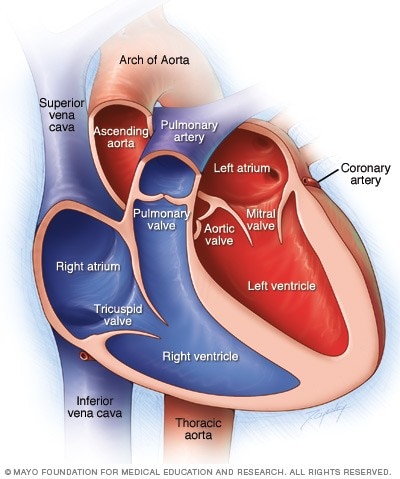
Pezeshkian is a cardiac surgeon by training. He knows what a human heart looks like when it stops beating. He knows the precise pressure required to restart one. There is a strange, jarring dissonance in that background when contrasted with the apparatus of state he now represents—an apparatus intimately familiar with the machinery of death and suppression.
When he looks out over the General Assembly hall, what does he see? Does he see an audience of adversaries waiting for him to stumble? Does he feel the ghost of his own medical career, a life spent mending individual bodies, now tasked with navigating a body politic tearing itself apart?
We will never truly know. But we know the cost of failing to understand each other.
The decision to let him walk those halls, past the protesters and the camera crews, is a concession to reality. It acknowledges that you cannot bomb a problem into permanent silence, and you cannot wish away a regional power by locking the front door.
As the motorcade pulls away from the curb, leaving behind a swirl of autumn leaves and the sharp odor of burnt rubber, the city returns to its frantic rhythm. The barricades will eventually come down. The diplomats will fly home. The transcripts will yellow in archives.
But the tension remains, humming quietly beneath the pavement, waiting for the next time the world's doors open to those who wish it harm.