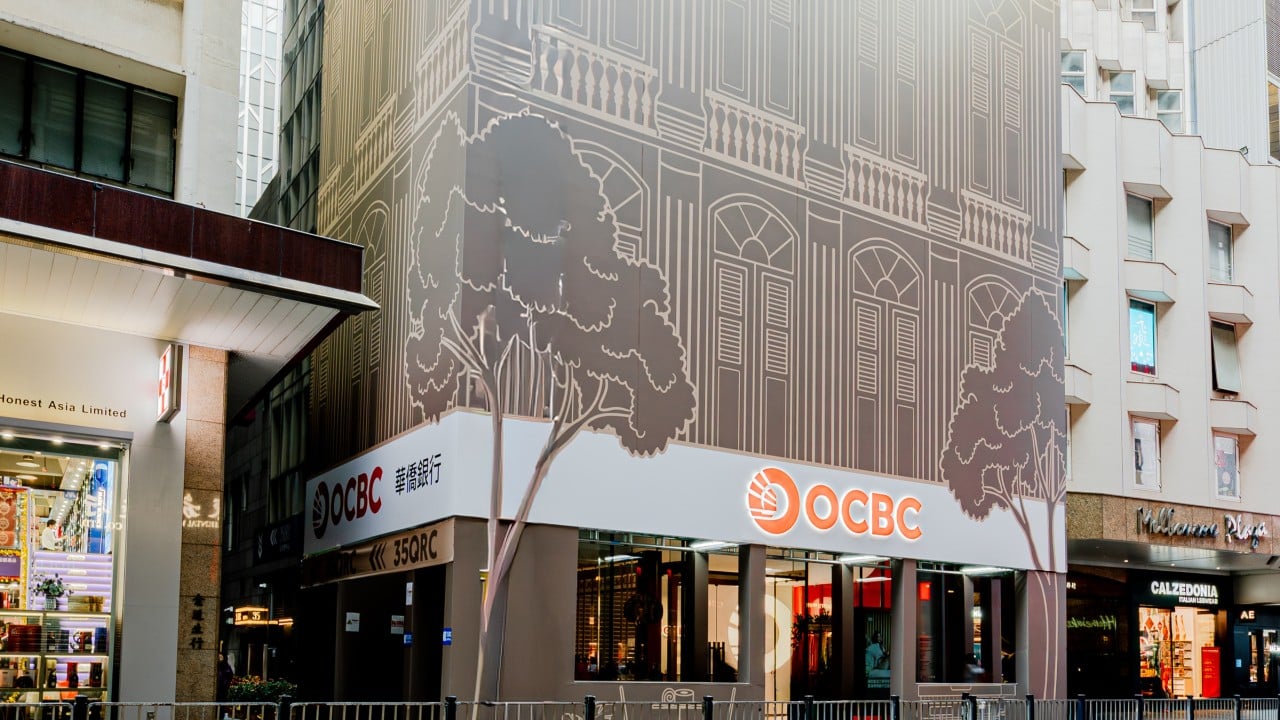
Walk down Queen’s Road Central in Hong Kong on a Tuesday morning and you will see the same ritual repeated a thousand times. Men and women in charcoal suits hurry past glass facades, their eyes locked on glowing rectangles in their palms. Money moves here with the speed of thought. It is digital, invisible, and increasingly detached from the hands that earn it. For decades, the retail bank was a place of utility—a sterile room with a queue, a velvet rope, and a ticking clock. It was a chore. You went there because you had to, not because you wanted to stay.
But something shifted in the air near the Landmark. The old guard realized that while they had mastered the math of wealth, they had forgotten the pulse of it. OCBC Hong Kong looked at the soaring skyscrapers and the frantic pace of the city and saw a void. They didn't see a need for more ATMs. They saw a need for a sanctuary.
The Death of the Counter
Consider a woman named Elena. She is a fictional composite of the people I see every day in the Central District—an entrepreneur who balances venture capital meetings with a curated taste for mid-century modern art. For Elena, the traditional bank is a friction point. It represents paperwork and the smell of industrial carpet. When she enters the newly reimagined OCBC space, the sensory shift is jarring.
The smell of stale air and paper is gone. Instead, there is the scent of roasted coffee and the quiet hum of a space that feels more like a private club than a financial institution. This isn't a cosmetic change. It is a fundamental pivot in how we value human time. By blending lifestyle elements—lounge seating, art galleries, and high-end hospitality—into the physical branch, the bank is making a quiet admission: money is a means, but experience is the end.
This strategy addresses a growing irony in the digital age. As we move all our transactions to apps, the "physical" becomes a premium. If you are going to bother leaving your home or office to talk about your life's savings, that conversation shouldn't happen across a cold, high-topped counter. It should happen over a pour-over coffee in a chair that invites you to linger.
Wealth is Not a Number
The problem with the "finance only" model is that it treats a client’s life like a spreadsheet. But spreadsheets are boring. They don't capture the reason why someone wants to grow their capital. People don't want money for the sake of numbers; they want the freedom, the security, and the aesthetic joys that money facilitates.
OCBC’s integration of lifestyle into their Hong Kong presence is a calculated move to bridge that gap. By hosting exclusive events, wine tastings, and art showcases, they are inserting themselves into the "why" of wealth. They are becoming the curator of the life their clients are working to build. It turns the bank from a vault into a partner.
There is a psychological weight to this. When a bank invests in the beauty of its surroundings, it signals a long-term commitment to the client’s well-being. It says, "We understand the world you live in." It’s an exercise in empathy.
The Invisible Stakes of the High Street
Retail banking is currently fighting for its soul. With the rise of neo-banks and purely digital platforms, the traditional branch is an endangered species. If a branch is just a place to deposit a check, it is obsolete.
The stakes are higher than just real estate. If we lose the physical connection to our financial lives, we lose the nuance of advice. You can’t get a feel for a client’s hesitation through a chatbot. You can’t see the spark of excitement about a new business venture via a push notification.
By creating a "Premier" experience that feels like a boutique hotel, OCBC is doubling down on the human element. They are betting that even in a world of high-frequency trading and AI-driven portfolios, humans still crave a sense of belonging. They are betting that a client who feels at home is a client who stays.
A New Kind of Currency
Let’s look at the mechanics of this shift. It isn't just about putting a sofa in the lobby. It’s about the "Lifestyle" ecosystem. In Hong Kong, space is the ultimate luxury. By offering a place where a client can hold a quiet meeting or simply decompress between appointments, the bank is offering a new kind of currency: peace.
The design language used in these spaces reflects a departure from the "fortress" architecture of the 1990s. The glass is clearer. The lighting is warmer. The barriers between staff and clients are intentionally thinned. It reflects a shift in power. The client isn't a petitioner asking for a loan; they are a guest being welcomed into a partnership.
I remember standing in one of these redesigned hubs and watching a young professional. He wasn't looking at a ticker tape. He was looking at a piece of contemporary sculpture on the wall while talking to an advisor. The conversation wasn't about interest rates, at least not at first. It was about legacy. It was about what he wanted his life to look like in ten years.
That is the magic trick. By changing the environment, you change the nature of the conversation.
The Risk of Getting It Wrong
Of course, there is a danger. If the coffee is good but the financial advice is mediocre, the whole thing falls apart. The "lifestyle" element cannot be a distraction; it must be an enhancement. It is a high-wire act. You have to maintain the rigor of a global financial institution while projecting the effortless grace of a concierge.
But the alternative is worse. The alternative is becoming a utility—like water or electricity. Utilities are chosen based on price alone. There is no loyalty to a utility. By weaving itself into the cultural and social fabric of Hong Kong, OCBC is attempting to build something sturdier than a brand. They are building a relationship.
This isn't just for the ultra-wealthy, either. The "lifestyle" approach is a signal to the next generation of earners. The Gen Z and Millennial cohorts in Hong Kong don't value the stuffy, wood-paneled offices of their parents. They value authenticity and integration. They want their brands to reflect their values and their tastes.
Beyond the Transaction
We are witnessing the end of the transactional era. We are entering the era of the "Atmosphere."
In this new world, the bank that wins is the one that understands that a person’s financial life is inseparable from their personal aspirations. You can’t talk about one without the other.
The glass walls that once separated the banker from the public are being replaced by a more fluid, open philosophy. It recognizes that in a city as dense and intense as Hong Kong, the most valuable thing a bank can offer is a moment of clarity.
As the sun sets over Victoria Harbour, the lights in the new OCBC centers don't feel like the harsh fluorescents of a counting house. They glow with the soft warmth of a living room. Outside, the city continues its frantic, breathless race. But inside, behind the heavy glass and the quiet art, there is a different rhythm. There is a sense that the money is finally working for the person, and not the other way around.
The silk chair isn't just a place to sit. It is a statement of intent. It is the realization that the most important asset any bank can manage isn't the gold in the vault, but the human being sitting right in front of them.