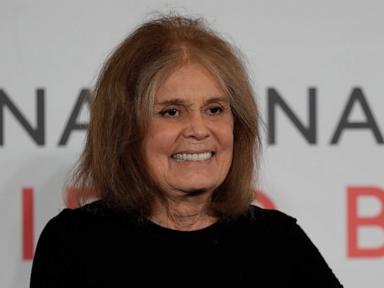
Gloria Steinem didn't just report on the world; she dragged it kicking and screaming into a conversation about basic human fairness. Passing away at her home in New York City at the age of 92, she leaves behind an intellectual footprint that fundamentally altered how society views gender, power, and autonomy. Most mainstream retrospectives treat her like a polished museum piece, reducing a sharp, fiercely political organizer into an easily digestible icon of aviator glasses and center-parted hair. That version misses the grit. She was an entrepreneur of social change who understood that real disruption happens on the ground, not in polite drawing rooms.
Her journey into the belly of institutional sexism started long before she became a household name. Born in Toledo, Ohio, in 1934, she spent much of her youth navigating an unstable household, acting as a caretaker for her mother. That early burden shaped a lifelong aversion to traditional domestic traps that demanded women sacrifice their identities. When she broke into journalism, the industry treated women as decoration or lifestyle advice columnists. Steinem exposed that rot from the inside.
Take her legendary 1963 undercover assignment. Posing as a Playboy Bunny for eleven days to write "A Bunny's Tale" for Show magazine, she didn't just poke fun at the absurdity of the uniform. She laid bare the grinding poverty wages, the humiliating medical checks, and the explicit sexual harassment that corporations inflicted on female staff. It wasn't a cute stunt. It was a masterclass in investigative reporting that proved systemic exploitation was hiding in plain sight behind a veneer of glamour.
Building the Infrastructure of Resistance
Writing essays wasn't enough for her. Steinem knew that shifting culture required building real institutions that could outlast political backlash. In 1971, alongside heavyweights like Betty Friedan, Shirley Chisholm, and Bella Abzug, she co-founded the National Women's Political Caucus. She didn't want women asking for a seat at the table. She wanted them to flip the table over entirely.
That same year saw the birth of Ms. magazine. Mainstream media outlets laughed off the concept, assuming women only cared about recipes, marriage tips, and cosmetics. Ms. proved them spectacularly wrong. It talked openly about domestic violence, workplace discrimination, and equal pay. Crucially, an early issue featured an unvarnished list of women—including Steinem herself—who publicly stated they had undergone illegal abortions, directly challenging the state-enforced tyranny of unwanted pregnancy before the landmark Roe v. Wade ruling.
Confronting the Blind Spots
Honoring a legacy like Steinem's means acknowledging where she evolved. Early second-wave feminism had a massive blind spot regarding race and class, often centering the specific grievances of white, middle-class women. Steinem didn't dodge this critique. She listened. Later in life, she frequently reminded interviewers that women of color essentially invented modern intersectional feminism. She learned to expand her scope, recognizing that reproductive freedom, racial justice, and labor rights are completely inseparable.
Her personal life also served as a laboratory for her theories. She famously criticized marriage as an institution built on unequal labor, stating that women wouldn't achieve equality outside the home until men pulled their weight inside it. She stayed single for decades, choosing her own path, before marrying environmentalist David Bale when she was 66 years old. Critics called it a contradiction. She called it a choice, proving her core thesis: true liberation means having the autonomy to live life on your own terms at any age.
The Work That Remains
Tributes will pour in from politicians and corporate boards who now find it safe to praise her. Don't let them sanitize her radicalism. Steinem was arrested for protesting apartheid, she fought against female genital mutilation globally, and she stood shoulder-to-shoulder with indigenous activists fighting to protect their land. She understood that power never concedes anything without a demand.
The best way to respect what she built isn't posting a nostalgic quote on social media. It's looking at the current dismantling of bodily autonomy, the widening economic inequality, and the persistent violence against women, and deciding to push back with the exact same unyielding clarity she brought to every room she entered. The signal fires are lit. Pick up the match.