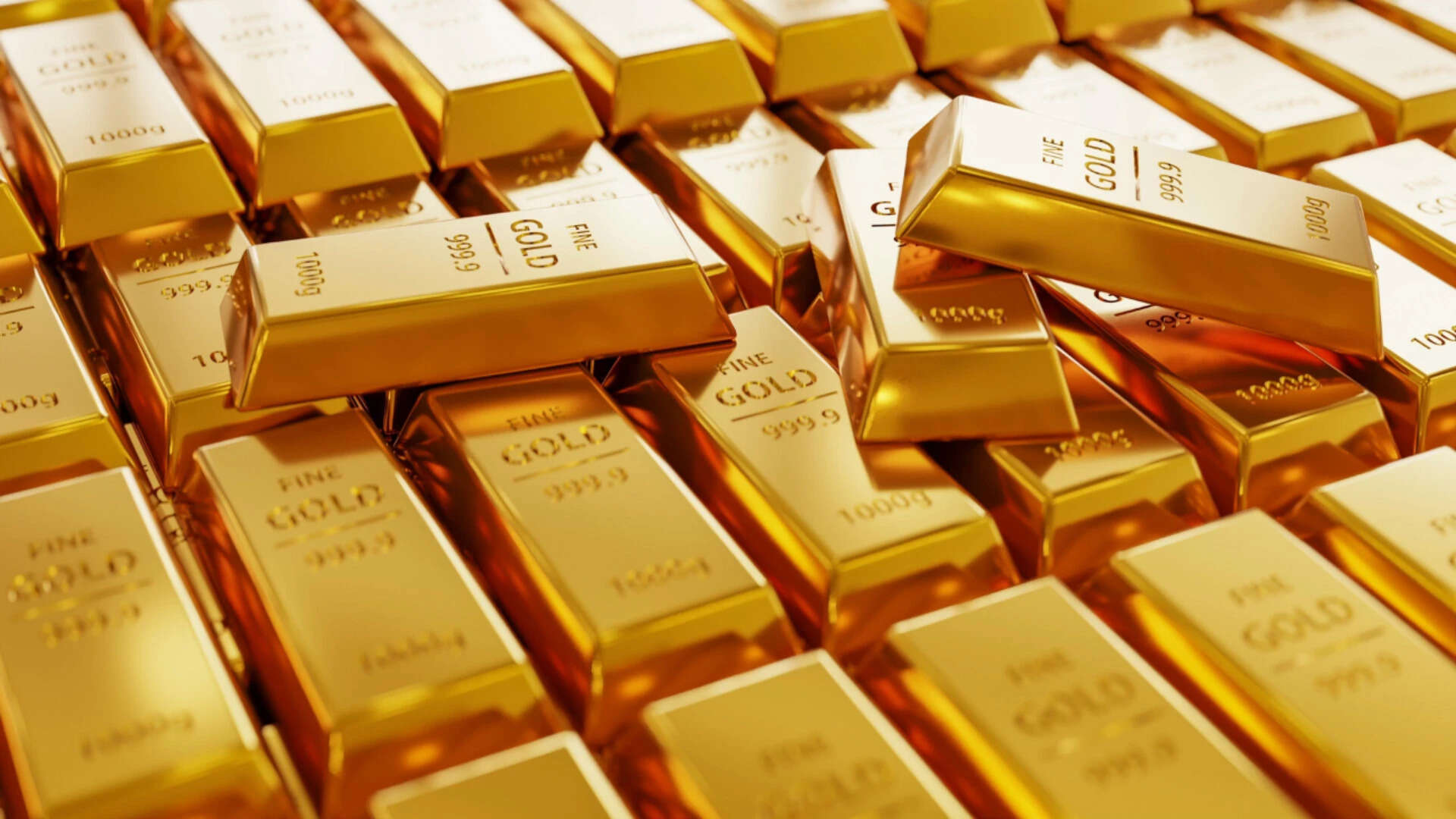
Pop science articles love a clean, comforting narrative. They peddle the cozy idea that gold survives the ages because of some magical, intrinsic perfection—a "self-protecting surface" that keeps it pristine while everything else rots.
It is a beautiful story. It is also fundamentally wrong. Also making headlines in related news: The Breath We Give the Water.
The lazy consensus tells you that gold never tarnishes, treating the element like a supernatural anomaly. But if you have ever worked with industrial-scale precious metals, managed high-end tech supply chains, or looked at ancient coinage under an electron microscope, you know the truth is far messier. Gold does not have a magical shield. In fact, under the right conditions, gold degrades, bonds with impurities, and fails just like any other metal.
The myth of imperishable gold is not just bad chemistry; it is a marketing narrative that blinds product designers, investors, and engineers to how precious metals actually behave in the real world. More details on this are detailed by Mashable.
The Chemistry They Conveniently Ignore
To understand why the "self-protecting surface" narrative is nonsense, we have to look at basic thermodynamics. The popular consensus confuses standard reduction potential with absolute immunity.
Yes, elemental gold ($Au$) is a noble metal. Its outer electrons are tightly bound, meaning it resists direct oxidation under normal atmospheric conditions. It does not form a passive oxide layer the way aluminum or titanium does. When a science writer claims gold has a "self-protecting surface," they are confusing gold with metals that actually passivate. Aluminum forms a microscopic layer of aluminum oxide ($Al_2O_3$) that prevents further corrosion. Gold does nothing of the sort. It simply sits there, chemically inert to oxygen.
But inertness is not invulnerability.
Introduce gold to harsher environments, and the illusion shatters. Expose it to aqua regia—a mix of nitric and hydrochloric acid—and it dissolves readily. More importantly for everyday applications, gold reacts aggressively with cyanides and halogen gases like chlorine and bromine. If you expose "pure" gold to volatile sulfur compounds over long periods, you will absolutely see a dark film form.
The Purity Trap: Why Your 24K Gold Stays Dirty
Here is a reality check from the jewelry and industrial minting sectors: pure gold is almost non-existent outside of highly controlled physics laboratories.
Even standard investment-grade bullion ($99.99%$ pure) contains trace amounts of iron, copper, silver, and palladium. When people point to an old gold coin and marvel that it "never tarnished," they are ignoring the red and brown spots creeping across the surface. Numismatists call these "copper spots" or "gold rust."
Imagine a scenario where a manufacturing team selects gold plating for electrical contacts, assuming it guarantees zero degradation. If the plating process is even slightly flawed, copper from the substrate layer will migrate through the gold via grain boundary diffusion. Once that copper reaches the surface, it oxidizes. The result? A tarnished, failed contact, despite being covered in gold.
I have seen electronics manufacturers lose millions in hardware failures because their engineering teams bought into the myth that gold fixes everything. They treated gold like a magic blanket, ignoring the substrate interaction and the porosity of the plating.
The Real Cost of the Noble Metal Illusion
The tech sector uses gold extensively because it is highly conductive and does not oxidize in air. But treating gold as an unassailable standard creates massive inefficiencies.
- Over-engineering: Designers often specify gold plating thicknesses far beyond what is required, wasting capital to guard against atmospheric threats that could be mitigated with better housing design or cheaper alloys.
- Neglecting Alternative Materials: Ruthenium, rhodium, and palladium often offer superior wear resistance and comparable chemical stability at different price points, yet they are ignored because gold carries the weight of historical obsession.
- Recycling Blindspots: The belief that gold is indestructible leads to sloppy e-waste processing. Gold recovery from circuit boards requires aggressive chemical stripping precisely because the gold has bound itself to other elements during years of thermal cycling.
Let us dismantle the popular "People Also Ask" consensus on this topic.
Does gold ever tarnish?
Yes. While pure gold does not oxidize in clean air, the alloys used in 99% of real-world applications tarnish easily as the base metals (copper, silver) react with oxygen and sulfur. Furthermore, even pure gold degrades when exposed to specific industrial pollutants and halogens.
Why did my gold chain turn black?
Because you do not own a solid block of unreactive physics-lab gold. You own an alloy. The silver and copper mixed into the jewelry are reacting to your sweat, skin oils, and ambient humidity.
The Trade-off of True Inertness
If you want a metal that truly forms a self-protecting skin, look at titanium or stainless steel. They are dynamic. They heal themselves when scratched by drawing oxygen from the environment to rebuild their oxide layers.
Gold is passive. It does not heal. If it is contaminated during the refining process, or if it is exposed to an environment that exceeds its electrochemical threshold, it fails permanently. It offers no self-repair mechanism.
Relying on gold because it is traditionally deemed "immortal" is a lazy engineering shortcut. Stop looking at materials through the lens of alchemy and start looking at them through the lens of phase diagrams and chemical kinetics. Stop treating gold like a miracle, and start treating it like the volatile, high-maintenance element it actually is.