The air in the negotiation room doesn’t smell like history. It smells like stale coffee and expensive wool. There are no soaring soundtracks or cinematic lighting cues when the fate of millions hangs in the balance. Instead, there is the scratching of pens and the heavy, rhythmic ticking of a clock that seems to be counting down to something no one wants to name.
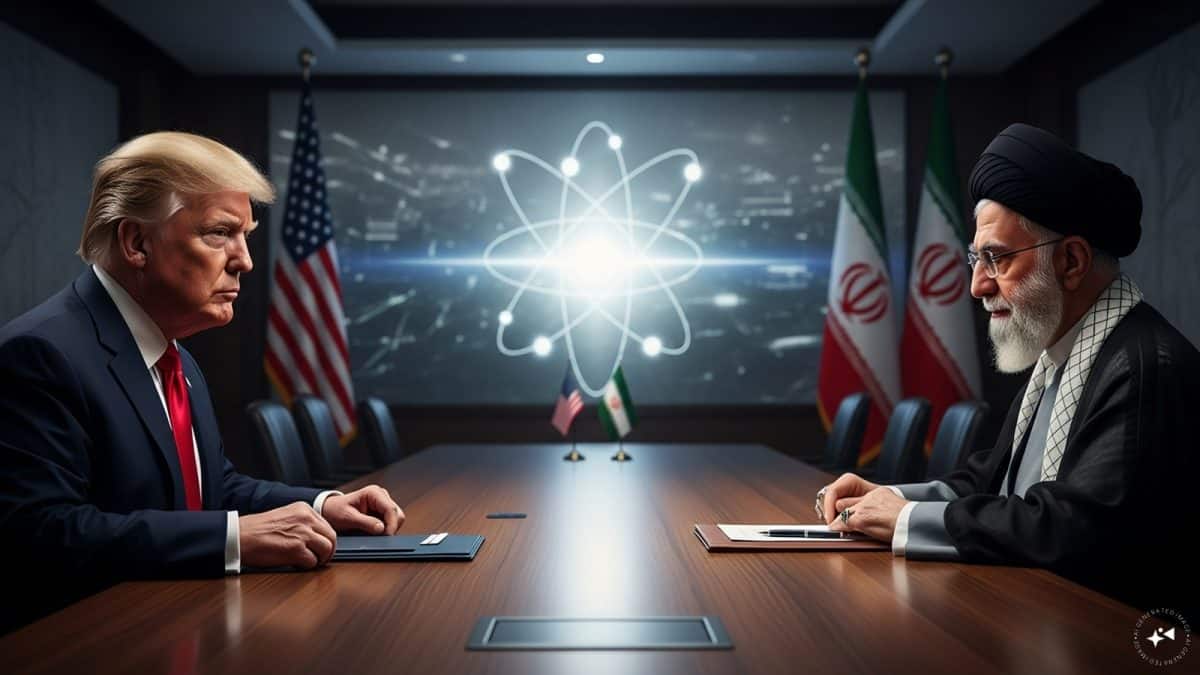
Across a polished mahogany table, men in dark suits trade maps and spreadsheets. On one side, the Americans—representative of a superpower that views the world through the lens of maximum pressure and strategic red lines. On the other, the Iranians—representatives of a besieged economy, masters of the long game, looking for a way to breathe without looking like they are gasping.
The latest reports from these closed-door sessions suggest something radical. Tehran didn't just come to the table with a white flag or a defiant fist. They came with a catalog. They offered Donald Trump a "commercial bonanza."
It is a move of pure, calculated desperation.
Consider the merchant in a Tehran bazaar. Let’s call him Reza. For decades, Reza has sold hand-woven rugs, their patterns telling stories of a Persian empire that once stretched to the horizon. Today, Reza watches the exchange rate of the rial like a man watching a slow-motion shipwreck. When the sanctions tighten, the price of milk climbs. When the warships move into the Strait of Hormuz, the tourists disappear. For Reza, "geopolitics" isn't an abstract concept discussed in Washington think tanks. It is the empty chair in his shop and the thinning soles of his children’s shoes.
The Iranian leadership knows this. They know that the street has a memory and a limit. To avoid a kinetic war—the kind with missiles and body bags—they are trying to pivot to a commercial war, or rather, a commercial peace. They are betting on the one thing they believe defines the American President: the soul of a dealmaker.
The offer is startling in its transparency. Tehran is essentially saying: Stop squeezing our neck, and we will open our doors to your companies. We will give you the contracts. We will give you the infrastructure. We will make it worth your while to keep the bombers on the tarmac.
But the talks failed. The deal remains a ghost.
The failure of these negotiations isn't just a headline in a Sunday paper; it is a seismic shift in the tectonic plates of the Middle East. Why did the "commercial bonanza" fall flat? Because in the high-stakes poker of international diplomacy, trust is the only currency that actually matters, and currently, both sides are playing with counterfeit bills.
Washington views the offer as a Trojan horse. They see a regime trying to buy time, using the lure of profit to dismantle a sanctions regime that took years to build. They fear that a "business-first" approach ignores the ballistic missiles, the regional proxies, and the nuclear centrifuges that continue to spin in the dark. For the Americans, the "bonanza" is a bribe to look the other way while the underlying fire continues to smolder.
Tehran, conversely, feels the sting of a broken promise. They remember the 2015 nuclear deal. They remember the planes landing with pallets of cash and the brief, shining moment when it felt like the world was opening up. Then the ink dried, the administration changed, and the door slammed shut. From their perspective, why offer a "bonanza" to a partner who might walk away from the table before the first check is even cashed?
The human cost of this stalemate is staggering.
Imagine a young engineer in Isfahan. She is brilliant, educated, and trapped. She dreams of working for a global firm, of designing systems that connect people rather than isolating them. Every time a headline screams about failed talks, her future shrinks. She represents a generation that is being used as a bargaining chip. When the "commercial bonanza" fails, she is the one who loses the job that doesn't exist yet.
We often talk about "deals" as if they are static things—pieces of paper signed with gold pens. But a deal is a living ecosystem. It requires the belief that tomorrow will be more stable than today. By offering Trump a literal stake in the Iranian economy, Tehran was attempting to create a set of golden handcuffs. They wanted to make it so that hurting Iran would mean hurting American bottom lines. It was a play for "interdependence," a fancy word for making sure everyone has too much to lose to start shooting.
The irony is bitter. The very thing that might have prevented a war—economic integration—is the one thing the current political climate cannot tolerate. We are living in an era of "de-risking" and "de-coupling." The idea of American corporations building skyscrapers in Tehran or managing Iranian oil fields feels like a fever dream from a different century.
The numbers tell a story of missed opportunities. Iran sits on the world’s second-largest gas reserves and fourth-largest oil reserves. Its population is young, tech-savvy, and hungry for the world. In a vacuum, it is the ultimate "emerging market." In reality, it is a radioactive zone for investors.
The "bonanza" wasn't just about money. It was a psychological gambit. It was an attempt to speak the President's language, to translate complex Persian security concerns into the dialect of the boardroom. "You like winning? We will let you win. You like big numbers? We have them."
But diplomacy is rarely a straight line from A to B. It is a jagged, broken path through a forest of historical grievances. You cannot erase decades of "Death to America" chants with a promise of construction contracts. Similarly, you cannot erase the memory of a CIA-backed coup or decades of strangling sanctions with a few rounds of golf-course diplomacy.
The failure reached a crescendo when it became clear that the gap wasn't just about the terms of the deal, but the definition of the world. The U.S. wants a change in behavior. Iran wants a guarantee of survival. Those two goals are currently orbiting different suns.
As the delegates packed their bags and the black cars whisked them away to their respective embassies, the "commercial bonanza" remained on the table, gathering dust. It was a glimpse into an alternate reality—a world where the Persian Gulf is a hub of trade rather than a flashpoint for global conflict.
Back in the bazaar, Reza closes his shop early. The sun sets over the Alborz mountains, casting long, purple shadows over a city that is tired of waiting for a breakthrough. He doesn't know the specifics of the failed deal. He doesn't know about the "bonanza" or the specific demands of the State Department. He only knows that the price of bread went up again this morning.
He locks the heavy wooden doors and looks at the empty street. The silence is the loudest thing in Tehran. It is the sound of a missed heartbeat, the quiet echo of a future that almost was, and the chilling realization that when the talking stops, the only thing left to do is wait for the thunder.
The tragedy of the failed talks isn't found in the fine print of the rejected proposals. It is found in the eyes of the millions of people who realize that, for now, the gold stays in the ground, the ships stay in the harbor, and the shadow of the sword remains the only constant in an uncertain world.
There is no "next step" in a standoff this deep. There is only the slow, grinding reality of a status quo that satisfies no one and endangers everyone. The bonanza was a mirage, and the desert is only getting hotter.
A single, tattered rug sits in the window of a shop, its intricate silk threads catching the last light of day, a masterpiece of patience and skill that no one is coming to buy.