The cold metal of a carbon-fiber running blade feels nothing like human bone.
If you have ever stood beside a track on a damp Tuesday morning in Manchester, watching an athlete strap on a prosthetic limb, you know the sound it makes before the sprint begins. It is a sharp, mechanical click, followed by the heavy, rhythmic thud of synthetic rubber striking wet asphalt. To the casual observer sitting in a warm living room, watching through the flat, sanitized glow of a television screen, that image looks like pure triumph. It looks like the conquest of biology by sheer willpower.
And that exact image—the glossy, triumphant silhouette of the Paralympic sprinter—recently stepped into the center of a ferocious storm in Westminster.
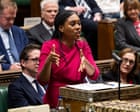
When Conservative leader Kemi Badenoch defended the use of amputee athletes to justify sweeping cuts to UK disability benefits, framing the rhetoric as a "message of hope," the political fallout was immediate. Critics saw callousness. Supporters saw aspiration. Yet beneath the shouting matches in the House of Commons and the endless cycle of live-blogged soundbites, something far quieter and much more dangerous was happening to the people whose lives actually depend on the state's safety net.
To understand why invoking elite athletes in a debate over Personal Independence Payment—or PIP—cuts so deeply, you have to step away from the Westminster bubble. You have to look at the invisible math of living with a disability in Britain.
The Architecture of a False Choice
Consider a hypothetical scenario, grounded in the daily realities documented by disability charities across the United Kingdom.
Meet Sarah. She is thirty-four, lives in a terraced house in Leeds, and lost her left leg below the knee after a severe infection four years ago. She does not own a thirty-thousand-pound J-shaped running blade engineered by aerospace specialists. She owns an everyday NHS prosthetic socket that, by four o'clock in the afternoon, rubs her residual limb raw until the skin blisters and bleeds.
On good days, Sarah works part-time as a graphic designer. On bad days, swelling makes it impossible to put her leg on at all, leaving her reliant on crutches to navigate a narrow hallway to the bathroom. Her disability benefit does not fund luxury holidays. It pays for the heated blanket that eases her phantom limb pain in January, the extra taxi fares when the local bus ramp is broken, and the specialized skincare products that keep her upright.
Now, place Sarah next to the rhetorical framing offered by modern political austerity.
In the political imagination, disabled people are frequently sorted into two tidy, fictional boxes. In the first box sit the tragic victims, entirely helpless and deserving of pity. In the second box sit the "superhumans"—the gold medalists who defy gravity, shatter world records, and prove that physical barriers are merely states of mind.
When politicians point to the second box to argue for shrinking the financial support offered to everyone else, they perform a sleight of hand. They turn exceptional human achievement into a benchmark for basic survival.
Wait.
Look closely at what happens when inspiration becomes a policy tool. If a bilateral amputee can run a hundred meters in under eleven seconds, the unspoken logic goes, why should the taxpayer subsidize the daily living costs of someone with a single amputation, or chronic fatigue, or severe rheumatoid arthritis? Hope, in this context, stops being an emotion. It becomes a fiscal excuse.
The Economics of Invisible Effort
I still remember the first time I watched a close friend try to fill out a UK disability assessment form. We sat at a kitchen table cluttered with pill bottles, hospital appointment letters, and a half-drunk mug of tea that had gone cold hours earlier. The document was dozens of pages long, dense with clinical traps disguised as simple questions. How far can you walk? Can you prepare a simple meal?
The anxiety in that room was physical. You could taste it in the stale air.
In Britain, the Department for Work and Pensions evaluates disability not by the diagnosis a doctor writes on a chart, but by how a condition affects specific daily activities. It is a system built on scrutiny, where applicants must prove their worst days over and over again just to maintain a baseline of dignity. According to official government statistics, millions of people in the UK rely on disability benefits to offset the unavoidable extra costs of impairment—costs that disability equality charity Scope has consistently calculated run into hundreds of pounds every single month, even after welfare payments are factored in.
A wheelchair does not run on air. A neurological condition does not pause because the Treasury needs to balance its books before the autumn statement.
Yet political rhetoric rarely deals in the unglamorous currency of wet wipes, grab rails, and elevated heating bills. Politicians love stories of individual grit because grit is free. A Paralympic podium finish makes for a stirring conference speech; an honest conversation about adult incontinence pads or the exhaustion of chronic pain does not.
Historically, this is nothing new. Sociologists and disability rights historians have long documented what they call "inspiration porn"—the cultural habit of objectifying disabled people for the emotional gratification of non-disabled observers. During the post-industrial shifts of the twentieth century, and acutely during the austerity drives following the 2008 financial crash, welfare debates in Britain repeatedly leaned on narratives of moral desert. The "striver versus skiver" dichotomy became the dominant lens through which poverty and disability were viewed.
If you looked like you were striving—if you were sweating on a track under stadium lights—you were celebrated. If you were quietly enduring an invisible illness behind drawn curtains, you were viewed with suspicion.
What the Stadium Lights Hide
There is a profound irony in using elite para-athletes as poster children for welfare reform, and any athlete will tell you what it is.
Elite sport is the most heavily subsidized, structurally supported environment on earth.
An Olympic or Paralympic contender does not wake up in an unadapted flat, fight a six-month battle with a local council for a ramp, and then casually stroll onto a podium through pure optimism. Behind every blade runner stands an army of physiotherapists, biomechanists, nutritionists, prosthetists, and funded governing bodies. Their equipment is custom-molded using lasers and carbon composites, maintained by technicians who adjust the alignment down to the millimeter.
To strip away financial support from ordinary disabled citizens while pointing at a heavily funded elite athlete is like taking away a commuter's bus pass because a Formula One driver managed to reach two hundred miles an hour.
Consider what happens next when that logic bleeds into actual legislation.
When disability benefits are tightened—whether through stricter eligibility criteria, frozen payment rates, or replacing cash support with vouchers—the immediate result is rarely a sudden surge of disabled people entering the workforce. Instead, the result is isolation. Without the money to pay for accessible transport or personal assistance, people stop leaving their homes. They drop out of community groups. They give up the very part-time jobs they were clinging to because they can no longer afford the taxis required to get there when their pain flares up.
The policy achieves the exact opposite of its stated goal. By cutting the lifeline in the name of encouraging independence, the state actively manufactures dependency.
The Weight of a Word
Let us be honest about why this debate feels so disorienting to watch from the outside. Most people want to believe in hope. Nobody wants to live in a country where disability is treated as a life sentence of misery, or where ambition is discouraged. When Kemi Badenoch spoke of offering a message of hope, she was tapping into a genuine cultural desire for optimism—a belief that human potential should never be written off.
That impulse is understandable. Even admirable, in a vacuum.
The confusion arises because political language routinely blurs the line between potential and provision. Believing that a disabled person can achieve great things is a cultural attitude; ensuring they have enough money to heat their home and buy groceries is a material obligation. You cannot pay a British Gas bill with optimism. You cannot barter a motivational speech for a replacement wheelchair tire.
When the two concepts are mashed together, the public is subtly encouraged to see welfare not as a structural bridge that makes achievement possible, but as a hammock that makes people lazy.
Think about the psychological toll that takes on the millions of Britons living with long-term health conditions. Imagine turning on the evening news, exhausted after spending three hours just trying to get dressed and make breakfast, only to hear a national leader imply that your struggle is merely a failure of imagination. Imagine realizing that the medalists you cheered for during the summer games are now being weaponized to justify taking sixty pounds a week out of your bank account.
It is a quiet, grinding betrayal.
Beyond the Podium
Real hope in disability policy does not look like a stadium full of cheering spectators. It looks utterly mundane.
It looks like a railway station where the lift actually works on a rainy Wednesday morning. It looks like an employer who understands that flexible hours are not a special favor, but a basic requirement for retaining talented staff with fluctuating conditions. It looks like a benefits system designed by people who have actually lived inside a body that does not always cooperate—a system that trusts doctors, reduces bureaucratic cruelty, and recognizes that financial stability is the floor upon which every human ambition is built.
If Britain truly wants to learn from its Paralympic champions, it should stop looking at their medals and start looking at their infrastructure. Those athletes succeed because society decided, deliberately and expensively, to remove the barriers standing in their way. They were given the right tools, the right medical care, and the right financial backing to thrive.
Until that same commitment extends to the quiet terraced houses in Leeds, the damp flats in Glasgow, and the kitchen tables piled high with incomprehensible assessment forms, talk of hope remains just noise.
Somewhere in a dimly lit bedroom tonight, a prosthetic leg is resting against a radiator, drying out before morning, while its owner stares at the ceiling, calculating whether they can afford to turn the heating up one more degree before dawn.