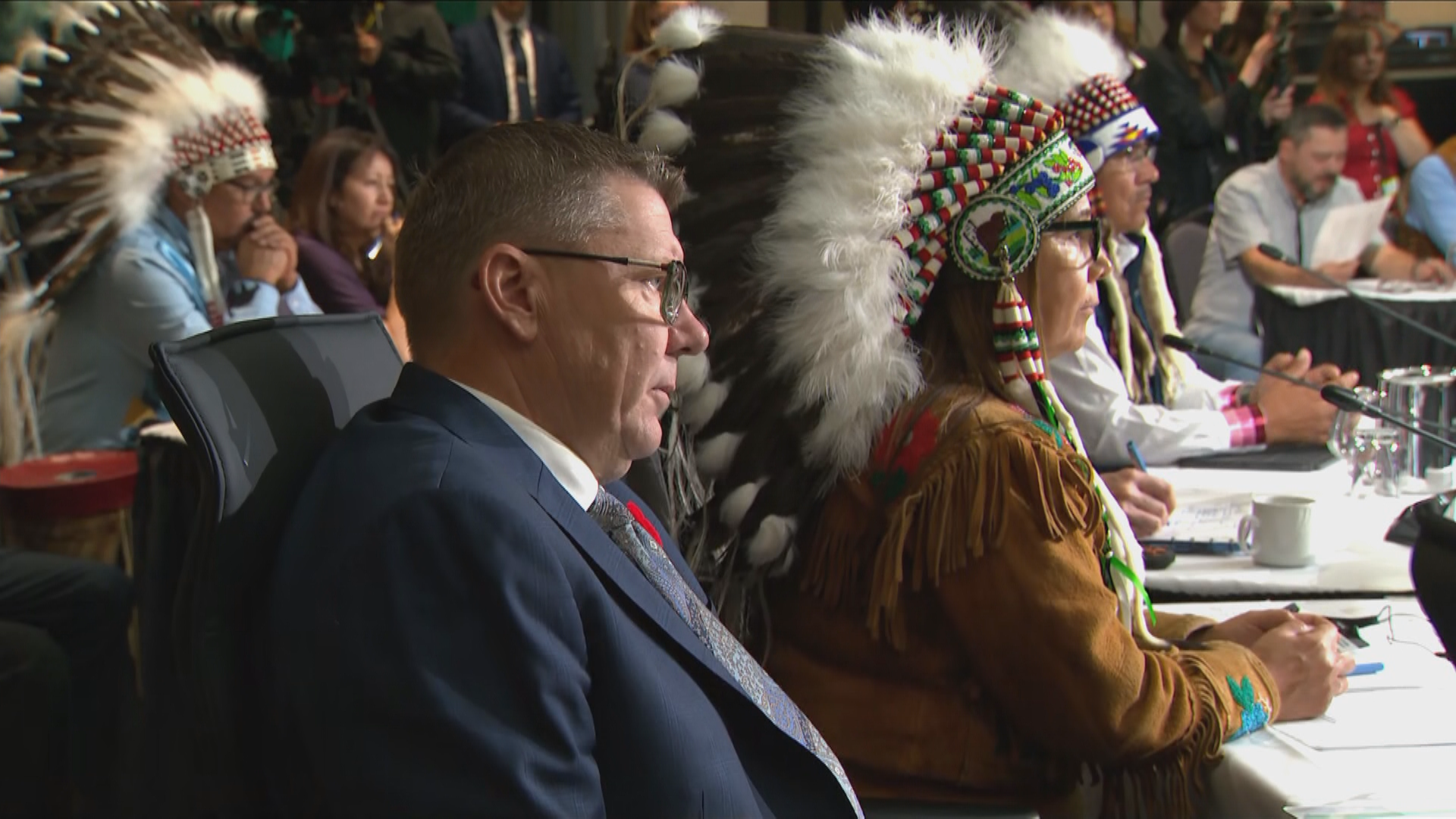
When Saskatchewan First Nations leaders convene in Ottawa to press federal officials on land rights and policing, the underlying conflict is not a routine political disagreement; it is a structural collision between federal fiduciary obligations, provincial resource jurisdiction, and the operational collapse of reserve-level public safety. Standard media coverage frames these summits as symbolic milestones or lists of grievances. In operational reality, these meetings represent high-stakes negotiations over capital allocation, statutory liability, and jurisdictional control within a system engineered for administrative gridlock.
To understand what actually happens when Saskatchewan tribal councils and the Federation of Sovereign Indigenous Nations (FSIN) bring land and policing portfolios to the federal capital, analysts must strip away diplomatic rhetoric and examine the two primary mechanisms driving the dispute: the financial and legal bottlenecks of Treaty Land Entitlement (TLE) and specific claims, and the structural underfunding of the First Nations and Inuit Policing Program (FNIPP).
The Jurisdictional Architecture of Saskatchewan Land Disputes
Land rights in Saskatchewan operate within a uniquely rigid legal matrix defined by the Numbered Treaties (specifically Treaties 2, 4, 5, 6, 8, and 10) and the Natural Resources Transfer Agreement (NRTA) of 1930. Unlike provinces where unceded territory forms the basis of litigation, Saskatchewan land claims center on contractual non-performance. The Crown promised specific acreage per family upon treaty adhesion, failed to survey or transfer the full allocation, and subsequently transferred control of Crown lands and natural resources to the provincial government via the NRTA without Indigenous consent.
This historical sequence created a three-party standoff that dictates every Ottawa summit:
- The Federal Liability: Under Section 91(24) of the Constitution Act, 1867, Ottawa holds exclusive legislative authority over "Indians, and Lands reserved for the Indians." Financial liability for historical treaty breaches sits squarely on the federal balance sheet.
- The Provincial Gatekeeper: Because the NRTA vested public lands and subsurface mineral rights in the Province of Saskatchewan, Ottawa cannot unilaterally transfer provincial Crown land to satisfy federal treaty debts.
- The First Nations Claimant: Sovereign nations hold validated legal entitlements to land and resource revenues, yet they face severe transaction costs when attempting to convert financial settlements into active reserve acreage.
The Mechanics of the Additions to Reserve Bottleneck
When Saskatchewan First Nations secure capital through specific claims or Treaty Land Entitlement agreements, the money alone does not restore territorial jurisdiction. To convert purchased fee-simple land into reserve status—thereby removing it from municipal tax rolls and placing it under First Nations governance—the land must pass through the federal Additions to Reserve (ATR) process.
The ATR pipeline functions as a classic administrative bottleneck. A single parcel transfer requires environmental site assessments, third-party interest resolutions (such as utility easements and grazing leases), municipal tax-loss compensation agreements, and provincial concurrence. Because each stage operates sequentially rather than concurrently, multi-year delays are the baseline outcome.
During these delays, First Nations bear the holding costs of fee-simple ownership—paying municipal property taxes on land legally designated to become tax-exempt reserve territory—while forfeiting the economic development window for commercial, agricultural, or resource-extraction projects. When leaders travel to Ottawa, their core demand is rarely just new settlement capital; it is the statutory streamlining of the ATR mechanism and the elimination of third-party vetoes that stall land conversion.
Subsurface Rights and the NRTA Friction
The economic stakes of Saskatchewan land negotiations escalate sharply when subsurface rights enter the equation. Saskatchewan’s economy relies heavily on potash, uranium, oil, and natural gas. Under the NRTA, the province collects royalties on these resources, while First Nations argue that the 1930 transfer illegally stripped them of resource-sharing rights embedded in the spirit and intent of the Numbered Treaties.
Furthermore, the Supreme Court of Canada’s duty-to-consult doctrine forces provincial and federal regulators to consult First Nations whenever Crown conduct might adversely affect treaty rights. However, consultation protocols frequently break down over the definition of economic accommodation. Provincial ministries treat consultation as a procedural checklist prior to issuing exploration permits, whereas First Nations view it as a prerequisite for equity participation and revenue sharing. Ottawa’s reluctance to intervene in provincial resource jurisdiction forces First Nations leaders to escalate the issue directly to federal cabinet ministers, demanding legislative enforcement of the United Nations Declaration on the Rights of Indigenous Peoples Act (UNDRIP) to override provincial regulatory inertia.
The Structural Failure of Reserve Policing Models
The second pillar of the Ottawa agenda—policing—reflects an acute operational crisis. Crime severity indexes in rural Saskatchewan consistently rank among the highest in Canada, with reserve communities experiencing disproportionate rates of violent crime, gang infiltration, and illicit drug trafficking. The root cause is not merely socioeconomic; it is an architectural flaw in how law enforcement is funded, governed, and deployed on reserves.
The Essential Service Deficit
Across non-Indigenous Canada, policing is legally defined and funded as an essential municipal or provincial service. Budgets scale automatically with population growth, inflation, and operational complexity. Under the federal First Nations and Inuit Policing Program (FNIPP), however, reserve policing is classified as a discretionary grant and contribution program.
This classification creates four cascading operational failures:
- Capital Starvation: FNIPP agreements historically restrict funding for critical infrastructure, leaving self-administered police services without modern detachment facilities, secure holding cells, or adequate fleet maintenance budgets.
- Compensation Disparities: Because funding envelopes are capped over multi-year cycles without automatic cost-of-living adjustments, First Nations police services cannot match the salary, pension, or disability benefit packages offered by the Royal Canadian Mounted Police (RCMP) or municipal forces. This turns Indigenous police services into uncompensated training academies; officers gain field experience on under-resourced reserves and subsequently transfer to municipal forces for higher pay and better institutional support.
- The Backfill Vacuum: Most Saskatchewan reserves are policed by the RCMP under the Provincial Police Service Agreement (PPSA) or Community Tripartite Agreements (CTAs). In rural detachments, vast geographic distances mean response times routinely stretch from 45 minutes to several hours. When an emergency occurs, officers are often patrolling alone without immediate backup, forcing tactical retreats rather than active intervention.
- Jurisdictional Blind Spots: Band bylaws passed under the Indian Act lack effective enforcement mechanisms. RCMP officers frequently decline to enforce band-specific bans on known drug traffickers or trespassers, citing unclear prosecutorial pathways and provincial court backlogs. Consequently, First Nations leadership possesses legal authority on paper without the coercive enforcement capacity required to maintain community order.
The Cost Function of Reactive Enforcement
The federal government’s refusal to legislate First Nations policing as an essential service produces a perverse economic outcome. By underfunding preventative, community-embedded policing—such as the File Hills First Nations Police Service, the sole self-administered Indigenous police force in Saskatchewan—Ottawa shifts the financial burden onto high-cost downstream systems.
When local policing fails to disrupt supply chains for fentanyl and methamphetamine entering rural reserves, the costs materialize elsewhere on the public balance sheet: emergency medical evacuations, acute trauma care, child welfare apprehensions, and provincial correctional facilities where Indigenous people comprise over 75 percent of the inmate population in Saskatchewan. From a purely fiscal standpoint, starving the FNIPP of permanent, statutory funding increases total federal and provincial expenditure per capita while degrading public safety outcomes.
Why Historic Ottawa Summits Fail to Produce Structural Change
Media narratives routinely describe high-level meetings between Prime Ministers, federal cabinet ministers, and First Nations leadership as "historic." In institutional analysis, the frequency of these historic meetings indicates systemic dysfunction rather than progress. When routine governance mechanisms work, leaders do not need emergency bilateral summits to secure basic infrastructure or process land transfers.
The failure of past summits to resolve Saskatchewan’s land and policing deficits stems from three structural misalignments inside the federal apparatus:
- Siloed Ministerial Mandates: Land claims sit with Crown-Indigenous Relations and Northern Affairs Canada (CIRNAC), reserve service delivery sits with Indigenous Services Canada (ISC), and policing falls under Public Safety Canada. Each department operates with distinct treasury board authorities, risk tolerances, and budget cycles. A commitment made by the Minister of Public Safety to expand Indigenous policing cannot be executed without Treasury Board approval and coordination with ISC for capital housing infrastructure—a cross-departmental synchronization that rarely occurs without direct Prime Ministerial intervention.
- The Bilateral vs. Trilateral Trap: Federal ministers frequently negotiate bilateral framework agreements with First Nations leaders in Ottawa, only to see implementation stall because the Province of Saskatchewan was excluded from the table. Without provincial buy-in on Crown land transfers, highway jurisdiction, and provincial court prosecution of band bylaws, bilateral federal commitments remain non-executable memoranda of understanding.
- Electoral Time Horizons vs. Generational Execution: Federal political cycles operate on two-to-four-year horizons, incentivizing announcements of lump-sum funding envelopes that generate immediate press coverage. Conversely, building a self-administered regional police force or clearing a decade-long ATR backlog requires ten-year statutory funding commitments and permanent regulatory amendments that survive changes in government.
Limitations of Legislative and Financial Remedies
Even if federal negotiators concede to the core demands presented by Saskatchewan First Nations leaders, substantial execution risks remain. Policy analysts must account for hard constraints that prevent immediate stabilization:
- The Recruitment Bottleneck: Passing federal essential-service legislation for First Nations policing will immediately unlock capital, but it will not instantly generate qualified personnel. Policing across North America faces a severe labor shortage. Expanding self-administered forces in Saskatchewan requires competing for a shrinking pool of recruits willing to work in remote, high-stress environments.
- Municipal Resistance to ATR: Accelerating Additions to Reserve transfers inevitably triggers friction with Saskatchewan rural municipalities (RMs) and urban centers concerned about tax-base erosion and regulatory fragmentation. Without standardized, front-loaded federal compensation formulas for municipalities, local governments will continue to use procedural objections to delay land conversions.
- Internal Governance Capacity: Rapidly transferring complex policing oversight and multi-million-dollar land portfolios to individual bands risks overwhelming local administrative capacity. Smaller First Nations often lack the internal legal, financial, and human-resources infrastructure required to manage independent police boards or commercial real estate holdings without pooling resources at the tribal council level.
Strategic Execution for Institutional Resolution
To move beyond cyclical summits in Ottawa, the negotiation framework must shift from discretionary political promises to binding statutory and fiscal mechanisms.
First, Public Safety Canada must transition the First Nations and Inuit Policing Program out of the grants-and-contributions model and enact federal essential-service legislation. This legislation must mandate statutory funding formulas indexed to crime severity, geographic dispersion, and inflation, while establishing strict parity in wages and pensions with the RCMP. Simultaneously, Saskatchewan tribal councils should consolidate policing governance into regional police commissions rather than fragmented band-by-band forces, creating the economies of scale necessary to recruit officers, manage specialized investigative units, and absorb administrative overhead.
Second, Crown-Indigenous Relations must decouple Additions to Reserve approvals from third-party municipal vetoes. Ottawa should establish a standardized, statutory tax-loss compensation fund paid directly by the federal treasury to affected municipalities upon land transfer, converting a multi-year negotiation into an automated accounting transaction. Where provincial Crown land is required to satisfy outstanding Treaty Land Entitlements, federal negotiators must tie infrastructure transfer payments to provincial cooperation on NRTA land releases, forcing trilateral execution rather than bilateral theater.