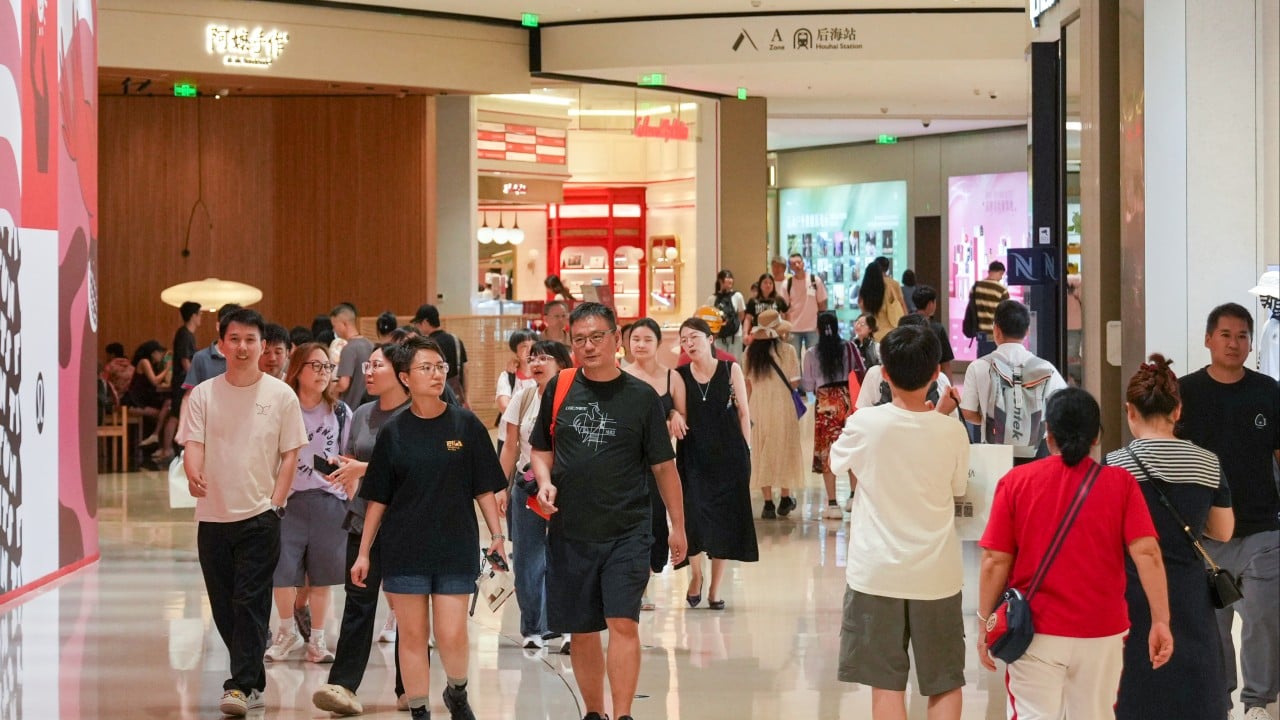
Mainstream media loves a mass-migration narrative. Every holiday weekend, the headlines write themselves. Thousands of Hong Kong residents cross the border into Shenzhen. The lazy consensus blames high local prices and cramped shops. Writers point to the mainland’s massive malls and hyper-attentive waitstaff as the death knell for Hong Kong commerce. They call it a structural shift, an inevitable economic surrender.
They are looking at the wrong data.
The crowd moving across the border for the July 1 holiday is not a sign of Shenzhen’s permanent superiority. It is a symptom of a temporary price arbitrage and a massive, decades-long failure of imagination by Hong Kong’s retail property cartels.
When you look past the surface-level panic, the reality becomes obvious. The current cross-border shopping craze is not sustainable, and the businesses panicking about it are exposing their own operational weaknesses.
The Illusion of the Mainland Bargain
Let’s dismantle the primary argument of the doom-mongers: value for money.
The narrative states that Shenzhen offers a superior experience because a dollar spent there goes twice as far. It is basic math, right? Wrong. It is a fundamental misunderstanding of asset depreciation and corporate subsidies.
The mainland retail boom is heavily propped up by artificially low commercial real estate rents and VC-subsidized tech platforms. The cheap coffee, the heavily discounted hotpot chains, and the ultra-low-cost beauty salons operate on margins that cannot survive long-term economic normalization.
Imagine a scenario where a Shenzhen mall offers free parking, deep discounts via digital coupons, and heavily subsidized subway connectivity. This works during an expansionary phase. But when the local governments scale back subsidies and developers face reality, those low prices vanish.
Hong Kong consumers are not shifting allegiance permanently. They are acting as rational, short-term economic tourists. They are exploiting a currency play. The Hong Kong Dollar, pegged to the US Dollar, holds immense purchasing power across the border right now.
But relying on currency fluctuations is a terrible basis for a long-term business strategy. The moment the macro-environment shifts, the price gap shrinks, and the friction of travel outweighs the savings. Crossing a border checkpoint, spending hours in transit, and navigating separate digital payment ecosystems is a high-friction experience. Consumers tolerate it now for a 30% discount. They will not do it for 10%.
The Real Culprit: The High-Rent Cartel
Hong Kong retailers love to blame the consumer. They complain that locals lack loyalty. They beg the government for handouts and consumption vouchers.
This is total deflection.
The real enemy of Hong Kong retail is sitting in the boardroom of the major property developers. For decades, Hong Kong's commercial real estate model has been extractive, not generative.
- Fixed-plus-turnover rents: Landlords demand a high baseline rent plus a cut of the store’s revenue.
- Monotonous tenant mixes: The same five luxury brands and cosmetics chains anchor every single mall from Causeway Bay to Tuen Mun.
- Zero-risk mentality: Landlords prefer empty storefronts over lowering rents for innovative, independent local concepts.
I have watched major lifestyle brands pull out of prime Hong Kong locations because the landlord demanded a 20% rent hike during a retail downturn. The brand did not close because the product was bad. It closed because the real estate math was broken.
Shenzhen did not win because its malls are inherently magical. Shenzhen won by default because Hong Kong landlords built boring, overpriced concrete boxes and assumed consumers had no other choice. The "more space" argument is a direct indictment of Hong Kong’s artificial scarcity of space, driven by land policy and developer greed.
Why the Service Quality Narrative is Flawed
The competitor pieces always feature a quote from a Hong Kong resident praising the hospitality in Shenzhen. "The staff smile here," they say. "They don't rush you out the door."
This praise ignores the economic reality of the service industry.
| Feature | Hong Kong Retail | Shenzhen Retail |
|---|---|---|
| Labor Dynamics | Acute shortage, high minimum wage, overworked staff | High labor supply, lower wages, hyper-monitored performance |
| Operational Goal | Maximize table turnover per square foot | Customer acquisition via heavy promotional spending |
| Real Estate Drag | Massive fixed overhead forcing rushed interactions | Lower fixed overhead allowing for longer dwell times |
Hong Kong service is brisk because the real estate costs demand high velocity. A restaurant must turn tables four times a night just to break even on the lease. When a waiter rushes you, they are not being rude; they are trying to keep the business solvent under the weight of an extortionate rent.
Conversely, the hyper-attentive service in mainland malls relies on a vast pool of cheap labor and digital surveillance systems that track a worker's every move. It is a high-stress, low-wage model that looks great to a casual weekend visitor but is highly vulnerable to labor market corrections.
Chasing this specific style of service is a race to the bottom for Hong Kong. Local businesses cannot compete on sheer volume of labor. Trying to mimic the mainland service model is a guaranteed way to go bankrupt faster.
The Actionable Pivot for Hong Kong Businesses
Stop competing on scale. Stop competing on price. You will lose.
If you run a consumer business in Hong Kong, your strategy cannot be "let's wait for the government to fix this" or "let's launch a 10% discount campaign." You need to change the fundamental value proposition.
1. Kill the Mass-Market Focus
If your business model relies on selling low-margin goods to millions of people, move your operations to the mainland completely. Hong Kong is no longer a viable hub for low-margin mass retail. Focus exclusively on high-margin, hyper-curated, or highly specialized offerings that cannot be easily replicated by a mega-mall in Futian.
2. Force Landlord Capitulation
The only way to bring down commercial rents is through collective vacancy. Retailers need to stop accepting predatory lease terms. Walk away from bad deals. Let the malls sit empty until developers realize that a vacant unit yields exactly zero dollars per square foot.
3. Lean Into Frictionless Efficiency
Do not try to be warm and fuzzy if your margins don't allow it. Be fast. Be precise. Use technology to remove human interaction where it adds no value, allowing your limited staff to focus entirely on high-value customer touchpoints.
The Wrong Question
The media asks: "How can Hong Kong win back the weekend shoppers?"
That is the wrong question. It assumes those weekend shoppers were highly profitable to begin with. High-volume, low-spend foot traffic looks good on a graph, but it does not build sustainable retail ecosystems.
The real question is: "How does Hong Kong redefine its commercial space to thrive on lower volume and higher value?"
The current cross-border trend is a market correction. It is flushing out the lazy, the inefficient, and the businesses that relied solely on a captive audience. The exodus isn't a tragedy. It is a necessary clearing of the field.
Stop whining about the line at the border control points. Fix your business model or get out of the way.