The heavy glass doors of the Calgary Petroleum Club don’t just swing open; they yield. Inside, the air carries the faint, ghost-like scent of expensive leather and old decisions. Men and women sit in deep armchairs, nursing coffees that have gone cold, eyes fixed on the flickering green and red numbers of the ticker. They aren't just looking at prices. They are looking for a pulse.
For decades, the Canadian oilpatch has been defined by a specific kind of grit. It’s the grit of a rig hand in the Athabasca mud at three in the morning, and the grit of a CEO staring down a balance sheet that looks like a crime scene. Right now, that grit has turned into a pressurized, suffocating stillness. Everyone is waiting.
Deloitte’s latest pulse check on the industry suggests that this silence isn't a sign of death. It is the indrawn breath before a sprint.
The Ghost of 2014
Consider a man we’ll call Robert. Robert spent thirty years building a mid-sized service company in the heart of Alberta. He survived the crashes of the eighties. He thrived in the boom of the early 2000s. But the last few years have felt different. To Robert, the current market isn’t just "volatile"—a word analysts love because it sounds clinical. To him, it feels like trying to build a house in a hurricane.
He wants to sell. He’s tired. He wants to see his grandkids in Kelowna without checking the Western Canadian Select (WCS) differential every twenty minutes. But who is buying? And at what price?
The problem isn't a lack of oil. It’s a lack of certainty. When interest rates climbed, the cost of "doing the deal" skyrocketed. When pipeline capacity remained a question mark, the value of the product stayed depressed. Robert sits on a gold mine, but in the current climate, that gold is buried under a mountain of geopolitical anxiety and high borrowing costs.
But the mountain is starting to shift.
The Math of the Mid-Market
The "turmoil" people talk about in the news usually focuses on the giants. We hear about the multi-billion-dollar mergers that make the front page of the Financial Post. Yet, the real story of Canada’s energy future is being written in the mid-market. This is where companies with valuations between $50 million and $500 million live.
These are the businesses that keep the lights on in towns like Grande Prairie and Fort McMurray. They are leaner than they used to be. They’ve had to be. Efficiency wasn't a choice; it was a survival mechanism.
Deloitte points out a fascinating irony: the very things that made the last three years miserable have created a sector that is now "ripe." Canadian energy companies have spent the lean years paying down debt. They’ve scrubbed their ledgers clean. They are, in the parlant of a poker player, "table ready."
The capital is there. Private equity firms are sitting on "dry powder"—billions of dollars in unallocated cash—waiting for the moment the "vibe" shifts. They aren't looking for wildcatters anymore. They are looking for cash flow. They are looking for Robert’s company, provided he can prove that his operations can withstand a world that is increasingly obsessed with carbon footprints and ESG scores.
The Invisible Pressure
The tension in the oilpatch isn't just about money. It’s about identity.
There is a quiet, simmering conflict between the old guard and the new reality. The old guard remembers when a handshake and a high oil price were all you needed. The new reality involves sophisticated carbon capture technology, Indigenous partnerships that are true equity stakes rather than just checkboxes, and a regulatory environment that feels like a moving target.
This is the "turmoil" that Deloitte mentions. It isn't just the price of a barrel. It’s the friction of an industry trying to reinvent its soul while the world watches with a critical eye.
Trans Mountain’s expansion isn't just a pipe in the ground. It’s a psychological dam breaking. For years, the Canadian oilpatch felt trapped, forced to sell its soul to a single customer south of the border at a steep discount. The opening of new pathways to the coast changes the math of every deal on the table. It turns a "maybe" into a "yes."
The Breaking Point of the Stalemate
Why hasn't the floodgate opened yet?
Think of it as a high-stakes standoff. The sellers remember the valuations of 2022 and refuse to budge. The buyers see the high interest rates and the looming 2025 elections and refuse to overpay. It is a gap in expectations that no spreadsheet can easily bridge.
But stalemates eventually break.
The pressure to consolidate is becoming unbearable. Small players can’t afford the technology required to meet new emissions standards. Mid-sized players need scale to compete. The big players have more cash than they know what to do with and are looking to "bolt on" assets that make sense.
The "ripe" nature of the market comes from this necessity. Deals won't happen because everyone is suddenly optimistic; they will happen because they have to. Survival in the next decade requires a size and a technical sophistication that most independent operators simply cannot achieve alone.
The Human Toll of the Wait
Back at the Petroleum Club, the conversation shifts. It’s no longer about whether the deals will happen, but who will be left standing when they do.
There is a specific kind of exhaustion that comes from living in a "transitional" period for a decade. It wears on the engineers who wonder if their kids should follow them into the trade. It weighs on the mayors of small towns who see their tax bases fluctuate with every headline out of OPEC+.
This is the human element the "dry" articles miss. A "ripe deal" for an analyst is a life-altering exit for a founder. It’s a shift in job security for a thousand families. It’s the difference between a town thriving or merely existing.
The Canadian oilpatch is often treated as a monolith, a giant machine that pumps wealth out of the ground. In reality, it’s a nervous system. Every deal is a nerve ending. Every delay is a localized paralysis.
The Shift in the Wind
If you listen closely, the tone of the room is changing. The pessimism of 2020 has been replaced by a sharp, calculating pragmatism. The "turmoil" hasn't vanished, but the industry has learned to breathe underwater.
The next eighteen months will likely see a flurry of activity that will reshape the Canadian landscape. It will be characterized by "consolidation of the core"—companies buying up their neighbors to create massive, contiguous blocks of land that can be drilled with surgical efficiency.
We will see "de-carbonization deals," where tech firms and energy giants merge to figure out how to get that barrel of oil to the coast with the lowest possible impact. This isn't just PR. It’s the new price of entry.
Robert is watching. He’s seen the first few "test" deals go through in the Montney formation. He sees the interest rates beginning their slow, agonizing plateau. He knows that soon, the phone will ring.
The stillness is ending.
The great northern waiting game is a test of nerves. The winner isn't the one with the most oil, or even the one with the most money. The winner is the one who understands that in Canada, the energy business has always been a cycle of freezing and thawing.
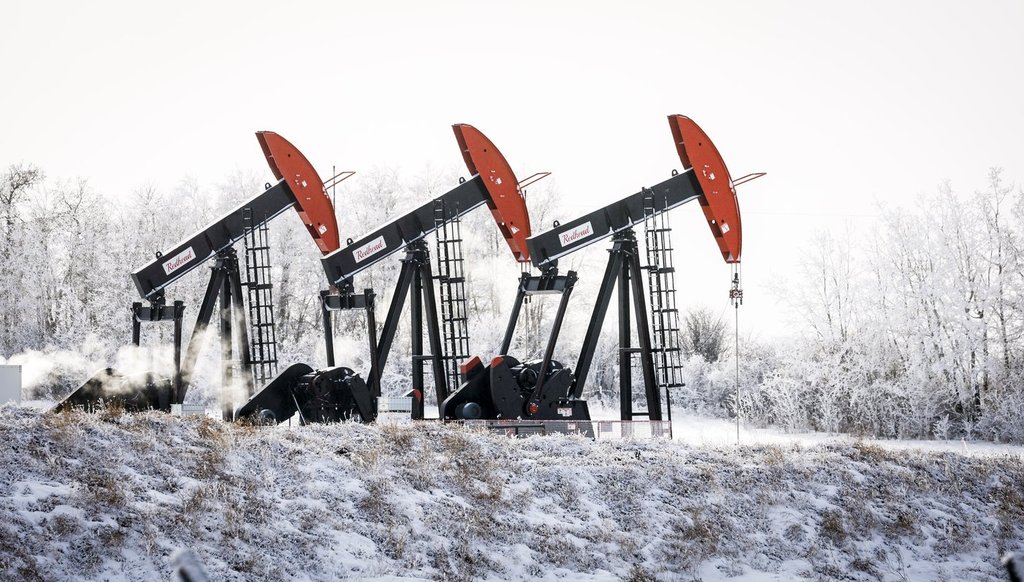
The frost is starting to crack. You can hear it if you’re quiet. It sounds like a pen hitting a contract. It sounds like the first shovel in the ground on a project that was supposed to be impossible. It sounds like a sigh of relief from a city that has been holding its breath for far too long.
The deals are coming. Not because the world has become a simpler place, but because the people in those leather armchairs have finally decided that the cost of waiting has become higher than the cost of moving.
They are ready to stop looking at the numbers and start making them.
The glass doors of the club swing open again. A cold wind blows in from the Rockies, but for the first time in a long time, no one inside is shivering. They are simply putting on their coats and heading to work.