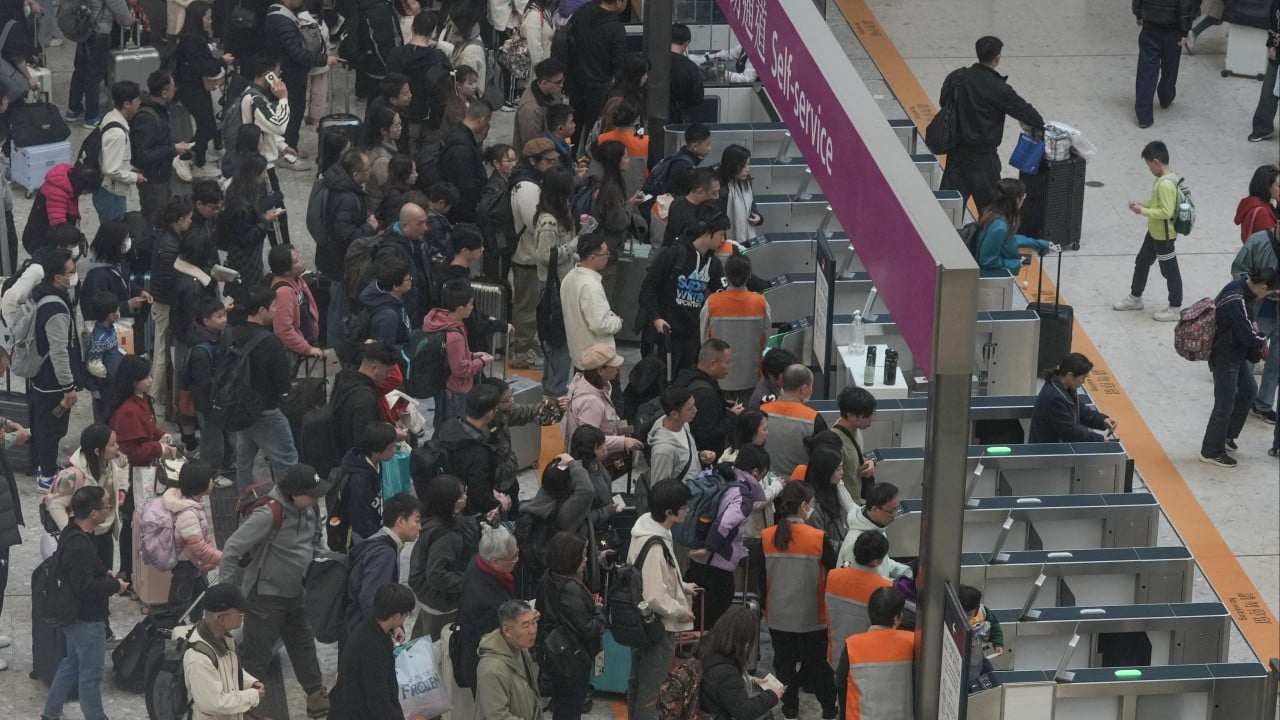
The air inside the West Kowloon High Speed Rail station is thick. It isn't just the humidity of a Hong Kong April clinging to the glass; it’s the collective breath of thousands of people vibrating with a specific, restless energy. You can smell it—a mix of expensive espresso, floor wax, and the faint, metallic scent of anticipation.
Mr. Lam stands near the ticket gates, gripping the handle of a suitcase that has seen better days. He is sixty-four, retired, and represents a statistic he doesn't yet know he belongs to. Behind him, his daughter checks her watch every thirty seconds. They are part of a surge. A literal wave of human movement that has seen tour group bookings from Hong Kong to mainland China spike by 40% for this Labour Day long weekend. Don't forget to check out our previous article on this related article.
Statistics are cold. They sit on spreadsheets and collect dust in government bureaus. But a 40% jump isn't a number. It is a roar. It is the sound of a city reaching for its neighbor after years of looking across the water with a mix of longing and hesitation.
The Pull of the High Speed Rail
For years, the border was a barrier. Now, it is a sieve. If you want more about the history of this, National Geographic Travel provides an in-depth summary.
The physical act of traveling has changed from a grueling trek into a seamless transition. When Mr. Lam was a younger man, "going back to the mainland" meant a slow ferry or a bumpy bus ride that rattled his teeth. Today, the G-trains sit on the tracks like white needles, ready to stitch the Greater Bay Area together.
The sheer convenience is the primary driver of this 40% surge. Travel agencies are reporting that the "short-haul" fever is breaking records. Why fly to Tokyo for five hours when you can be eating authentic Chaoshan beef hotpot in two? The value proposition has shifted. In a city where the cost of living feels like a thumb pressing down on your chest, the mainland offers room to breathe.
Consider a hypothetical family of four. In Hong Kong, a weekend of high-end dining and entertainment might cost a month's rent. Cross the border into Shenzhen or Guangzhou, and that same budget buys a suite, three-course meals, and enough left over for a shopping spree at the Sam’s Club warehouses that have become the new cathedrals of Hong Kong consumerism.
Beyond the Shopping Bags
If you look closely at the crowds clogging the departure halls, you see more than just bargain hunters. You see a shift in the soul of the traveler.
Industry data suggests that the Labour Day rush isn't just about the neighboring cities anymore. The appetite for "long-haul" domestic travel is ravenous. We are talking about Beijing, Shanghai, and even the rugged, ethereal landscapes of Yunnan.
The travel agencies—the same ones that were skeletal shells during the pandemic—are now scrambling to hire enough guides. They are seeing a particular interest in "culture-deep" tours. People don't just want to take a photo of a landmark; they want to understand the lineage of the tea they are drinking. They want to walk the ancient streets of Xi'an and feel the weight of the dynasties.
This isn't just tourism. It’s an exploration of identity. For many younger Hong Kongers, the mainland was a place of stories told by grandparents. Now, it is a playground. They are using apps like Xiaohongshu to find "hidden gem" cafes in Chengdu that their parents wouldn't recognize. The digital integration—the fact that a Hong Kong phone now pays for a coffee in Hangzhou with a single swipe—has removed the friction that once defined the border.
The Economics of a Long Weekend
The 40% increase in tour groups tells a story of supply finally meeting a desperate demand. After the initial post-reopening rush last year, many expected the novelty to wear off. They were wrong.
Instead, the infrastructure caught up. The "Northbound Travel for Hong Kong Vehicles" scheme has turned the Hong Kong-Zhuhai-Macao Bridge into a pulsing artery. But even for those without cars, the organized tour has seen a massive resurgence.
Why? Because the world has become complicated.
In an era of information overload, there is a profound luxury in letting someone else handle the logistics. The modern tour group isn't the "flag-following" cliché of the 1990s. It’s a curated experience. For the Labour Day weekend, agencies have tailored packages that focus on everything from high-tech manufacturing tours to "nature-therapy" retreats in the mountains of Guizhou.
The stakes are high for the local economy. As Hong Kongers pour across the border, local businesses in the city feel the vacuum. It is a precarious balance. The "outbound" boom is a testament to the connectivity of the region, but it also forces Hong Kong to reinvent its own appeal. You cannot compete with mainland prices; you have to compete with an experience that cannot be found elsewhere.
The Human Current
Back at West Kowloon, Mr. Lam finally moves through the gate. He isn't thinking about the 40% surge or the macroeconomic implications of the Greater Bay Area integration. He is thinking about the crispy pigeon he plans to eat in Zhongshan.
He is thinking about his grandson, who is currently obsessed with the high-speed trains, watching the digital speedometer in the carriage climb toward 350 kilometers per hour. To the child, the border is an abstraction. To the grandfather, it is a miracle of regained access.
This weekend, hundreds of thousands will follow them. They will fill the hotels of Futian and the alleys of old Guangzhou. They will crowd the scenic spots of Guilin and the bustling markets of Kunming.
The movement is more than a seasonal blip. It is a recalibration. Hong Kong is no longer an island looking out toward the West; it is a gateway looking inward. The surge in tour groups is the heartbeat of a region that is finally starting to pulse as one.
The train glides out of the station, silent and predatory in its speed. Outside the window, the skyscrapers of Kowloon give way to the green hills of the New Territories, and then, almost before you can settle into your seat, the sprawling, neon-lit horizon of the mainland appears.
The journey used to take a lifetime. Now, it takes a lunch break.
As the sun sets over the Pearl River Delta, the sheer volume of people moving across the earth becomes visible in the lights of the bridges and the glowing windows of the trains. It is a river of humanity, driven by a simple, universal desire: to see what lies just beyond the horizon, and to find a version of home in a place that once felt like a world away.
The suitcase handle feels lighter in Mr. Lam’s grip. He settles into his seat, watching the speed readout climb. The city he left is only minutes behind, but the world he is entering feels vast, vibrant, and, for the first time in a long time, completely open.