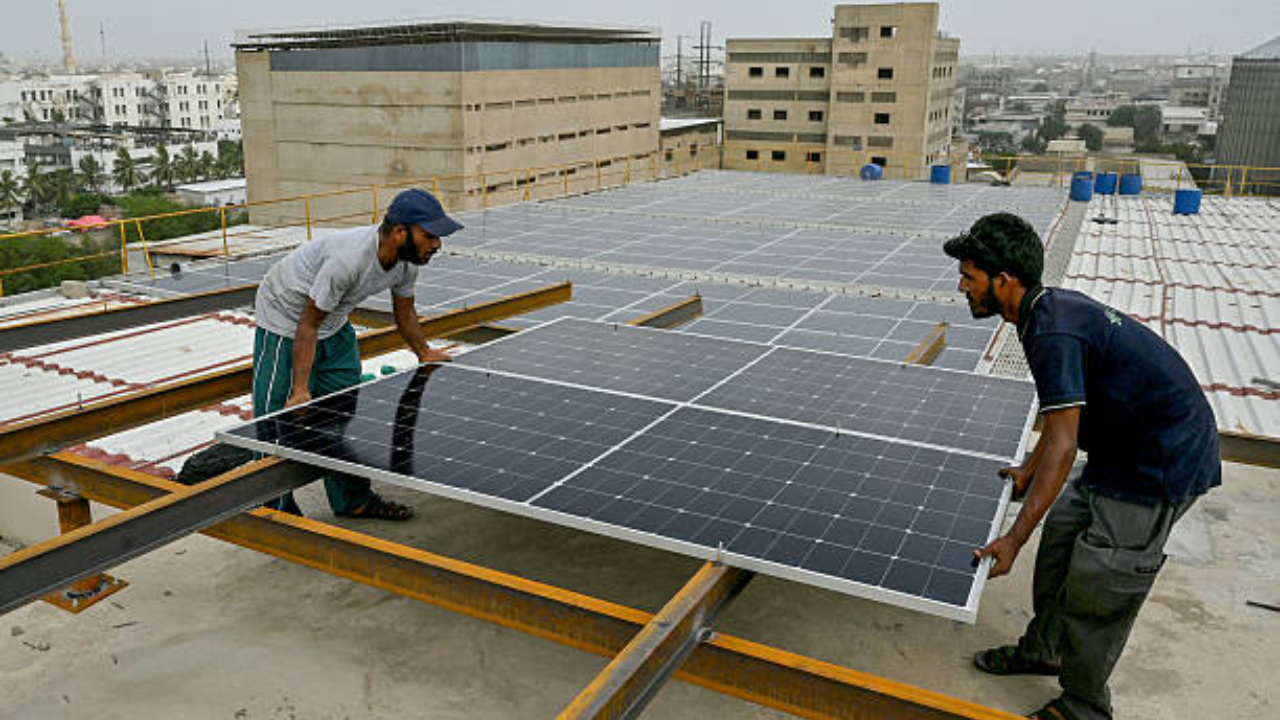
The grid was supposed to be untouchable. For decades, Pakistan's central power infrastructure functioned as an unassailable state-backed monopoly, extracting high tariffs from a captive population while bleeding billions in transmission losses, circular debt, and expensive imported fossil fuels. Then came the panels. In a quiet, frantic grassroots revolution, millions of households, small shopkeepers, and industrial titans took matters into their own hands. They put silicon on their roofs, unplugged from the economic anxiety of soaring monthly utility bills, and in doing so, accidentally orchestrated a macroeconomic rescue mission that slashed the nation's fossil fuel import bill by $12 billion.
This was not a government-subsidized green transition. It was an act of economic self-preservation. For a closer look into this area, we recommend: this related article.
The Anatomy of a Tariff Trap
To understand why the rooftop solar wave swept through Pakistan with the speed of a wildfire, one must look at the mathematical trap that the utility sector constructed for its own customers. For years, the International Monetary Fund structural adjustment programs forced the government to hike electricity tariffs to plug cavernous fiscal deficits. Every quarter brought another double-digit price bump. Base tariffs climbed past unsustainable thresholds, laden with cascading taxes, capacity payments to idle thermal power plants, and surcharges meant to cover theft and inefficiencies further down the line.
For an average urban household or a mid-sized textile unit, a monthly electricity bill stopped being a utility expense and started looking like a second rent. The social contract cracked. When grid power became a luxury commodity, the economic calculus shifted overnight. Importers rushed containers of photovoltaic panels and inverters through Karachi port, meeting a tidal wave of desperate consumer demand. Capital that would have normally sat in low-yield savings accounts or defensive hard assets was converted into aluminum racking and monocrystalline glass. To get more details on this topic, in-depth analysis can also be found at MarketWatch.
The state utility executives watched in genuine shock as their paying base evaporated. High-end consumers—the very residential and commercial brackets that subsidized the lifeline tariffs for poorer segments—were leaving the high-tension lines behind.
Crunching the Macroeconomic Impact
The $12 billion figure cited across financial desks is not a theoretical carbon credit projection. It represents hard currency that did not leave the State Bank of Pakistan's dwindling foreign exchange reserves to pay for liquefied natural gas and furnace oil cargoes stranded off the coast.
Consider the mechanics of a thermal power plant running on imported hydrocarbons. Every megawatt-hour generated requires a continuous burn of foreign-denominated fuel, exposing the entire national ledger to global commodity shocks. When millions of decentralized rooftop systems began generating peak power during high-sun daylight hours, two things happened simultaneously. First, the aggregate national demand for grid-supplied thermal power plummeted during peak industrial and commercial windows. Second, the state was spared from procuring expensive emergency spot-market LNG just to keep air conditioners running in Lahore and Karachi during scorching summer afternoons.
The fiscal breathing room was immense. At a time when sovereign default hung over the economy like a guillotine blade, the self-funded solar pivot acted as an unintended macroeconomic shock absorber. It plugged a structural trade deficit gap from the bottom up, driven entirely by private capital expenditure.
Yet, this rapid decentralization exposed deep fissures in the national energy architecture.
The Counter-Attack of the State
Monopolies do not surrender their revenue models quietly. As rooftop solar installations crossed critical gigawatt thresholds, the utility distributors and policymakers realized an existential threat. Under the prevailing net-metering framework, consumers who fed excess solar generation back into the grid during peak daylight hours were credited at favorable rates, effectively reducing their net bills to near zero.
For the state apparatus, this triggered a panic. The remaining grid-tied consumers—primarily those too poor to afford the upfront capital cost of a solar array—were left shouldering the entire burden of fixed capacity payments owed to independent power producers. These legacy contracts, signed decades earlier in foreign currencies, guaranteed capacity payouts regardless of whether the plants generated a single kilowatt-hour.
Bureaucrats responded with predictable bureaucratic friction. Discussions began around slashing net-metering buyback tariffs, introducing fixed solar grid connection fees, and tightening regulatory oversight on new installations. The argument from the power ministry was framed around equity, suggesting that suburban homeowners with solar roofs were unfairly shifting grid maintenance costs onto marginalized citizens.
The pushback missed the broader reality. The rooftop solar migration was no longer a niche hobby for environmentalists; it was the primary line of defense protecting the middle class from complete financial insolvency. Tampering with the economics of distributed generation risked triggering a severe political backlash and driving consumers entirely off-grid through the adoption of home battery storage systems.
What Lies Ahead for the Grid
Pakistan’s energy landscape is now permanently altered. The era of centralized, top-down power planning where bureaucrats dictated pricing to a helpless populace is over. The country has effectively decentralized its generation capacity through millions of independent rooftops, creating a resilient, albeit chaotic, micro-utility network.
The challenge ahead is not stopping the solar wave, but managing its integration. Without grid modernization, smart substations, and sensible energy storage integration, high daytime solar generation will continue to create voltage spikes and frequency instability for the legacy infrastructure. The grid must evolve from a rigid, unidirectional toll road into a flexible platform capable of balancing decentralized power flows.
The transition proved a fundamental truth about modern economics. When state-managed systems become predatory and dysfunctional, capital and human ingenuity will route around them, reshaping entire national balance sheets in the process.