Seven hours a day.
If you watch a child sit in front of a glowing pane of glass for that long, something strange happens to their eyes. The pupils dilate. The reflection of the screen bounces off their retinas, casting a pale, bluish hue across their cheeks. They look like deep-sea divers staring into an abyss, entirely submerged, completely cut off from the air above. For a deeper dive into this area, we suggest: this related article.
Now, multiply that single child by thirty. Put them in a room with industrial carpeting, a whiteboard that no one uses anymore, and a teacher pacing the aisles. This is not a sci-fi dystopia. It is a third-grade classroom in suburban Ohio. It is a middle school in Austin, Texas. It is the current state of American education.
We were promised a revolution. Roughly a decade ago, Silicon Valley executives and eager school boards shook hands on a vision of the future. The pitch was intoxicating: give every student a laptop or a tablet, and you democratize learning. No more heavy textbooks. No more outdated editions. Every child, regardless of zip code, would possess the sum of human knowledge at their fingertips. It sounded beautiful. It felt inevitable. For further details on the matter, comprehensive analysis is available at MIT Technology Review.
We bought it. Districts spent billions of dollars in public funds to achieve a one-to-one ratio of screens to students.
But a funny thing happened on the way to the digital utopia. The screens did not just replace the textbooks. They swallowed the classroom whole.
The Boy with Two Lives
Consider a hypothetical student based on the aggregate realities of modern educators. Let’s call him Leo. Leo is twelve years old. He is sharp, naturally curious, and possesses an attention span that has been meticulously fragmented by design.
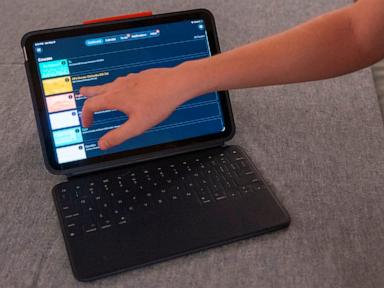
In 2012, a twelve-year-old opened a physical binder, sharpened a yellow pencil, and looked at a teacher. Today, Leo walks into his homeroom, opens his district-issued Chromebook, and logs into a learning management portal. His assignments are there. His quizzes are there. His grades are there.
His distractions are also there.
While the teacher explains the nuances of ecosystem interdependence, Leo’s screen shows a digital workspace. But behind that tab lies a universe of bypass proxies, unblocked browser games, and chat rooms. His fingers move with the speed of a concert pianist. Alt-Tab. A colorful puzzle game disappears. Alt-Tab. A Google Doc appears, filled with notes that look like schoolwork but are actually a clandestine conversation with a boy sitting three rows over.
Leo is not a bad kid. He is a normal kid trapped in an unfair fight. On one side is a human being with a voice and a piece of chalk. On the other side is an army of behavioral psychologists, software engineers, and engagement algorithms working for tech conglomerates, all weaponized to keep Leo’s eyeballs glued to the glass.
The human being with the chalk never stood a chance.
The statistics bear out Leo's quiet struggle. Recent national assessments have shown a sobering trend: despite the massive influx of technology into schools, reading and math scores across the United States have stagnated or precipitously dropped. The Program for International Student Assessment (PISA) noted a global decline in student performance, explicitly linking heavy digital device use in schools to lower academic outcomes. Students who spend more than a few hours a day on devices for schoolwork scored significantly lower in math than those who used them moderately.
It turns out that typing an essay is not the same as writing it. Scrolling through a PDF is not the same as turning a page.
The View from the Chalkboard
To understand how deep this wire runs, you have to talk to the people standing at the front of the room.
For twenty-two years, Sarah taught high school English in Virginia. She watched the transition happen in real-time. First came the smartphones, smuggled in pockets and under desks. Then came the school-sanctioned devices, handed out like state-issued uniforms.
"The silence changed," Sarah told me, her voice carrying the weariness of someone who fought a war and lost. "Classrooms used to be noisy. Kids talked, they argued, they passed physical notes. When the tablets became mandatory, the room went dead quiet. But it wasn’t the quiet of deep concentration. It was the quiet of a waiting room. Everyone was somewhere else."
Sarah described the physical toll of teaching in the digital age. She found herself acting less like an educator and more like a low-level cybersecurity guard. Her days were spent scanning the angles of students' shoulders, tracking the rhythmic twitch of their thumbs, trying to decipher if a smile was caused by a Shakespearean sonnet or a viral video clip.
The psychological friction broke her. She resigned last year.
"You feel invisible," she said. "You are competing with a machine that gives them a hit of dopamine every four seconds. I can tell a beautiful story about F. Scott Fitzgerald, but I cannot compete with an algorithm engineered to hijack the human brain."
The shift has forced a massive re-evaluation across the country. In states like California, Indiana, and Florida, lawmakers are pushing back. They are passing legislation to restrict smartphone use during the school day, and some districts are quietly reconsidering the omnipresence of the one-to-one laptop programs. The backlash is not driven by a Luddite hatred of progress. It is driven by a profound sense of exhaustion. Parents and teachers are looking at a generation of children who are highly connected but deeply lonely, intensely stimulated but academically unfulfilled.
The Great Disconnect
Why did we think this would work?
The mistake we made was confusing access to information with the processing of information. A screen is a portal of consumption, not necessarily comprehension. When a child reads a story on a printed page, their brain constructs a spatial map of the text. They remember that a specific plot point happened near the top left corner of a left-hand page. They feel the physical weight of the story shifting from their right hand to their left as they progress. This tactile feedback acts as an anchor for memory.
On a screen, that architecture vanishes. The text is an endless, frictionless scroll. Everything occupies the same flat, infinite space.
Furthermore, the physical act of handwriting activates neural pathways that typing completely bypasses. When a child writes the letter 'A' by hand, their brain executes a complex motor sequence that helps imprint the letter's identity into their memory. When they press 'A' on a keyboard, the physical action is identical to pressing 'Z' or 'Q' or 'M'. The body forgets the lesson because the body did nothing unique to learn it.
We traded the slow, messy, beautiful process of tactile learning for the efficiency of a glowing box.
And then there are the social costs. Walk into a high school cafeteria today where devices are permitted. The noise level is strangely muted. Instead of navigating the awkward, painful, and essential social rituals of adolescence—making eye contact, reading body language, managing a conversation—teenagers sit shoulder-to-shoulder, staring straight ahead, communicating through text boxes with people who are sometimes sitting right next to them.
We are automating the humanity out of human development.
The Turning of the Tide
The pushback is beginning, and it is coming from the most unexpected places.
In Silicon Valley, the very executives who designed these devices send their own children to tech-free Waldorf schools, where classrooms feature wooden desks, chalkboard slates, and mud pies. They know what they built. They know how it works. They keep their own creations far away from their offspring, while selling those same creations to public school districts under the guise of equity.
But the rest of the country is catching on.
Imagine a school district in a small town. Let's call it Oak Creek. For five years, Oak Creek Middle School suffered from the typical modern plagues: cyberbullying during third period, rampant cheating via artificial intelligence utilities, and a collective attention span that seemed to dissolve with each passing semester.
Last autumn, the administration made a radical choice. They bought locking fabric pouches for the smartphones. They parked the Chromebooks in carts at the back of the room, to be opened only when absolutely necessary for specific assignments. They brought back the paper novels. They handed out spiral-bound notebooks.
The first two weeks were brutal. The students went through a literal withdrawal. They fidgeted. They stared at their empty hands. They complained of an intolerable boredom.
But by week four, something miraculous happened. The noise returned.
Students started looking at each other again. When they finished their work early, they didn't sink into a digital stupor; they looked around the room, noticed their peers, and started talking. Teachers reported that they could make eye contact again. The collective gaze of the classroom shifted upward, away from the laps and toward the world.
"It felt like someone turned the lights back on," one Oak Creek teacher remarked.
The Reality of the Pendulum
We cannot completely banish technology from education, nor should we. The goal is not to pretend the digital world does not exist. A child growing up today must learn to navigate the digital landscape, understand data, and use computers as tools.
But a tool is only useful if you control it. Right now, the tools are controlling the children.
The solution is not a total retreat into the nineteenth century, but a fierce, protective boundary around the spaces where human beings grow. We must protect the sanctity of the daydream. We must guard the uncomfortable silence that precedes a creative thought. We must remember that learning is an inherently social, emotional, and physical act. It requires eye contact. It requires the scratch of graphite on paper. It requires the presence of an adult who is looking at a child's face, not their dashboard statistics.
We tried the great digital experiment. The data is in. The results are clear on the screens, and even clearer in the tired eyes of our children.
The bell rings. Leo packs his bag. For the first time all day, his Chromebook remains closed, zipped away in the dark fabric of his backpack. He walks out of the school building and into the afternoon sun. He reaches into his pocket, his fingers searching automatically for the cold glass of his phone.
He stops. He looks up at a flock of birds scattering across the gray sky. He watches them for a long time, his hands empty, his eyes wide, remembering how to see the world without a frame around it.