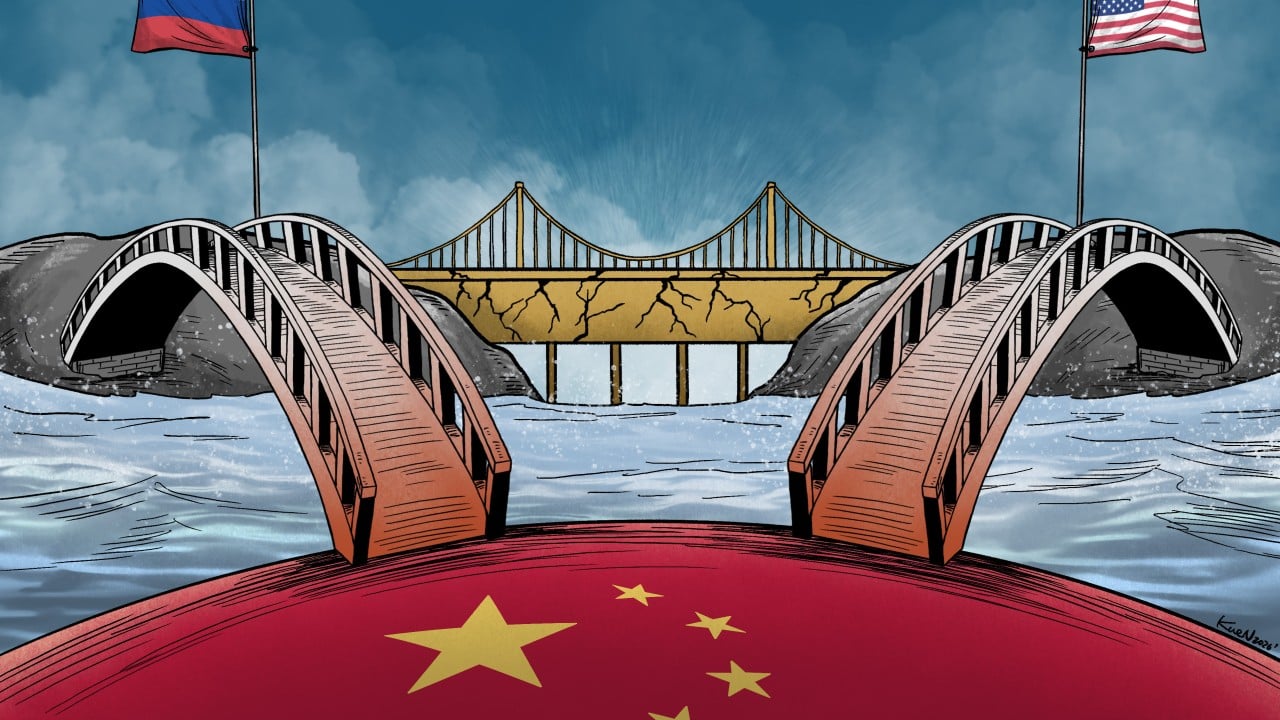
The contrails from Air Force One hadn't even cleared from the Beijing sky before Vladimir Putin’s plane touched down. In a masterclass of diplomatic scheduling, Chinese President Xi Jinping hosted US President Donald Trump and Russian President Vladimir Putin just days apart in May 2026. The back-to-back spectacles looked like something out of a scripted geopolitical drama. Red carpets, 21-gun salutes, and carefully arranged lines of flag-waving children greeted both men at the Great Hall of the People.
But don't confuse identical pomp with identical purpose. While the choreography seemed mirrored, the underlying realities couldn't have been more different. Trump came representing an adversarial superpower trying to manage a hyper-competitive trading relationship and stabilize a volatile globe. Putin arrived as a heavily sanctioned leader looking for an economic lifeline.
If you want to understand where global influence sits today, look no further than these two visits. Beijing didn't just host these summits; it orchestrated them to project a specific image. Xi Jinping wants the world to see China not as a disruptive upstart, but as the indispensable geographic and political center of gravity for global statecraft.
The Tale of Two Tarmacs
The real story of these visits wasn't found in the joint press conferences. It was written in the subtle language of Chinese protocol. Beijing uses administrative rankings like a scalpel, and they sliced the optics perfectly to send distinct messages to Washington and Moscow.
When Donald Trump arrived for his May 13–15 summit, he was met at the airport by Chinese Vice-President Han Zheng. It’s a high-profile, largely ceremonial role that looks impressive to Western media but sits outside the Communist Party’s core inner sanctum of power. Trump brought a massive, high-flying entourage packed with the chief executives of Apple, Tesla, and Nvidia. The message from Washington was clear: we are here to talk business, supply chains, and market access.
Days later, on May 19, Putin arrived. The Kremlin tried to downplay any comparison, with spokesperson Dmitry Peskov insisting the trips shouldn't be viewed through a lens of rivalry. But everyone was comparing them. Putin was met on the tarmac by Wang Yi, a sitting member of the Politburo and China’s top diplomat. By sending a core party decision-maker to greet Putin, Beijing signaled that it views Moscow as a deep institutional partner in building a non-Western global order, rather than just a trading competitor.
Yet, Putin’s entourage revealed his hand. Instead of tech titans, the Russian president was flanked by square-jawed security officials and a handful of sanctioned oil and banking executives. It highlighted a structural asymmetry that the Kremlin hates to admit. Russia needs China far more than China needs Russia.
The Illusion of the Equal Partner
Putin gushed during his visit that Russia-China relations serve as a "model of comprehensive partnership." Xi countered with classic poetic flair, welcoming his "old friend" with an ancient Chinese idiom. But the cold numbers tell a different story.
Russia's ongoing war effort has drained its treasury and isolated its economy from Western markets. This has effectively demoted Moscow to Beijing's junior partner. Consider the basic trade data: while China buys up vast amounts of cheap Russian oil and gas, Russia accounts for roughly 4% of China’s total international trade. Xi can afford to walk away from Russia; Putin has nowhere else to go.
Take the long-delayed Power of Siberia-2 natural gas pipeline. The project was penciled in back in late 2025, and Putin hoped to finalize the joint construction deal during this May summit. The pipeline might eventually pump gas by the middle of the next decade, but the massive upfront infrastructure costs will stretch Russia's strained finances even further. Beijing knows this, and they're using Russia's weakness to lock in ultra-cheap energy prices for decades.
During Trump's visit, Xi even flaunted this lopsided dynamic. While hosting the US president inside Zhongnanhai—the exclusive leadership compound rarely opened to foreigners—Trump asked if foreign leaders get invited there often. Xi shook his head and laughed, saying, "Very rarely. For example, Putin has been here." It was a subtle power play. Xi wanted to remind Trump that China holds the keys to Russia's survival.
What Trump and Xi Actually Agreed On
Don't let the lack of massive, sweeping treaties fool you into thinking the Trump-Xi summit was a failure. It achieved exactly what both sides actually wanted: strategic stabilization.
According to post-summit analyses from institutes like the Brookings Institution, the Trump administration focused heavily on trade truces and investment protection. The two sides didn't sign a grand free-trade deal, but they agreed to avoid an escalation cycle of destructive tariffs. The Chinese leadership walked away feeling highly positive, securing rhetorical concessions on Taiwan and getting Washington to accept the phrase "constructive strategic stability."
This phrase sounds like dry diplomatic jargon, but it's incredibly meaningful. It means both Washington and Beijing now openly accept that they are long-term strategic rivals, and they're shifting their focus toward preventing that rivalry from turning into an open military conflict. Trump’s 2026 National Defense Strategy mirrors this, aiming for a favorable balance of power in the Indo-Pacific rather than trying to completely dismantle China’s economic system.
The Missing Breakthroughs on Global Wars
What was most notable about both summits was what didn't happen. Despite Beijing positioning itself as the world's diplomatic crossroads, there was zero progress made on the major conflicts rattling the globe.
Before Putin arrived, rumors circulated that Xi had privately suggested to Trump that Moscow might eventually regret its protracted war. Both Trump and the Chinese foreign ministry quickly denied the report, but the tension was obvious. China wants the economic benefits of cheap Russian resources, but it doesn't want Russia's war completely destabilizing its primary consumer markets in Europe and America.
Similarly, Trump openly admitted he rejected an offer from Xi for China to help broker peace regarding conflicts in the Middle East. Trump explicitly stated he doesn't expect or want Chinese help on that front. Beijing loves the theater of being a global peacemaker, but when it comes to hard security guarantees, neither the US nor Russia is ready to let China write the rules.
Navigating the New Beijing Centric Reality
If you’re running a business, managing a global supply chain, or just trying to figure out where the global economy is heading, you can't ignore the reality of this summit diplomacy. China is no longer a rising power looking for a seat at the Western table. It’s a confident state that believes the global balance of power is permanently shifting East.
You need to stop viewing global politics as a simple choice between Washington and Moscow. Beijing has successfully created a tri-polar diplomatic reality where it acts as the vital swing factor.
Your next steps should reflect this multi-aligned world. If you operate an import-export business, you must diversify supply chains outside of direct US-China choke points, because even a "strategic truce" between Trump and Xi remains fragile. If you're managing corporate investments, expect China to keep doubling down on industrial manufacturing and exporting to non-Western markets to offset any US trade pressures. The red carpets in Beijing proved that the world's major powers will keep coming to Xi Jinping's court—you need to make sure your strategic plans are ready for the world they are building.


