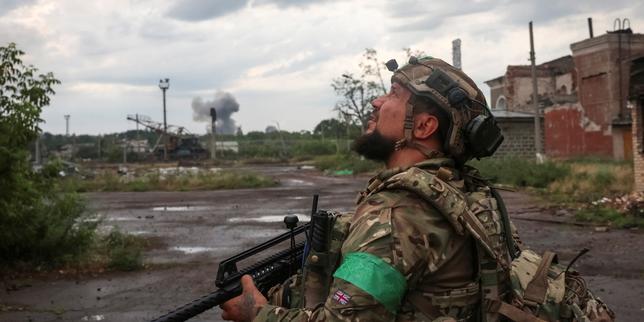
The Ukrainian General Staff recently reported a staggering 283 combat engagements within a single twenty-four-hour window. This unprecedented surge in kinetic activity marks one of the most intense periods of friction since the onset of the war, underscoring a brutal reality. The frontline is not frozen; it is melting under the sheer weight of relentless, small-unit assaults and massive artillery duels. While superficial news feeds treat these figures as a mere statistical spike, the underlying mechanics reveal a deeper crisis of attrition, logistics, and Western production bottlenecks that threaten to upend the defensive posture of Kyiv.
To understand how a battlefield sustains nearly three hundred distinct engagements in one day, one must look past the official press releases.
The Anatomy of Attrition at the Contact Line
The raw number of daily combats is a deceptive metric if divorced from tactical context. A single engagement can range from a five-man reconnaissance platoon stumbling into a tripwire to a multi-battalion mechanized assault aimed at a critical rail junction.
Currently, the vast majority of these 283 engagements consist of squad-level infantry assaults, often referred to as "meat assaults" by field observers. This tactical approach serves a specific purpose. By launching continuous, low-tech infantry waves across multiple axes simultaneously, offensive forces force Ukrainian defenders to expend precious ammunition, reveal their hidden firing positions, and deny frontline troops the luxury of rotation or sleep.
[Continuous Infantry Waves] -> [Defenders Expend Ammunition] -> [Artillery Targets Revealed]
The logistical strain this creates is immediate. When a defensive position faces ten distinct assaults in a afternoon instead of two, the consumption of small arms ammunition, mortar rounds, and drone batteries multiplies exponentially.
The Shell Calculus and Western Industrial Delusions
For over two years, Western allies have promised to scale up production of 155mm artillery shells to meet the demands of a high-intensity conventional conflict. The reality on the ground shows that these promises remain largely unfulfilled on the scale required to match opposition output.
Military logistics relies on a simple, unforgiving equation. If a defensive force requires 8,000 artillery rounds per day to suppress incoming assaults, and the supply chain only delivers 2,000 rounds, the deficit is paid in territory and human lives. Ukraine's defenders have been forced into an aggressive form of ammunition rationing, selecting only the highest-value targets while letting smaller enemy formations advance into closer combat range.
- The European Production Gap: Despite high-profile announcements from defense ministries in Paris, Berlin, and Brussels, European manufacturing lines are still hamstrung by bureaucratic contracting, lack of raw materials like specialized cotton linters for gunpowder, and a reluctance to sign long-term procurement contracts.
- The Sourcing Asymmetry: While the West debates corporate subsidies, opposing forces have secured a steady, uninterrupted pipeline of millions of artillery shells and ballistic missiles through established defense agreements with external partners.
This industrial mismatch means that when combat intensity spikes to 283 engagements a day, the defensive line is burning through stockpiles that will take months to replace.
The FPV Drone Illusion
To compensate for the severe lack of traditional artillery, Ukrainian forces have turned to FPV (First Person View) loitering munitions as a primary defensive tool. These cheap, consumer-grade drones modified with explosives have revolutionized tactical warfare, allowing operators to strike armored vehicles and infantry trenches with pinpoint accuracy.
However, relying on drones to replace artillery is a fundamentally flawed strategy. A standard 155mm high-explosive shell carries roughly fifteen pounds of explosives, travels at supersonic speeds, and is entirely immune to electronic interference. An FPV drone carries a fraction of that payload, moves at double-digit miles per hour, and can be rendered useless by commercial-grade radio-jamming equipment.
As electronic warfare systems become standard issue down to the squad level across the frontline, the effectiveness of these improvised aerial weapons is dropping. When a heavy electronic jammer blankets a sector, a drone operator is blinded, leaving the infantry with nothing but their rifles to stop an incoming assault.
The Human Factor and the Rotation Deficit
Wars are fought with iron, but they are won or lost by people. The sheer density of combat recorded over the last twenty-four hours points to an exhausting operational tempo that the current Ukrainian mobilization framework is struggling to sustain.
Units deployed in hot zones like the Donbas are frequently left in the trenches for weeks without relief. Prolonged exposure to heavy shelling without sleep causes severe cognitive decline, slower reaction times, and an inevitable breakdown in tactical cohesion. When an exhausted unit faces a fresh, rotated adversary during one of these multi-assault days, the risk of a localized frontline collapse increases dramatically.
The political hesitation surrounding deeper mobilization measures in Kyiv has created a situation where the veteran core of the army is slowly being eroded, while newly arrived recruits often lack the rigorous, multi-month training required to survive the meat grinder of modern trench warfare.
The Strategy of Forced Dispersion
The sudden expansion of combat actions across the entire length of the border is not accidental. It is a deliberate strategy of forced dispersion.
By activating quiet sectors in the north and launching localized incursions, offensive forces compel the Ukrainian high command to pull its elite reserve brigades away from critical southern and eastern axes. This constant shuffling of resources logistical friction, wastes fuel, and exposes moving convoys to long-range missile strikes.
Axis A: Active Assault -> Reserves Deployed
Axis B: Sudden Incursion -> Reserves Diverted
Result: General Thinning of the Defensive Line
Ukraine cannot afford to hold every inch of the border with equal density. Every platoon sent to secure a secondary northern forest is a platoon taken away from the defense of vital industrial hubs or logistics nodes.
The Fallacy of the Static Defense
The international community has largely settled into a comfortable narrative that the war has reached a permanent stalemate resembling the Western Front of 1916. This perspective is dangerous.
A defense that is constantly subjected to 283 combats a day is not static; it is undergoing systemic degradation. The current strategy of holding lines at all costs, without the artillery parity needed to break up enemy concentrations before they reach the trenches, plays directly into a strategy of long-term exhaustion.
Western capitals must shift from a paradigm of "preventing defeat" to one of industrial mobilization. Without a massive, immediate injection of heavy conventional munitions, air defense interceptors, and engineering equipment, the sheer mathematical weight of these daily assaults will eventually find a weak point that cannot be patched. The numbers provided by the Ukrainian General Staff are not just a report on the past twenty-four hours. They are an explicit warning about the next six months.