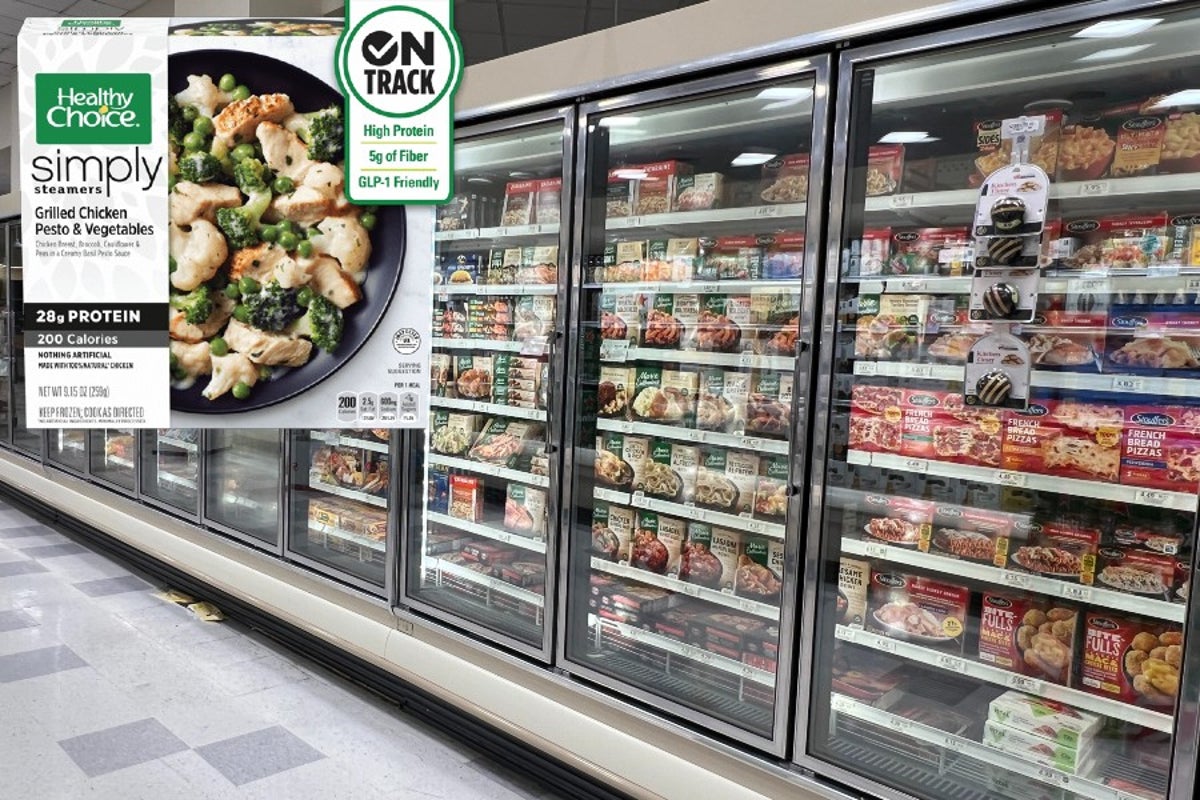
Elena stood in aisle four, staring at a package of tortillas. She wasn’t looking at the price, the net weight, or even the calorie count. Her eyes were locked onto three bold letters printed next to a green checkmark: GLP-1.
For the past six months, those letters had dominated her life. They were the biological engine behind the weekly injection she took to manage her type 2 diabetes and chronic weight issues. The medication had quieted the constant, nagging food noise in her brain, giving her a sense of control she hadn't felt in decades. But seeing those same medicalized letters slapped onto a plastic bag of flour wraps next to the generic store brands felt jarring. It felt like her prescription pad had leaked onto the grocery shelves.
Food marketing moves fast, but the pharmaceutical boom moves faster. We have officially entered the era of companion foods. As millions of people adopt blockbuster medications like Ozempic, Wegovy, Mounjaro, and Zepbound, the food industry is facing a quiet panic. People on these medications eat significantly less. They buy fewer snacks. They bypass the bakery. In response, food conglomerates are pivoting from fighting the trend to feeding it.
The result is a new category of grocery items specifically engineered, or at least strategically rebranded, to appeal to the changing biology of the modern shopper. But beneath the shiny new packaging lies a deeper question: Is a "GLP-1 friendly" label a genuine nutritional breakthrough, or is it just the latest corporate trap designed to monetizing our medical vulnerabilities?
To understand why a tortilla is suddenly trying to act like a pharmaceutical, you have to understand what happens inside the human body when these medications take hold.
GLP-1, or glucagon-like peptide-1, is a hormone your gut naturally releases after you eat. It signals to your brain that you are full. It slows down stomach emptying. It keeps your blood sugar stable. For someone like Elena, whose natural GLP-1 signaling was sluggish, the synthetic versions of this hormone are a revelation.
Imagine your stomach is a crowded theater. On a normal day, the audience leaves slowly, one by one, creating a constant demand for more entertainment—or in this case, more food. When a GLP-1 medication steps in, it locks the theater doors. The food sits in the stomach longer. The brain receives a sustained, unyielding message: We are occupied. Do not send more.
This physiological shift creates a unique nutritional dilemma. When you can only manage to eat half of what you used to, every single bite carries a heavier burden. If a person on Ozempic eats a standard, nutrient-stripped piece of white bread, they have used up a massive portion of their daily volume allowance on empty calories. They risk malnutrition, muscle loss, and severe fatigue.
This is the vulnerability that food companies are rushing to exploit.
The strategy is simple. Take an existing product, crank up the dietary fiber, boost the protein content, strip out the simple carbohydrates, and market it as a perfect match for a suppressed appetite.
Let us look closely at the anatomy of one of these "friendly" tortillas. In a hypothetical laboratory setting, if you strip away the marketing text, what you actually have is a highly processed wrap that relies heavily on modified wheat starch, vital wheat gluten, and isolated plant fibers. By packing 12 grams of fiber into a single wrap, the manufacturer can subtract those indigestible carbohydrates from the total carb count, arriving at a low "net carb" figure.
Fiber slows digestion. Protein preserves muscle. On paper, it matches the clinical goals of a patient on a weight-loss medication.
But biology is rarely as simple as a nutrition facts panel.
The human digestive system is an incredibly complex, adaptive ecosystem. When you are on a medication that already drastically slows down your gastric emptying, introducing massive doses of isolated, highly processed fibers can be a recipe for gastrointestinal misery. The natural fiber found in an apple or a bowl of lentils comes packaged with water, vitamins, and minerals that help it move smoothly through your system. The synthetic, powdered fibers used to bulk up industrial tortillas behave differently. They absorb water like a sponge, expanding in a digestive tract that is already operating in slow motion.
Elena learned this the hard way. Eager to maximize her protein intake, she swapped her regular meals for these engineered alternatives. The result was not a feeling of clean, sustained energy. It was a painful, heavy bloating that left her feeling like she had swallowed a stone.
The irony is thick. A product designed to ease the journey of medical weight management can end up exacerbating the exact side effects that make the medications difficult to tolerate in the first place.
This is not the first time the food industry has performed this magic trick. We have seen this cycle repeat itself with exhausting predictability over the last forty years.
In the 1990s, when the medical establishment declared war on dietary fat, the grocery aisles were flooded with snack cakes and cookies that proudly wore "Fat-Free" banners. The manufacturers had simply removed the fat and pumped the food full of high-fructose corn syrup to keep it palatable. The public ate them by the boxful, believing they were making a healthy choice, while rates of metabolic syndrome soared.
When the pendulum swung toward the low-carb and ketogenic diets in the 2000s, the same factories pivot overnight. Sugar vanished, replaced by sugar alcohols and artificial sweeteners. Suddenly, heavily processed bars and shakes were branded as health foods because they didn't spike blood sugar in a laboratory test.
Now, the pendulum is swinging again, driven by a syringe instead of a diet book. The "GLP-1 friendly" label is just the latest coat of paint on a very old machine. It shifts the focus away from whole, unprocessed foods and redirects consumers back toward the middle aisles of the grocery store, where profit margins are highest.
Consider the economics of the grocery store. A bunch of raw spinach or a pound of dried lentils cannot be patented. It cannot be branded with a catchy medical acronym. It does not yield a high profit margin for a multinational corporation. But a chemically altered tortilla that costs twice as much as the standard version because it claims to support your prescription medication? That is a goldmine.
The food industry is not trying to heal us. It is trying to survive us.
If millions of people permanently reduce their caloric intake, the traditional business model of selling cheap, hyper-palatable, high-volume food collapses. To prevent a drop in volume, companies must increase the value—and the price—of the smaller amounts of food people are still buying. They need you to believe that your new biology requires a new kind of food.
But the body does not need engineered starch to thrive under the influence of these medications. It needs exactly what it has always needed, only in denser, more bioavailable forms.
A piece of wild-caught fish. A handful of roasted almonds. A bowl of quinoa tossed with olive oil and dark, leafy greens. These are the true companions to a metabolic reset. They do not carry a certified label. They do not shout their clinical credentials from the packaging. They simply provide the clean proteins, essential fatty acids, and natural micronutrients required to keep a human body functioning when its energy intake is slashed in half.
The real danger of the medicalization of the grocery aisle is psychological. It creates a false sense of security. When a food product adopts the language of medicine, we drop our guard. We stop looking at the ingredient list and start trusting the front of the box. We outsource our intuitive understanding of nourishment to a marketing department that is reading the same pharmaceutical stock reports we are.
Back in aisle four, Elena reached out her hand. She picked up the package of GLP-1 friendly tortillas, turned it over, and read the long, dense list of stabilizers, gums, and processed proteins. She thought about the discomfort of the previous week, the feeling of her body struggling to process ingredients that had been built in a lab to solve a problem her body didn't actually have.
She put the package back on the shelf.
She walked past the brightly colored boxes with their scientific promises and clinical validation. She moved past the meal replacement shakes and the low-net-carb snack bars. She stopped instead in the produce section, where the damp mist settled over rows of crisp kale, heavy sweet potatoes, and unblemished avocados.
There were no acronyms here. No checkmarks. No promises of pharmaceutical synergy. Just real food, waiting to be quietly, simply digested.