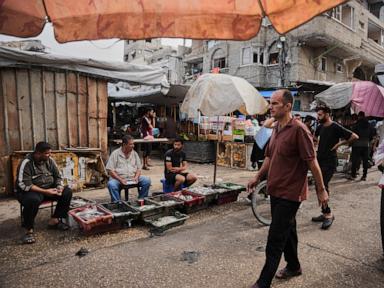
The halt of commercial goods entering Gaza has severed a critical supply line alongside humanitarian corridors, intensifying fears of acute shortages across the territory. When private-sector shipments stop, the burden falls almost entirely on aid convoys that were never designed to replace a functioning market. That distinction matters more than most headlines let on. Aid feeds people in emergencies; commerce sustains the daily mechanics of survival, repair, and trade.
For decades covering conflict zones and border economies, I have watched supply chain analyses treat every truck as interchangeable. They are not. A pallet of flour delivered by a relief agency solves an immediate caloric gap. A commercial shipment of spare parts, cooking gas, packaging materials, soap, or fresh produce keeps bakeries running, small workshops open, and households from burning scrap wood just to boil water.
To understand what happens when commercial goods stop moving into Gaza, you have to look at how the territory's economy actually functions under prolonged restriction. It is a fragile hybrid of aid dependency and private enterprise. Remove one leg of that stool, and the other wobbles violently.
How Commercial Supply Chains Operate Inside Gaza
Before any truck crosses into a restricted territory, it moves through a maze of customs clearances, security inspections, billing arrangements, and local distribution networks. Private merchants do not operate out of charity. They buy inventory on credit or cash, pay freight and insurance, assume transit risk, and sell to wholesalers or retailers who need rapid turnover to stay solvent.
In Gaza, that commercial pipeline has long been shaped by border controls, permit regimes, and fluctuating access rules. Even during periods of relative calm, traders navigated strict dual-use lists, inspection backlogs, and unpredictable transit times. Still, private importers supplied a wide range of everyday items that humanitarian agencies rarely procure at scale.
Aid organizations focus on lifesaving basics and core relief items. Commercial traders fill the gaps in variety, volume, and everyday maintenance that keep a population from living solely on rations.
Consider how a local bakery or food stall operates in a hypothetical example. Suppose a small producer makes flatbread for a neighborhood. Humanitarian flour might arrive intermittently, yet yeast, salt, fuel for generators, spare belts for a mixer, or bags for distribution often come through commercial channels. If the commercial lane shuts down, the whole operation can stall even when raw grain is sitting in a warehouse.
That same ripple effect hits households directly. When commercial goods disappear from market stalls, prices on whatever stock remains tend to spike. Families with cash or digital purchasing power find fewer choices and steeper markups, while families without income face compounding deprivation.
Why Aid Convoys Cannot Replace Private Trade
Policymakers and commentators frequently talk about scaling up relief trucks as if aid volume alone can offset a commercial freeze. In practice, humanitarian logistics and commercial supply chains solve different problems with different constraints.
Aid agencies operate with donor mandates, strict procurement rules, and prioritized cargo lists. Their convoys are built around emergency nutrition, medical supplies, shelter materials, water sanitation, and basic hygiene. They are not structured to stock hardware shops, supply agricultural inputs, or maintain a broad retail market across hundreds of thousands of residents.
Humanitarian logistics also face severe operational bottlenecks. Security clearances, route closures, warehouse capacity, and fuel availability inside the territory limit how fast cargo can move from entry points to end users. When commercial trucks stop entering, aid agencies face sudden pressure to absorb demand they were never budgeted or staffed to meet.
- Assortment limits: Relief cargo prioritizes standardized survival items rather than diverse foods, household repair goods, or personal care products.
- Distribution friction: Aid groups distribute through shelters, clinics, and designated hubs, whereas merchants move goods through local markets and neighborhood shops.
- Market distortion: When private trade halts, remaining goods become scarce assets, inviting hoarding and informal price gouging.
- Livelihood erosion: Local wholesalers, drivers, mechanics, and shopkeepers lose income, shrinking the cash economy needed to buy goods even when they appear.
There is also a practical governance question that rarely gets a neat answer. Security authorities often scrutinize commercial entry because private trade involves profit motives, loose networks, and concerns over whether items could be diverted or misused. Yet cutting off commerce entirely carries steep humanitarian and economic costs of its own.
Acknowledging that tension does not mean ignoring security concerns. It means recognizing that border inspection regimes and commercial bans sit at the center of a harsh trade-off: tighter control over what enters versus wider scarcity and price shocks inside Gaza.
The Hidden Costs of Supply Shocks
Shortages rarely hit all at once in a uniform wave. They move in stages, starting with the easiest items to substitute and ending with essentials that have no quick workaround.
First go the convenience items and fresh foods. Fruits, vegetables, dairy, and eggs spoil quickly or depend on cold chains and fast border crossings. Once those vanish, diets narrow to shelf-stable staples, increasing micronutrient gaps and fatigue.
Next come industrial and maintenance inputs. Without spare parts, batteries, cables, lubricants, or construction materials, infrastructure degrades quietly. A water pump breaks and waits for a part. A solar setup loses storage capacity. A clinic generator runs harder without proper filters.
Cash Liquidity Meets Empty Shelves
A halt in commercial goods collides with another chronic stress in Gaza: tight access to physical cash and banking services. When currency is scarce or damaged bills circulate without easy replacement, ordinary transactions become cumbersome. Merchants who cannot restock cannot turn inventory into revenue, and consumers who hold electronic balances or limited cash run into empty shelves.
Over time, scarcity reshapes behavior. People buy what they can carry rather than what they need today. Informal networks step in to move scarce items at steep premiums. Trust in basic market predictability erodes.
Historical precedent from other protracted crises shows how hard it is to rebuild commercial habits once broken. Supply chains rely on relationships between suppliers, insurers, transporters, and local buyers. The longer a freeze lasts, the more suppliers walk away from risky routes and the higher the cost to restart them later.
What Comes Next for Gaza Supply Lines
When commercial goods stop entering Gaza, every stakeholder faces a narrower set of choices. Humanitarian agencies have to stretch limited capacity across widening needs. Local communities have to ration dwindling reserves and improvise repairs with whatever materials remain on hand.
| Channel | Primary Role | Key Bottleneck | Impact When Restricted |
|---|---|---|---|
| Commercial imports | Broad market supply, daily essentials, spare parts | Security screening, import rules, trader risk | Price spikes, empty shops, stalled repairs |
| Humanitarian aid | Emergency food, medical care, shelter, sanitation | Access limits, convoy security, distribution reach | Overstretched relief hubs, unmet non-aid needs |
| Local production | Fresh food, baking, small-scale fabrication | Raw materials, fuel, power, farmland access | Falling output, higher local production costs |
No single measure can fix a deeply strained supply environment overnight. Expanding inspected commercial entry alongside vetted humanitarian corridors remains the most direct way to ease market shortages, provided oversight mechanisms are clear, predictable, and enforceable on the ground.
Until reliable commercial goods flow steadily again alongside aid, the real measure of Gaza's supply crisis will not just be the number of trucks parked near the border, but what is left on the shelves when families go looking for the basics.



