The air in the room didn’t smell like ink or old parchment. It smelled like high-octane cooling fans and the faint, ozone scent of a laboratory. When two men stand at a podium to discuss a Free Trade Agreement, the world usually looks away. We have been conditioned to believe that "trade" is a dry ledger of tariffs, customs duties, and maritime law. We think of shipping containers. We think of logistics.
We are wrong.
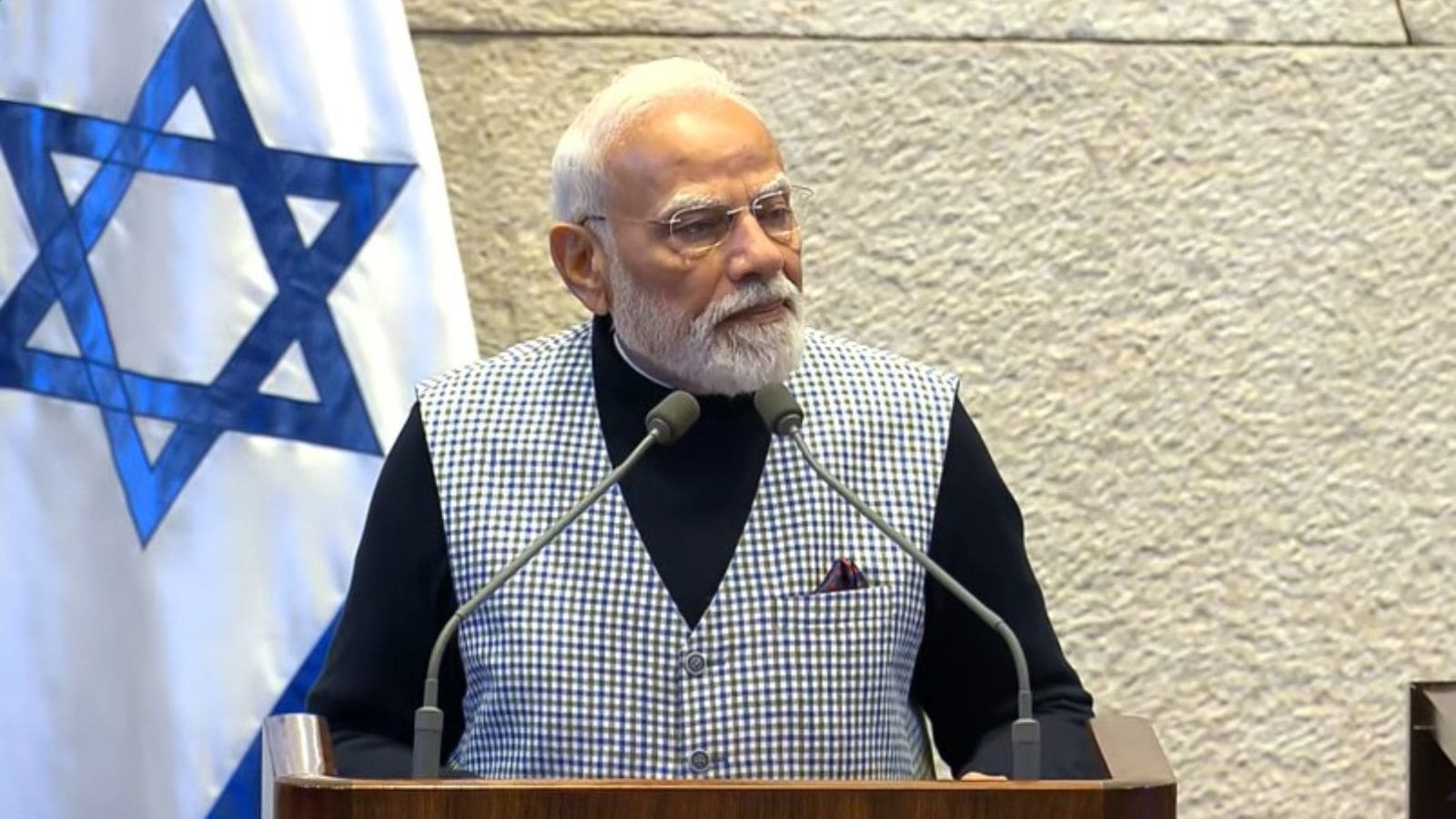
When Prime Minister Narendra Modi and his Israeli counterparts sat down to carve out the final shape of a bilateral FTA, they weren’t just moving numbers across a spreadsheet. They were attempting to bridge two civilizations that have decided their survival depends on one another. To understand why this matters, you have to look past the suits and the teleprompters. You have to look at the dust of the Negev desert and the crowded tech hubs of Bengaluru.
Consider a hypothetical farmer in the dry belts of Maharashtra. Let’s call him Arjun. For decades, Arjun’s life has been a gamble against a sky that refuses to cry. His soil is parched, his yields are thinning, and the debt is a physical weight on his shoulders. Now, consider a young engineer in Tel Aviv—call her Noa—who spends her days perfecting a sensor that can tell a plant exactly how much water it needs down to the milliliter.
The FTA is the bridge that carries Noa’s sensor to Arjun’s field without the suffocating weight of 20th-century bureaucracy. It is the invisible thread that turns a breakthrough in a Mediterranean lab into a harvest in a Deccan village.
The Weight of History in a Digital Age
Trade agreements are often sold as cold economic necessities. But this specific partnership feels more like an old friendship finally getting a legal contract. India and Israel share a peculiar, intense energy. Both are ancient cultures that are, in their modern incarnations, relatively young states. Both are surrounded by complex geographies. Both have realized that in a world of shifting talliances, the only true currency is innovation.
During the recent updates from the visit, the rhetoric wasn't just about "mutually beneficial" outcomes. It was about "finalizing the shape" of a new reality. When we talk about an FTA, we are talking about removing the friction of distance.
Currently, a startup in Haifa looking to scale in the massive Indian market faces a gauntlet of regulatory hurdles. Similarly, an Indian firm specializing in green energy or pharmaceutical manufacturing finds the Israeli market lucrative but tangled in red tape. The agreement is the machete cutting through that jungle. It is about speed. In the modern economy, the slow die first.
The Silicon Bond
The heart of this deal beats in the semiconductor and the cloud server. Israel is often called the "Startup Nation," a title earned through a relentless, almost frantic pace of invention born from necessity. India is the "Scale-up Nation," a behemoth with the human capital and the market hunger to take a single spark and turn it into a wildfire.
But there is a tension here.
People often ask: won't a free trade deal hurt local industries? It’s a valid fear. If you open the floodgates, does the local creek dry up? The answer lies in the specific nature of the India-Israel synergy. This isn't a zero-sum game where one side wins and the other loses. It is a collaborative architecture. Israel provides the "Zero to One"—the raw, disruptive invention. India provides the "One to One Million"—the engineering depth, the manufacturing prowess, and the sheer volume of implementation.
Imagine a specialized medical device that can detect early-stage cancers using AI. If it stays in a boutique lab in Israel, it saves hundreds. If it travels the path cleared by the FTA into the Indian healthcare ecosystem, it saves millions. The "benefit" isn't just a bump in GDP. It is a heartbeat.
Beyond the Ledger
The updates from the Prime Minister's visit highlighted a sense of urgency. The world is fracturing. Supply chains that we once thought were permanent have proven to be as fragile as glass. In this climate, "friend-shoring"—the act of trading primarily with those you trust—is no longer a luxury. It is a defense mechanism.
The FTA is a declaration of trust. It says that the data flowing between these two nations is safe. It says that the intellectual property created in a joint venture will be protected. It says that a scientist in Delhi and a researcher in Jerusalem are working on the same team.
But the real story isn't in the high-level meetings. It’s in the shift of the "invisible stakes." When these two leaders shake hands, they are signaling to the global investor class that the Indo-Mediterranean corridor is open for business. They are telling the world that the center of gravity is shifting.
There will be critics. There will be those who point to the complexities of regional politics or the slow pace of bureaucratic change. They aren't entirely wrong. Negotiating an FTA is like trying to tune a piano while someone else is playing a concerto on it. It is messy. It is loud. It requires constant adjustment.
The Human Core
We often forget that "economy" is just a fancy word for "how people take care of each other."
When the Prime Minister speaks of "giving final shape" to this deal, he is talking about a future where a student in a rural Indian school uses a tablet powered by Israeli chip architecture to learn a trade that will lift her family out of poverty. He is talking about a future where Israeli desalination technology, refined and scaled in Indian factories, ensures that water is no longer a cause for war, but a basic right of birth.
The stakes are not just about the price of diamonds or the export of defense equipment. The stakes are about whether two of the world's most resilient democracies can create a blueprint for the rest of the 21st century.
Consider the alternative. A world of silos. A world where innovation is hoarded behind high walls and exorbitant tariffs. In that world, Noa’s sensor never reaches Arjun’s field. The plant dies. The farmer remains in debt. The engineer’s invention remains a curiosity rather than a revolution.
We are standing at a crossroads. The FTA is the map.
The documents will eventually be signed. The cameras will flash. The pundits will analyze the percentage drops in duties on electronic components and chemicals. But the real victory won't be found in the text of the agreement. It will be found in the quiet, mundane reality of a more connected world.
It will be found when a small business owner in Tel Aviv realizes she can hire a team in Chennai as easily as she can hire someone across the street. It will be found when an Indian tech firm realizes it has a permanent seat at the table of global innovation.
The ink is drying on a new chapter of an very old story. It is a story of two people who looked across a vast distance and realized they were looking into a mirror.
The rubicon has been crossed. Now, we build.
The silence that follows a great deal isn't an absence of sound; it is the collective breath of two nations waiting to see what they can create together when the barriers finally fall away.
Would you like me to analyze the specific sectors—such as agritech or cybersecurity—that stand to gain the most immediate momentum from this agreement?