The stalks are taller than my head now, dry enough to whisper in a stiff October breeze, and smelling faintly of sweet dust and crushed green leaf. If you stand at ground level inside a corn maze, you cannot see the picture you are walking through. You only see walls of yellow-brown leaves, narrow dirt aisles stamped hard by thousands of sneakers, and the occasional flash of bright plaid or a child's red jacket turning a corner thirty feet ahead.
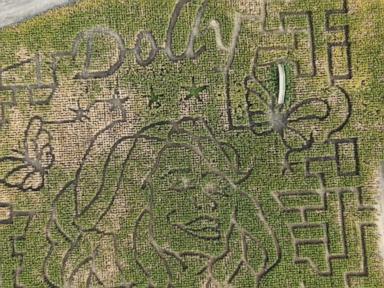
From a drone two hundred feet up, though, those crooked aisles stop looking like random turns and start looking like ink on a page.
Across the United States, working farms have carved Dolly Parton into standing corn. Not as a cheap gimmick for a weekend crowd, though autumn agritourism is a serious business for small growers trying to keep tractors paid for and barns standing. When growers cut a likeness into acres of field corn—complete with sweeping hair, a recognizable smile, butterflies, guitars, or books—they are doing something older than viral video clips. They are turning perishable agriculture into public memory.
To be clear, I am using a hypothetical scenario to make the human side of agritourism concrete: imagine Clara, a third-generation corn and orchard grower in the Midwest whose family has worked the same black prairie loam since the 1940s. Commodity prices swing wildly. Input costs—seed, diesel, fertilizer, equipment repairs—rarely drift downward. When a late frost nips blossoms or a dry spell shrinks yield, a traditional crop margin can vanish overnight.
Agritourism changes the math on a single acre. Instead of selling only bushels of grain at whatever the market offers that week, a farm sells time, space, and an afternoon outdoors. Families come for cider donuts, hayrides, pumpkins, and the puzzle of finding their way out of a maze before dusk turns the rows into shadows.
Yet even Clara knows a maze is a gamble. Corn is stubborn and indifferent to human plans. Heavy rain can lodge stalks; wind can twist a carefully mapped path; a hot September can turn lush green foliage brittle weeks earlier than expected. Cutting a portrait into a living field means trusting geometry, GPS-guided plotters, and a mower blade to translate a digital drawing into living plants—knowing the whole thing will eventually be harvested or turned back into the soil when the season ends.
Why Dolly?
Because she occupies a rare spot in American life where glamour and plainspoken grit sit at the same kitchen table. Born into poverty in East Tennessee, rising through county fairs, radio stations, television variety shows, and songwriting rooms, she has long stood for self-determination without losing warmth. For decades, her work has bridged audiences that rarely agree on much else. People who love classic country know her voice; kids who have never heard a fiddle record know her name through books mailed to their homes every month; travelers passing through the Smoky Mountains see how deeply her roots run in a region shaped by both beauty and hard work.
When a farm carves Dolly into a cornfield, the tribute works on two levels at once. Up close, it is a physical challenge—dead ends, wrong turns, laughter when a family realizes they passed the same bend three times. From above, it is an unmistakable portrait drawn in living green and gold.
There is a quiet vulnerability in admitting that agritourism isn't always effortless romance. Anyone who has spent a chilly Saturday morning watching muddy parking lots fill up while worrying about weather forecasts knows how thin the margin between a banner weekend and a washout can be. Sometimes the hardest part of running a seasonal farm attraction isn't cutting the paths; it is standing by the ticket booth at nine in the morning wondering if families will drive forty miles out of town when a gray sky hangs low over the highway.
When they do come, though, something shifts in the air.
I have stood beside farm gates where tired parents hand juice boxes to sticky-fingered toddlers, where grandparents walk slowly behind teenagers arguing over which path leads north, and where strangers call out directions across a row of stalks like neighbors over a backyard fence. A corn maze slows people down in a way a screen never can. You cannot swipe past a dead end. You have to turn around, retrace your steps, and look a little closer at the pattern around you.
Think of a corn maze like an old vinyl record played on a porch turntable. The grooves are already cut, guiding the needle through every rise and pause, yet the room around it shapes how the music lands. A dry breeze rustling ten-foot stalks adds a percussion track no studio can fake.
Historically, rural communities have always marked seasons and milestones with shared spectacles—county fairs, harvest suppers, barn raisings, quilting bees. The tools change from hand scythes to precision mapping software, and social feeds carry aerial photographs across the country in seconds. Still, the impulse underneath stays remarkably steady: gather people in a real place, give them something memorable to walk through together, and tie a moment of joy to the land that feeds them.
Many farms also connect seasonal tributes with charitable causes, turning gate receipts, pumpkin sales, or special weekends into support for literacy programs and local community needs. A child carrying home a new picture book after getting lost in a cornfield gets a double dose of magic—first the adventure of finding the exit, then the quiet pride of owning a story of their own.
People often wonder how a corn maze is actually designed without ruining the crop or losing the likeness. Modern maze makers usually start with a high-resolution image or sketch, overlay it onto a grid matching the planted rows, and map out a network of paths. A good maze balances puzzle logic with crowd flow: enough twists and loops to feel tricky, wide enough aisles so strollers and groups don't bottleneck, and checkpoints or riddles that keep younger walkers engaged when their legs start to ache.
Another common question is whether cutting paths hurts the field. In practical terms, the maze is the crop for that patch of land. Growers plant specifically for the attraction, sometimes using taller varieties so visitors feel enclosed rather than looking straight over the tops. Once autumn winds down and visitors head home, the remaining corn is chopped or harvested, closing the loop between planting and return.
As October fades into November, the novelty of fresh green leaves gives way to bare branches, frost on fence posts, and shorter afternoons. The maze doesn't last forever. Nothing in farming does.
Picture a late-autumn dusk settling over an Illinois or Tennessee field: pale amber light caught along the frayed edges of dry corn leaves, a single crow lifting off a distant tree line, and the faint, steady hum of a combine or tractor waiting for its next turn. The paths carved into the stalks will soon be gone, folded back into the earth that grew them—yet the memory of people laughing inside those green walls stays long after the last row falls.