Temporary pauses in active war zones rarely hold long enough to solve the underlying crisis. When the Oleshky ceasefire expires and Ukrainian authorities accelerate civilian evacuations across parts of the Kherson region, the immediate reality on the ground shifts back to survival, logistics, and split-second decisions.
You've probably seen the headlines flash across news tickers without much context. A truce ends. Buses roll out. Families pack decades of life into two suitcases. If you want to understand why this specific stretch of southern Ukraine remains one of the most volatile bottlenecks in the entire conflict, you have to look at the geography, the river, and the brutal math of evacuation corridors.
The Geography Behind the Oleshky Ceasefire Collapse
Oleshky sits directly across the Dnipro River from Kherson city, positioned on the occupied left bank. That single geographic fact dictates everything that happens there.
Before the full-scale invasion, crossing between Kherson and Oleshky took minutes via the Antonivskyi Bridge. Today, that bridge lies in ruins, and the river itself serves as a shifting, heavily mined frontline. When local ceasefires or humanitarian pauses are negotiated around Oleshky, they aren't grand diplomatic breakthroughs. They're fragile, hyper-local agreements designed to let repair crews fix shattered power grids, allow emergency medical transfers, or give trapped residents a narrow window to move away from artillery range.
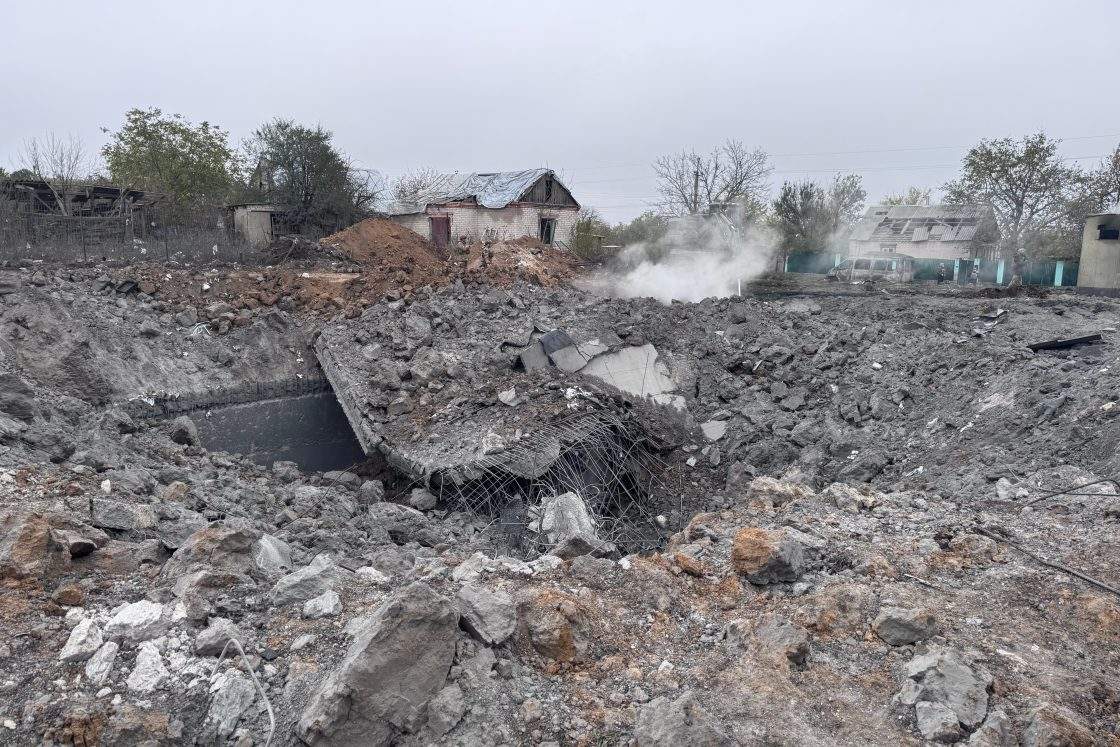
Once that clock runs out, the artillery resumes almost immediately. Why? Because neither side can afford to cede observation or fire control over the riverbanks. For civilians still living in the gray zones and adjacent right-bank settlements of the Kherson region, the expiration of a pause means an instant return to drone strikes, mortar fire, and cut-off supply lines.
Why Ukraine Is Evacuating Parts of the Kherson Region Now
People often ask why residents didn't just leave months or years ago. Honestly, it's easy to judge from thousands of miles away when you aren't abandoning an elderly parent, a farm, or the only home you've ever owned.
Ukrainian regional authorities, led by the Kherson Regional Military Administration, have repeatedly issued mandatory and voluntary evacuation orders for frontline communities along the right bank—places like Beryslav, Antonivka, Sadove, and parts of Kherson city itself. When a ceasefire near Oleshky expires, shelling intensity along the opposite bank typically spikes. Russian forces use the left-bank wetlands and urban cover in Oleshky to launch FPV drones and artillery toward Ukrainian-held towns across the water.
Here is what actually drives an evacuation wave when a truce ends:
- Drone saturation. Small commercial and military drones now hunt individual civilian vehicles on coastal roads, making basic grocery runs or ambulance trips nearly impossible.
- Infrastructure collapse. Repeated strikes on transformers and pumping stations leave entire districts without electricity, running water, or heating ahead of freezing temperatures.
- Medical access. Frontline clinics operate under constant threat, forcing authorities to move vulnerable patients, pregnant women, and children inland toward Mykolaiv, Odesa, or western Ukraine.
- Forced displacement dynamics on the left bank. While Ukraine evacuates citizens from right-bank settlements under fire, residents inside occupied Oleshky face severe movement restrictions, lack of basic utilities, and the lingering devastation from the 2023 Kakhovka Dam destruction.
What Most Coverage Gets Wrong About Evacuation Corridors
If you read standard wire reports, evacuations sound like orderly, predictable operations. A convoy arrives, people board, and everyone drives safely to a reception center.
In practice, it's messy, dangerous, and deeply stressful. Volunteer networks—groups like Save Ukraine and local paramedics—often do the heaviest lifting in the red zones where standard municipal buses can't risk entering. Teams operate in armored vans, moving fast during overcast weather or low-visibility windows when surveillance drones struggle to track targets.
Another common misconception is that a ceasefire expiration affects both banks equally. It doesn't. On the Ukrainian-controlled right bank, evacuees have access to state-backed transit hubs, rail links from Kherson or Mykolaiv, and international aid from organizations like the UN Refugee Agency (UNHCR) and the International Committee of the Red Cross (ICRC). Inside occupied Oleshky on the left bank, residents have no direct legal crossing across the Dnipro into Ukrainian-held territory. Their only exit routes run deeper into occupied territory toward Crimea or Russia, a journey many refuse to take despite relentless shelling.
How Humanitarian Logistics Actually Work Under Fire
When I look at how evacuation teams operate in Kherson, the difference between success and tragedy comes down to preparation before the shooting restarts. Once the Oleshky ceasefire expires, coordination centers shift into emergency mode.
- Registration and triage. Residents call regional hotlines or coordinate through local village heads. Families with children, people with disabilities, and bedridden seniors get top priority.
- Staged extraction. Armored vehicles pick up residents directly from basements or designated collection points on the outskirts of shelled neighborhoods, avoiding main highways visible from the left bank.
- Transit hubs. Evacuees are moved to safer staging areas in Mykolaiv or Kryvyi Rih, where they receive cash assistance, temporary housing vouchers, and medical screening before boarding evacuation trains to central or western regions.
It sounds straightforward on paper. On the ground, a single incoming shell or fiber-optic drone can force an entire convoy to abort and wait out the barrage in a concrete shelter for hours.
What to Watch Next in the Kherson Sector
The expiration of the Oleshky ceasefire isn't an isolated news blurb—it's an early warning signal for heightened artillery duels and drone warfare across the lower Dnipro. Expect Ukrainian authorities to tighten curfew rules and expand mandatory evacuation zones for families with children in settlements within ten kilometers of the river.
If you're tracking this conflict for policy analysis, journalism, or humanitarian support, stop watching only the territorial maps. Watch the evacuation numbers coming out of the Kherson Regional Military Administration and the daily utility repair reports from Ukrenergo. Those figures tell you the truth about frontline conditions long before any official military briefing does. Support verified local evacuation groups operating in southern Ukraine, verify corridor updates through official regional channels rather than unverified Telegram rumors, and keep your focus on the human movement along the Dnipro.