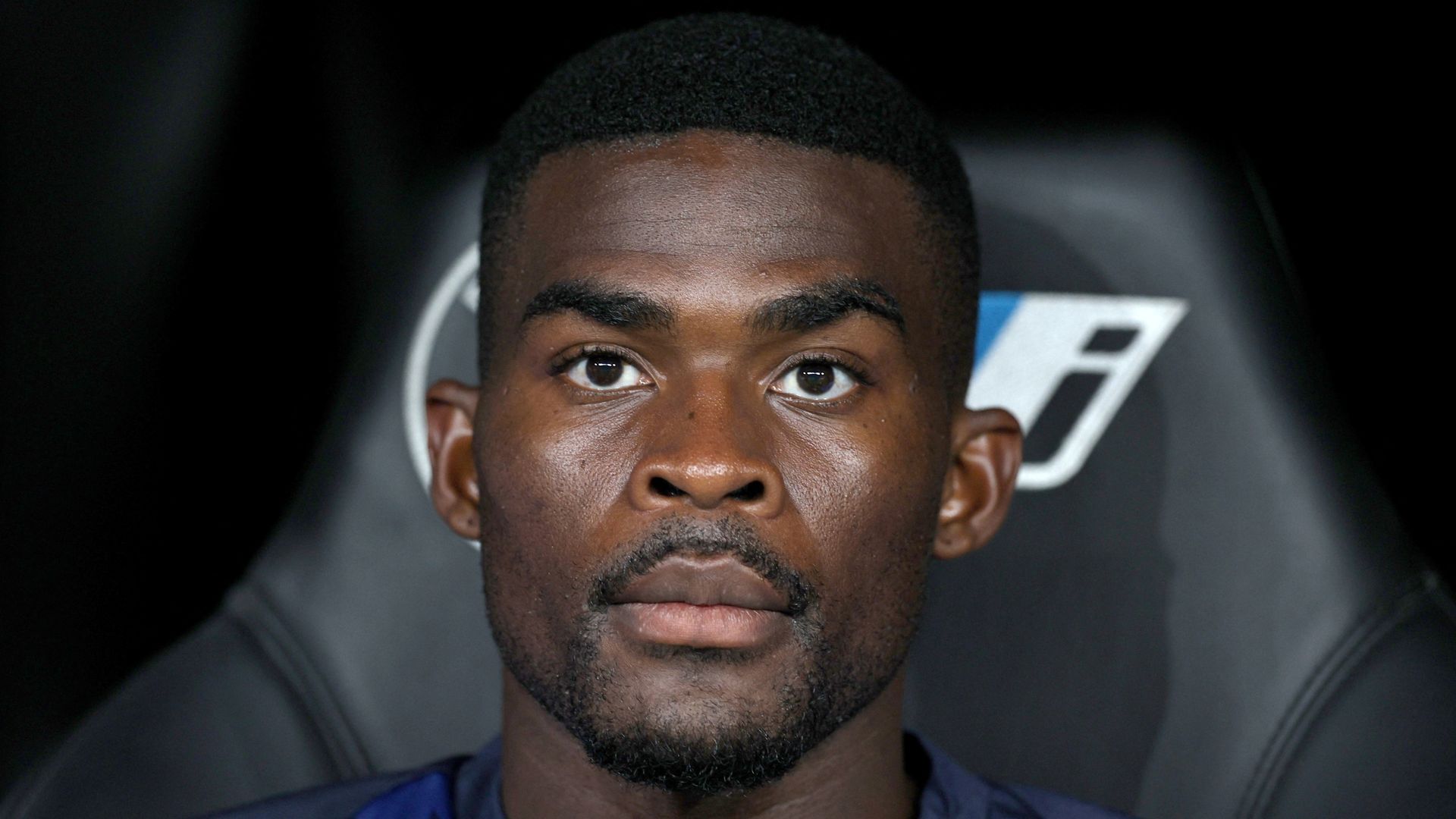
Two meters of muscle, bone, and scar tissue, standing completely still while twelve thousand people scream his name.
If you have ever sat close enough to a heavyweight judo mat to hear the air leave a man’s lungs when he hits the canvas, you know that Teddy Riner does not move like a normal human being. He is six-foot-eight and weighs over three hundred pounds, yet he pivots with the sudden, terrifying grace of a middleweight. For nearly two decades, France has watched him do one thing with absolute, monotonous perfection. He grabs a lapel. He shifts his hips. He drops giants onto their backs and walks off the tatami with gold draped over his shoulders. Don't forget to check out our earlier coverage on this related article.
Five Olympic gold medals. Eleven World Championships. An undefeated streak that stretched across nearly a decade, turning a boy born in Guadeloupe and raised in the gritty, concrete neighborhoods of Paris into the closest thing modern France has to a living monument.
Now, he wants to step off the mat and walk into the Élysée Palace. To read more about the background here, CBS Sports provides an in-depth summary.
When rumors first began swirling through the cafés of Saint-Germain and the locker rooms of the INSEP training facility that Teddy Riner was eyeing the French presidential race, the reaction was a uniquely Parisian cocktail of affection and condescension. People smiled. They patted him on the back. They treated it like a charming vanity project—the inevitable midlife restlessness of an aging athlete who had run out of mountains to climb.
They missed the point entirely.
To understand why Riner is stepping into the bloodsport of French politics, you have to stop looking at him as a celebrity athlete and start looking at the fracture lines running straight through the country he represents. France is tired. It is fractured by economic anxiety, bitter ideological trench warfare, and a pervasive sense that the people running the republic have forgotten what actual work feels like. Into that vacuum steps a man whose entire life has been built on a single, brutal truth: you cannot fake leverage. Either you have balance, or you hit the floor.
The Illusion of the Safe Throw
Consider a hypothetical voter—let’s call her Claire. Claire is forty-two, teaches high school history in a suburb outside Lyon, and hasn't felt genuine hope during a presidential election since she was in her twenties. Every five years, she watches the same polished graduates of the same elite administrative schools argue on television in immaculate suits. They speak in abstract nouns. They promise structural reforms that never seem to lower the price of her groceries or quiet the tension in her classroom.
When Claire hears that a judo champion is entering the race, her first instinct is skepticism. What does a man who spent his twenties fighting in white cotton pajamas know about pension deficits, European Union energy policy, or the slow decay of rural hospitals?
It is a fair question. In fact, it is the central question hanging over Riner’s entire political gamble.
Politics is not judo. On the mat, the rules are ancient, codified, and enforced by a referee standing six feet away. If your opponent grabs your legs illegally, they are penalized. If you pin them for twenty seconds, you win. There is no spin room after an ippon. There is no coalition government to negotiate when you are flat on your back staring at the stadium lights.
French politics, by contrast, is a knife fight in a dark room where the rules change every Tuesday. The Fifth Republic was designed by Charles de Gaulle to create a powerful, almost monarchical presidency, yet recent legislative deadlocks have turned the National Assembly into a paralyzed theater of mutual sabotage. To govern France today requires not just strength, but a dark, Machiavellian fluency in bureaucratic warfare.
If Riner enters this arena expecting fair play, he will be eaten alive before the first televised debate ends.
What Happens When a Monument Moves
Yet the political establishment in Paris is making a dangerous miscalculation if they think Riner is just a naive sportsman wandering into traffic.
Spend ten minutes watching how Riner manages his career, and you realize the "gentle giant" persona is a carefully maintained illusion. Behind the infectious grin and the easy charm lies one of the most calculating operators in modern sports. For years, Riner has functioned less like an employee of the French Judo Federation and more like a multinational corporation. He negotiated unprecedented commercial autonomy, built a media empire around his own image, and navigated the treacherous politics of international Olympic committees with ruthless precision.
He knows how power works because he has held it since he was eighteen years old.
More importantly, Riner possesses the one asset that no billionaire donor, no campaign strategist, and no elite academy in Paris can manufacture: legitimacy.
Think back to the summer of 2024, when the Olympic cauldron floated into the night sky over the Tuileries Garden. When Teddy Riner and Marie-José Pérec lit that flame together, a country that had spent months tearing itself apart over snap elections and street protests suddenly exhaled. For two weeks, France remembered what it felt like to like itself. And at the center of that collective memory stood Riner—Black, Caribbean-born, fiercely proud of his Parisian upbringing, and utterly unbothered by the far-right voices that have spent years trying to narrow the definition of what a "real" French citizen looks like.
His mere presence on a presidential ballot is an earthquake.
For decades, French politics has been trapped in a suffocating triangle: the technocratic center, the fractured left, and a nationalist right that has steadily normalized itself by claiming to speak for the forgotten working class. Riner breaks that geometry. He cannot be easily dismissed as an out-of-touch Parisian elitist, because his calluses are real. Nor can he be painted as a radical bent on burning down the republic, because he has literally wrapped himself in the tricolor flag while singing La Marseillaise on podiums across the globe.
The Invisible Weight of the Grips
In judo, the entire match is won or lost before anyone ever leaves their feet. It happens during the kumi-kata—the grip fighting.
If you watch an untrained observer watch a heavyweight judo match, it looks boring. Two huge men slapping each other’s wrists, grabbing fabric, tugging collars, shuffling in circles for two minutes without throwing a punch or attempting a sweep. It looks like stalling.
It isn't. It is a violent conversation conducted through fingertips and forearms.
Every grip is a question. If I pull your left shoulder down, where does your weight go? If I step inside your hip, do you panic and lean back? Master judokas can feel a shift of three millimeters in an opponent’s center of gravity through two layers of heavy woven cotton. They wait, absorbing tension, letting the other man exhaust himself trying to force a throw that isn't there, until the exact microsecond the opponent overcommits. Then, the trap springs.
Riner’s presidential campaign—whether it culminates in an official run in 2027 or reshapes the kingmaking dynamics from behind the scenes—is currently in the kumi-kata phase.
Right now, he is testing grips. Every interview where he speaks about youth unemployment in the overseas territories, every quiet dinner with disillusioned mayors in provincial towns, every carefully worded critique of the government’s failure to invest in grassroots education is a tug on the lapel. He is measuring how the political class reacts.
And how are they reacting? With panic disguised as amusement.
The veteran politicians in Paris know the math. In a two-round presidential system, you don't need fifty percent of the country to love you in the first round; you just need twenty-two percent to believe you aren't lying to them. If Riner makes it to the second round—the runoff where France chooses its leader head-to-head—all traditional political gravity ceases to exist. Against a divisive career politician, a unifying national icon doesn't just have a chance. He becomes the favorite.
The Ghost of George Weah and the Trap of Celebrity
Of course, history is littered with the wreckage of beloved athletes who mistook applause for a mandate.
Look across the water to Liberia, where football legend George Weah won the presidency on a wave of euphoric hope, only to find that scoring goals in Milan did not prepare him to untangle entrenched corruption and economic collapse. Look at Manny Pacquiao in the Philippines, or Imran Khan in Pakistan—men of undeniable charisma and genuine conviction who discovered that governing a divided nation is infinitely harder than conquering a stadium.
I remember watching a local mayor in a small town in northern France try to explain his frustration with national politics a few winters ago. We were standing outside a community center whose heating budget had just been slashed. He didn't want a savior. He wanted someone who understood how municipal bond financing worked. "Inspiration doesn't pay the gas bill," he told me, blowing steam into the cold air.
That is the trap waiting for Teddy Riner.
If he runs on vibes—on the warm, nostalgic glow of Olympic medals and vague promises of national unity—the French electorate will turn on him with breathtaking speed. French voters are notoriously unsentimental once the honeymoon ends. They have chewed up and spat out brilliant intellectuals, charismatic reformers, and seasoned statesmen within months of inauguration day. The presidency of France is not a ceremonial crown; it is a meat grinder.
To survive it, Riner has to prove he isn't just bringing his shoulders to the fight. He has to show his homework. He needs a shadow cabinet of serious economists, constitutional lawyers, and policy architects who can translate his instincts about fairness, discipline, and social mobility into actual legislation. He has to survive three-hour television interrogations where journalists will probe his knowledge of nuclear energy grids, Sahel foreign policy, and agricultural subsidies without mercy.
The Gamble That Changes Everything
Why do it, then?
Think about what Riner already has. He is rich. He is universally adored. He can walk down almost any street in the world and be greeted with reverence. If he retires quietly, opens a chain of academies, does luxury watch commercials, and commentates on the Olympics for the next forty years, his legacy is bulletproof. He dies a saint of French sport.
By stepping into the presidential arena, he puts every ounce of that goodwill on the table. If he stumbles, if he utters a single clumsy phrase during a live debate, if he aligns himself with the wrong political faction, the saint dies. He becomes just another politician—argued over at Sunday dinner tables, mocked by late-night satirists, booed in half the country.
You don't take that kind of risk unless you feel something deeper than ambition.
You take it because you have spent your whole life standing on podiums listening to an anthem that promises liberty, equality, and fraternity, and then driving home through neighborhoods where none of those three words feel particularly real. You take it because you realize that winning a sixth gold medal won't fix a broken school system, and throwing another three-hundred-pound opponent onto a foam mat won't stop a generation of young people from feeling invisible in their own country.
Picture him back at the edge of the mat.
The referee raises an arm. The arena goes dead silent, that strange, heavy hush that falls right before the whistle blows. Riner closes his eyes for half a second, rolls his massive shoulders back, and steps forward into the center of the square. He knows the man across from him wants to take him down. He knows one mistake means hitting the floor in front of millions.
He reaches out anyway, and grabs the collar.