The expansion of Israeli settlements in the West Bank is often viewed through the narrow lens of territorial diplomacy and military checkpoints. Yet, beneath the geopolitical rhetoric lies a more grounded, mechanical reality. It is a massive infrastructure project. The acceleration of these housing units and industrial zones relies on a sprawling network of private contractors, financial institutions, and global supply chains. When a new settlement project breaks ground, it does not materialize out of thin air. It requires concrete, telecommunications, heavy machinery, and capital flows that often originate far beyond the Jordan Valley.
Corporate complicity in the West Bank is not merely a matter of ideology. It is a matter of procurement. Major construction firms, equipment manufacturers, and service providers find themselves embedded in a system where the line between domestic infrastructure and occupation-related activity becomes vanishingly thin. International law experts and human rights monitors have long argued that companies operating in these territories facilitate the normalization of settlements, effectively rendering them participants in the maintenance of a status quo that the United Nations and numerous international bodies define as illegal. You might also find this related article interesting: Why Santa Rosa Island Was Worth Thirty Million Dollars.
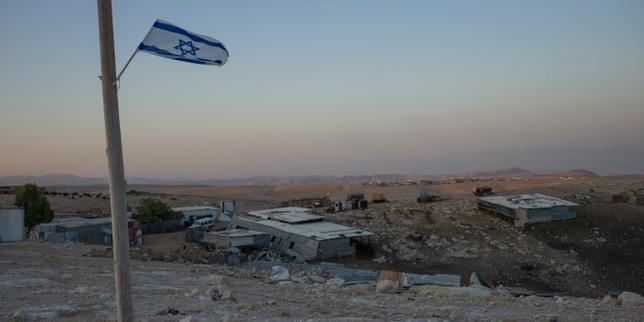
The core issue remains the material support provided to these outposts. Consider the lifecycle of a single housing block. It requires heavy transport vehicles to move aggregate, steel reinforcements for foundation work, and specialized industrial equipment. When these assets are provided by multinational corporations—or even domestic entities with significant international investment—the parent organizations are pulled into the administrative web of the occupation. They provide the physical foundation for a policy that has recently seen the reopening of previously shuttered sites, such as Kadim, signaling a shift toward deeper territorial entrenchment.
Investors often struggle to quantify this exposure. Asset managers utilize environmental, social, and governance (ESG) metrics to filter out companies associated with controversial human rights outcomes. However, the complexity of sub-contracting makes transparency a luxury. A primary contractor might have a clean record in Europe or North America, while its local subsidiary or a third-party logistics provider handles the actual transport of materials into the West Bank. This diffusion of responsibility is not accidental. It is a built-in feature of the modern industrial supply chain. As reported in recent articles by BBC News, the implications are worth noting.
We must also address the financial conduits. Banking institutions that provide mortgages or construction loans for projects in the West Bank are essentially betting on the longevity of the status quo. By normalizing the economic life of these settlements, these institutions ensure that the projects are not just temporary military holding points but permanent residential or industrial hubs. This creates a feedback loop. As more businesses establish themselves in these zones, the pressure on the state to protect and expand those areas increases. It shifts the burden of geopolitical risk from the state to the private sector, which then demands protection as a matter of commercial interest.
The argument for corporate neutrality often crumbles under scrutiny. When a company provides the fiber-optic infrastructure that connects a remote settlement to the broader Israeli network, they are not simply selling technology. They are reducing the isolation that would otherwise be a natural consequence of the settlement's location. This is active integration. Whether these firms are Israeli-based or international entities operating through partners, the utility they provide is identical: the functional annexation of space.
For the international community, the frustration is palpable. Despite widespread condemnation from eighty-five nations at the UN, the expansion continues. The reason for this persistent divergence between diplomatic consensus and reality is the sheer momentum of the private sector involvement. Once a supply chain is established, it requires little to no political intervention to keep running. The invoices continue to be paid. The shipments continue to arrive. The structures continue to rise.
Disengaging from this architecture is notoriously difficult. Most firms are bound by long-term contracts and binding partnerships. Exit strategies often involve significant legal fees and potential breach-of-contract penalties. Furthermore, local governments in Israel may impose regulatory hurdles for companies attempting to pull out of the region. This creates a state of permanent tethering, where a company’s commercial interests are hostage to the political project of settlement expansion.
We are seeing a trend where companies are attempting to bifurcate their operations. They keep their profitable ventures in the mainland while creating "firewalled" subsidiaries for activities that fall within disputed territories. Yet, from an oversight perspective, this is a hollow gesture. The capital and expertise still flow from the same source. Until there is a fundamental shift in the risk-reward calculus—where the cost of reputation and potential legal liability exceeds the profit margins of these specific projects—the current trajectory will hold.
True oversight requires more than just naming and shaming. It requires forensic accounting that follows the flow of capital and material from the head office down to the final installation on the ground. When investors demand to see the full scope of a company's logistical footprint in the West Bank, they uncover the mechanics of the expansion. Transparency is the only tool that can strip away the veneer of normalcy from these operations.
The reality is that these settlements cannot thrive without the active participation of the private sector. It is a symbiotic relationship. As long as the infrastructure of the occupation is built, financed, and sustained by the market, the political debates in the halls of international power will remain secondary. The machinery of construction is the true silent partner of territorial change. It is the invisible hand that builds the wall, the road, and the home. Ignoring the economic engine behind these developments is a strategic error that ensures the cycle continues, unchecked and unquestioned.
International concern over West Bank settlements
This video provides important context regarding the international community's opposition to the ongoing expansion of Israeli settlements in the West Bank.
http://googleusercontent.com/youtube_content/1