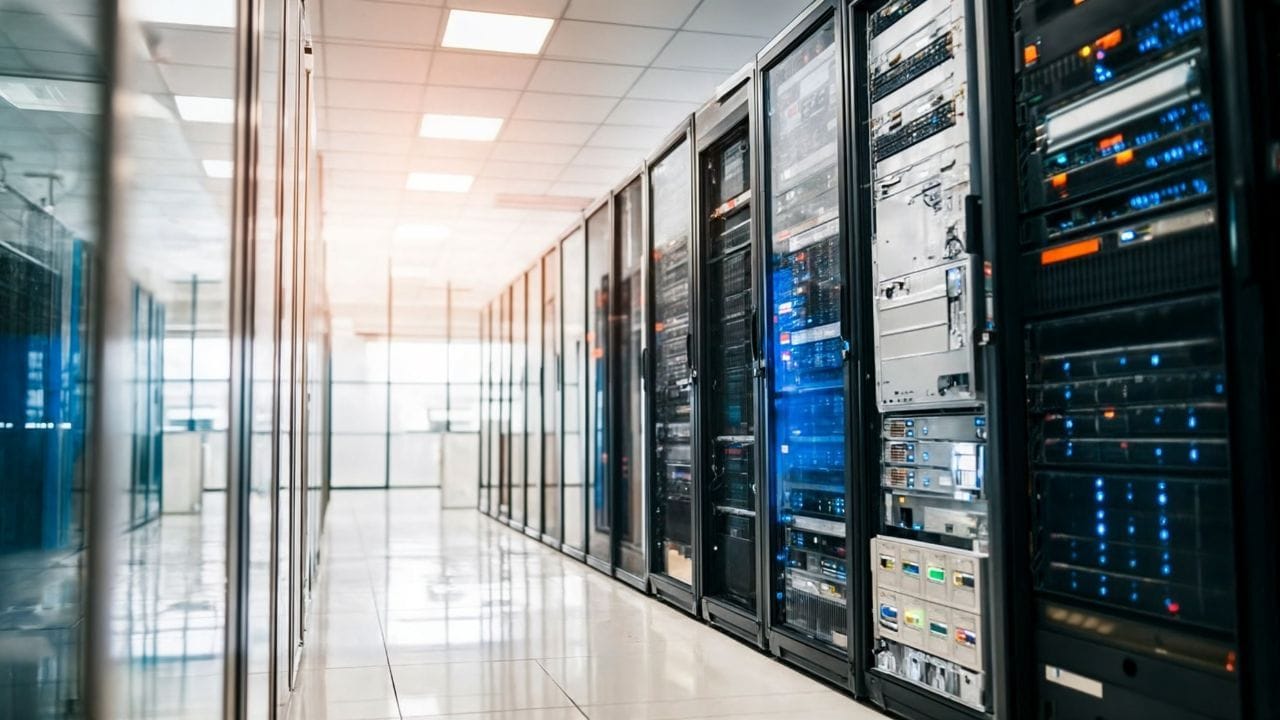
Tech giants are quietly locking down energy and water supplies across the globe. According to a United Nations report, artificial intelligence could consume 3% of the world's electricity and as much freshwater as 1.3 billion people by 2030. This surging resource demand threatens local power grids and risks draining vital aquifers. While Silicon Valley promotes software efficiency, the physical reality of data centers requires massive amounts of power and cooling water to function.
The narrative surrounding the technology sector used to be clean, weightless, and virtual. We were told that moving operations to the cloud would reduce carbon footprints and streamline resource use. That illusion is shattering. Every complex search query, every generated image, and every large language model training session triggers a physical chain reaction inside data centers that requires immense power and physical cooling. Recently making headlines lately: Why Wasted Renewable Energy is Chinas Secret Weapon.
The Power Hungry Architecture of Neural Networks
To understand why tech infrastructure requires so much power, look at the hardware. Traditional data centers run on standard central processing units (CPUs) that handle tasks sequentially. Artificial intelligence relies on graphics processing units (GPUs) and specialized accelerators that process thousands of calculations simultaneously.
They run hot. They run constantly. More details on this are detailed by MIT Technology Review.
A standard data center rack historically drew around 3 to 5 kilowatts of power. Modern AI infrastructure clusters easily demand 40 to 100 kilowatts per rack. This exponential spike in power density strains the electrical infrastructure built to support older internet technologies. When a company trains a single massive model, it can consume more electricity than hundreds of American homes use in an entire year.
This creates a structural problem for utility companies. Power grids require balance between supply and demand. The sudden addition of gigawatt-scale data center campus clusters disrupts this equilibrium, forcing utilities to keep aging fossil-fuel plants online just to prevent blackouts. In regions like Northern Virginia, the global capital of data storage, the sheer volume of new construction has pushed local transmission infrastructure to its absolute limit.
The Millions of Gallons Needed for Cooling
Electricity consumption is only half of the equation. The public rarely sees the immense volume of water required to keep these facilities from melting down.
Data centers generate massive thermal energy. If the processors overheat, performance drops and equipment fails. The most cost-effective way to remove this heat is through evaporative cooling systems. These systems pull in outside air, run it past water-saturated media, and let the evaporation lower the ambient temperature inside the server rooms.
Consider the scale of a standard data center facility. A single medium-sized site can consume hundreds of thousands of gallons of water every day. Multiply that by the thousands of facilities planned globally, and the aggregate strain on municipal water systems becomes alarming.
- Evaporative Loss: Water used in cooling towers evaporates into the atmosphere, meaning it cannot be immediately recycled or returned to the local watershed.
- Aquifer Depletion: Many data center hubs are built in arid or semi-arid regions where land is cheap, placing immense pressure on dwindling groundwater reserves.
- Potable vs. Non-Potable: While some operators pledge to use recycled graywater, a significant portion of modern infrastructure still relies on treated, drinkable water lines.
Tech executives frequently emphasize water allocation efficiency metrics to show progress. They highlight how little water they use per megawatt of power. But efficiency metrics do not change the absolute volume. If efficiency improves by 10% while total deployment grows by 500%, total water consumption still skyrockets.
Grid Cannibalization and the Clean Energy Illusion
Major technology corporations claim to be the largest corporate buyers of renewable energy in the world. They sign power purchase agreements (PPAs) for wind and solar farms to match their total operational footprint. This looks impressive on corporate sustainability reports, but the physical reality on the grid tells a different story.
Wind and solar power are intermittent. The sun sets, and the wind stops blowing. Data centers, however, require uncompromised uptime. They cannot power down when the weather changes.
To bridge this gap, facilities rely on the standard regional grid mix during non-generation hours. This means that while a tech company funds a solar farm in one state, its night-shift data operations in another state may run entirely on coal or natural gas.
Furthermore, this corporate buying power creates a crowding-out effect. By purchasing the majority of available local renewable energy capacity, tech firms leave fewer clean energy options for heavy manufacturing, residential heating, and public transit systems. The tech sector is effectively monopolizing the green transition to power automated chatbots, forcing the rest of the economy to rely on older, dirtier energy sources for longer periods.
The Geographic Flashpoints of Resource Conflict
This resource crunch is no longer a theoretical projection for the year 2030. It is causing real-world friction right now.
In Ireland, data centers already consume roughly 20% of the nation's total metered electricity. The state-owned grid operator has placed a de facto moratorium on new data center connections in the Dublin region, warning of potential rolling blackouts if development continues unchecked. This has forced infrastructure developers to look elsewhere, shifting the burden to other European nations with fragile energy ecosystems.
In the United States, places like Phoenix, Arizona, present a different contradiction. Local municipalities actively court tech investment to boost tax revenues, yet the region faces chronic water shortages driven by prolonged droughts and Colorado River restrictions. Building water-cooled server farms in a desert is fundamentally unsustainable, regardless of the software optimizations implemented by engineers.
Local Backlash and Regulatory Pressure
Communities are beginning to fight back against these developments. Residents living near proposed data center sites are organizing to oppose zoning changes, citing noise pollution from massive industrial cooling fans, visual blight, and fears over long-term water security.
Regulators are taking notice. New legislative proposals aim to force tech operators to disclose their exact energy and water footprints. For years, companies treated their resource consumption figures as proprietary trade secrets, hiding behind non-disclosure agreements signed with local economic development agencies. That era of secrecy is coming to an end as public infrastructure feels the strain.
The Limitations of Software and Efficiency Solutions
The tech sector argues that hardware innovations will solve this crisis. They point to historical trends where computational efficiency doubled every two years, allowing systems to do more work with less power.
This argument ignores Jevons' Paradox.
This economic principle states that as a technology becomes more efficient, the cost of using it falls, which ultimately causes total consumption to increase rather than decrease. When AI inference becomes cheaper and faster, developers embed it into more applications. Instead of running a few specialized models, the industry deploys AI into everyday search engines, email clients, spreadsheet software, and operating systems.
Increased Efficiency -> Lower Cost per Query -> Massive Volume Growth -> Higher Total Resource Consumption
A standard search query takes a fraction of a watt. Replacing that search with a generative AI model query increases the energy requirement by a factor of ten or more. When multiplied by billions of daily interactions globally, the efficiency gains achieved at the silicon chip level are entirely erased by the sheer explosion in total usage volume.
Nuclear Power and the Quest for Independent Energy
Desperate to secure reliable power without triggering public blowback, tech companies are turning to alternative energy strategies. The most notable shift is a sudden interest in nuclear energy.
Several major cloud operators have recently signed agreements to buy power directly from existing nuclear power plants or fund the development of Small Modular Reactors (SMRs). By co-locating data centers next to nuclear facilities, companies can bypass the public grid entirely, securing a constant, carbon-free source of electricity.
This strategy introduces new complications. SMR technology is largely unproven at commercial scale and faces significant regulatory hurdles that could take a decade to clear. Buying up existing nuclear capacity also removes clean, baseload power from the public pool, forcing residential consumers to rely on other power generation methods. It protects the tech industry's growth at the direct expense of municipal energy transitions.
The tension between digital ambition and physical limits cannot be solved by marketing campaigns or creative accounting. Cloud applications rely on a massive physical footprint of concrete, copper, water, and steel. As resource demands grow toward the 2030 threshold, societies must decide whether prioritizing computational scale is worth compromising the stability of our most basic utilities.