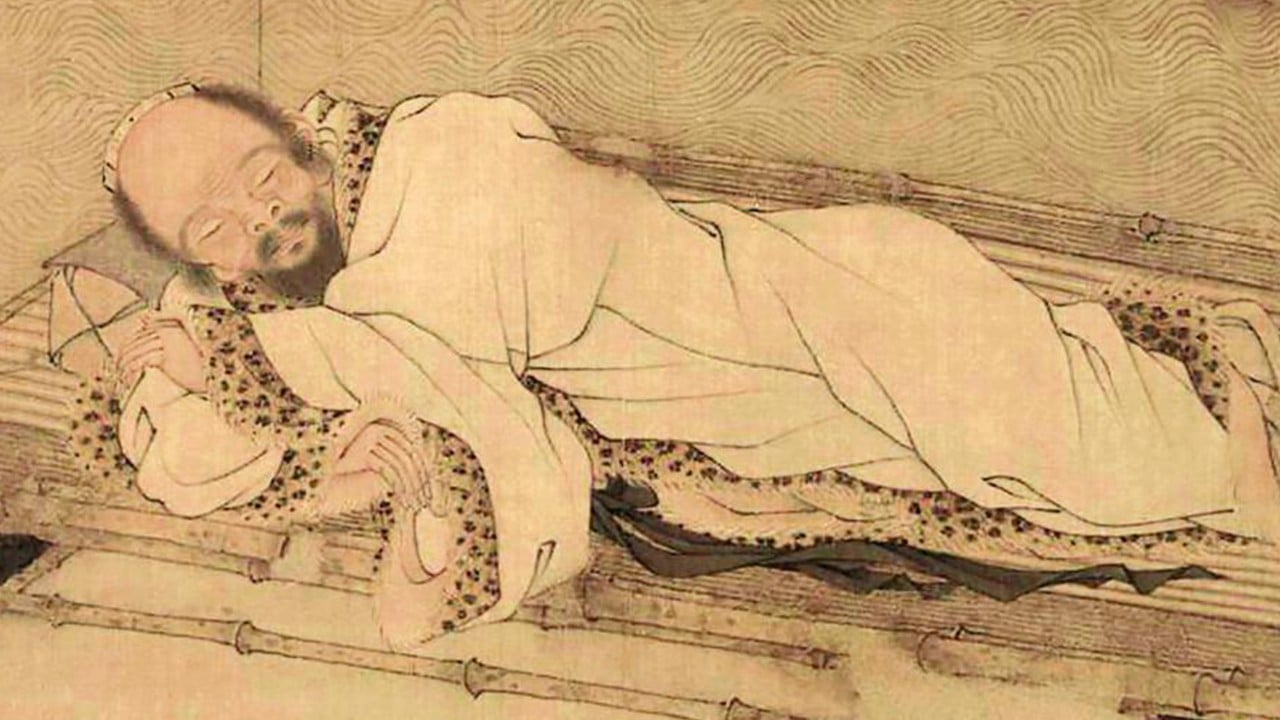
Walk into any corporate office in Beijing or Shanghai at 1:15 PM and you will encounter an eerie, uniform silence. The lights are dimmed. Hundreds of white-collar workers are slouched over their desks, snoring softly on specialized ergonomic pillows, or stretched out on fold-out cots tucked between cubicles. This is wushui, the mandatory afternoon nap, a practice embedded so deeply into Chinese society that roughly 70 percent of the population participates daily. While casual observers dismiss this as a quirky cultural leftover from ancient agrarian rhythms or Traditional Chinese Medicine, the reality is far more calculated. In modern China, the power nap has been weaponized as a vital economic tool to survive grueling work schedules and sustain industrial productivity.
This is not a story about lazy afternoons or ancient philosophy. It is an exploration of how a nation manages chronic sleep deprivation to keep its massive economic engine from stalling.
The Corporate Calculus of the Half Hour Nap
For decades, outside analysts looked at China's wushui tradition through a historical lens. They pointed to the Huangdi Neijing, an ancient medical text claiming that sleeping during the wu hour—between 11:00 AM and 1:00 PM—balances the body's internal energies. Traditional medicine certainly provides the cultural permission slip for napping, but it does not explain why hyper-capitalist tech giants and cutthroat manufacturing hubs actively encourage their workforce to sleep on the job.
The real driver is biological survival in a brutal corporate environment. China’s notorious "996" work schedule—working from 9:00 AM to 9:00 PM, six days a week—creates a structural sleep deficit that no amount of caffeine can fix. Human biology dictates a natural dip in circadian alertness in the early afternoon.
By formalizing a 30 to 60-minute nap windows right after lunch, employers extract higher cognitive performance during the grueling evening hours. It is cheap fuel for human capital. A exhausted software engineer makes coding errors that take hours to debug. A rested engineer keeps working until midnight.
[Image of circadian rhythm afternoon slump]
The practice is so institutionalized that it is protected by a quirk of constitutional history. In 1954, Mao Zedong included the "right to rest" in the constitution of the People's Republic of China. During the planned economy era, factories blew sirens to signal the start and end of the lunch nap. When China transitioned to a market economy, the sirens vanished, but the expectation remained. Today, the tech sector relies on this exact framework. The fold-out cot is as standard in a Hangzhou tech startup as a ping-pong table is in Silicon Valley. The difference is the cot gets far more mileage.
The Multi Billion Dollar Nap Economy
Where there is a mandatory daily habit, there is a massive consumer market. What used to be a matter of folding your arms on a school desk has transformed into a highly commercialized ecosystem.
Chinese e-commerce platforms are flooded with products engineered specifically for office sleeping. There are hollowed-out desk pillows designed to prevent your arms from falling asleep, O-shaped head wrappers that block out fluorescent office lighting, and ultra-compact memory foam mattresses that slide under a standard filing cabinet.
- Desk Nap Pillows: Specially angled cushions to prevent neck strain when sleeping upright.
- Foldable Office Cots: Heavy-duty, lightweight beds that deploy in under thirty seconds between cubicles.
- Privacy Pods: High-end tech firms install soundproof capsules where employees can book 20-minute sleep sessions via an app.
This commercialization extends into public spaces. The rise of the shared economy gave birth to shared sleeping pods located in major business districts. Users scan a QR code with their smartphones to unlock a capsule equipped with disposable bedding, a fan, and a reading light. For a few yuan per minute, workers can escape the open-plan office entirely.
Why the West Gets Napping Wrong
Western corporate culture largely views afternoon drowsiness as a personal failure or a sign of laziness. In the United States or Western Europe, falling asleep at your desk is often a fireable offense, viewed as a lack of dedication or poor lifestyle choices. Western workers cope by chugging energy drinks, Downing double espressos, or pushing through a haze of brain fog that severely degrades output.
This creates a hidden tax on Western productivity. Sleep deprivation costs the US economy over $400 billion annually in lost productivity and absenteeism.
China avoids a portion of this tax by treating sleep as a collective, guilt-free utility. Because everyone from the senior vice president to the janitor naps simultaneously, there is no social stigma. The collective pause removes the competitive anxiety that prevents a Western worker from resting. If everyone is asleep, you are not falling behind by closing your eyes.
The Dark Side of the Slumber
We must look at the trade-offs honestly. The institutionalized nap is a symptom of a deeper, systemic crisis in work-life balance.
If employees did not have to work twelve-hour shifts, they would not need to sleep on a cot next to their paper shredder. The afternoon nap functions as a pressure valve, releasing just enough tension to prevent workers from burning out completely, which in turn allows companies to maintain unsustainable work hours. It is an ambulance at the bottom of a cliff rather than a fence at the top.
Younger Chinese workers, particularly those from Gen Z, are beginning to question this dynamic. A growing counter-culture movement known as tangping, or "lying flat," rejects the relentless corporate grind altogether. For these workers, napping is no longer a tool to recharge for the evening shift; it is a form of passive resistance against a system that demands total devotion to the corporate machine.
Furthermore, the physical toll of office napping is real. Sleeping face-down on a desk compresses the ulnar nerve, leads to chronic neck misalignment, and can spike intraocular pressure in the eyes. The medical tradition that originally justified wushui assumed people were resting in proper beds, not hunched over keyboards in a high-pressure office environment.
Reengineering the Workday
The lesson from China’s napping culture is not that every company should immediately buy pillows for its staff. The lesson is that human biology cannot be optimized out of the economic equation.
A management culture that ignores the mid-day biological dip is actively wasting human potential and bleeding money through unfocused, error-prone work. Companies must design workdays that accommodate human physiology rather than fighting it. Whether through flexible hours, designated quiet zones, or a cultural shift that destigmatizes a twenty-minute reset, the goal remains the same.
The afternoon slump is inevitable. How an economy chooses to handle it determines its long-term endurance.