Ali Khamenei has spent nearly half a century as the most powerful man in Iran, yet his most constant public companion is a physical disability he has spent decades turning into a symbol of spiritual resilience. The reason the Supreme Leader keeps his right hand tucked beneath his cloak or resting motionless on his lap is not a stylistic choice or a secret ritual. It is the permanent result of a 1981 assassination attempt that nearly ended the Islamic Revolution in its infancy. For forty-five years, this "hidden hand" has functioned as a piece of living propaganda, reminding his followers of his "living martyr" status while masking the physical frailty of an aging autocrat.
On June 27, 1981, a tape recorder packed with explosives detonated at the Abu Zar Mosque in South Tehran. Khamenei, then a rising star in the revolutionary government and the Tehran Friday Prayer leader, was the target. The blast shattered his right arm, shoulder, and chest. While he survived, the nerve damage was catastrophic and irreversible. His right arm was left paralyzed, a skeletal reminder of the brutal internal power struggles that defined Iran after the fall of the Shah.
The Anatomy of a Revolutionary Icon
To understand the power of this injury, one must look at how the Islamic Republic views suffering. In Shia Islam, the concept of the "living martyr" carries immense weight. By surviving an attack by the Mujahedin-e Khalq (MEK), Khamenei didn't just survive a bombing; he inherited a divine mandate. The paralyzed hand became his most effective political tool.
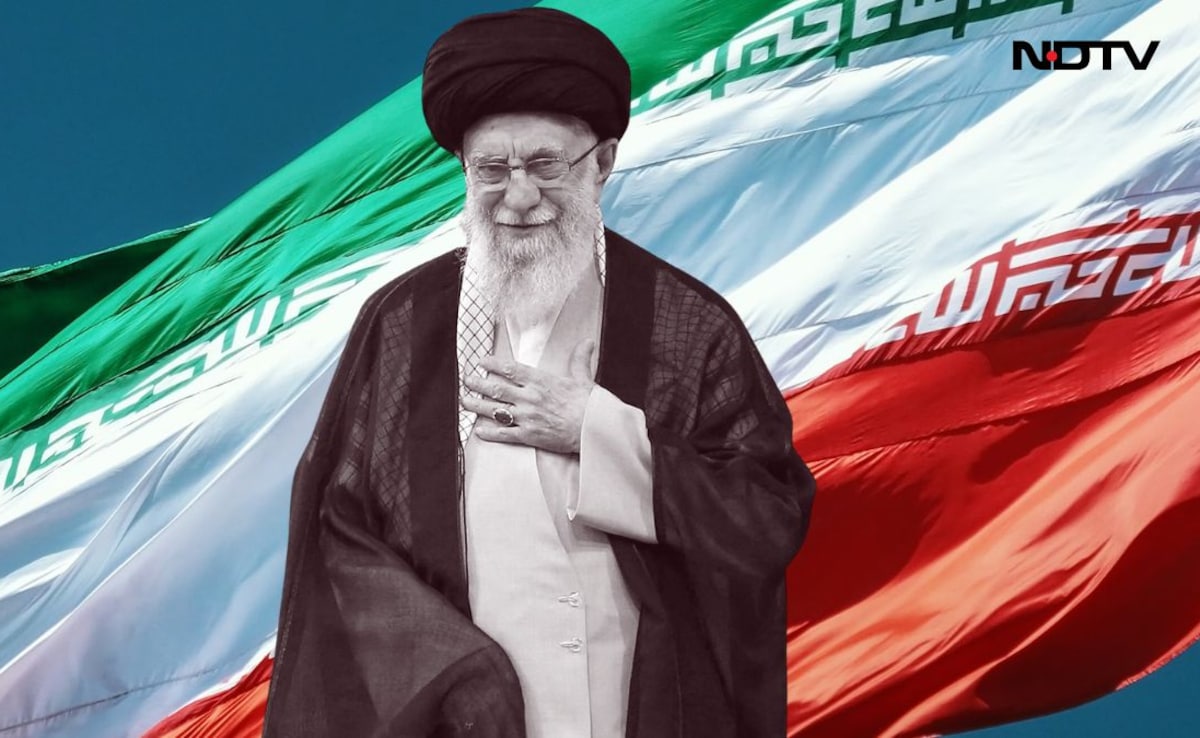
He rarely uses a prosthetic in a way that suggests functionality. Instead, he uses the "aba"—the traditional clerical cloak—to drape over the limb. This creates a specific silhouette. It is the image of a man who has sacrificed his physical body for the state. When he speaks, his left hand handles the gestures, the page-turning, and the grip on the podium. The stillness of the right side creates a visual anchor, a stoic contrast to the fiery rhetoric that often defines his sermons.
The injury forced a complete rewiring of his public persona. Before 1981, Khamenei was an active, mobile figure. Post-1981, he became the stationary center of the Iranian universe. This immobility actually helped him. It projected an aura of stability. While other revolutionary leaders were being cleared out by purges or bombs, Khamenei remained, his cloak-covered arm a constant fixture of the televised evening news.
The Logistics of a One Handed Autocrat
Behind the scenes, the disability creates significant protocol challenges. Iranian state media is under strict orders regarding how the Supreme Leader is filmed. You will almost never see a wide shot of Khamenei walking where the right arm swings unnaturally. Instead, the cameras focus on his face or his active left hand.
Visual Management Protocols
- The Podium Shield: Most of his public addresses are delivered behind high wooden podiums that mask the lower half of his torso and his resting right arm.
- The Cloak Tuck: Tailors for the Supreme Leader's robes reportedly make slight adjustments to the weight of the fabric on the right side to ensure the sleeve hangs naturally even when empty or unsupported.
- Seating Arrangements: When meeting foreign dignitaries or internal officials, Khamenei is almost always positioned so his left side faces the primary camera or the guest, allowing his functional hand to be the one used for emphasis or receiving documents.
The psychological impact on the Iranian public is divided. To the hardline "Basij" and Revolutionary Guard members, the hand is a badge of honor. They see it as proof that their leader is a "Janbaz"—a Persian term for those who have lost limbs in the service of the faith. To the younger, more secular generation, however, the hidden hand is a metaphor for the state itself: rigid, scarred by the conflicts of the 1980s, and unwilling to adapt to a new century.
Beyond the Bombing
There is a deeper, more pragmatic reason for the continued concealment. In the high-stakes world of Middle Eastern geopolitics, physical strength is synonymous with the right to rule. By keeping the arm hidden, Khamenei avoids the appearance of a "shriveled" limb. Nerve damage often leads to muscle atrophy over decades. A withered arm would project weakness or vulnerability to his rivals, both within the Iranian clerical establishment and abroad in Riyadh or Washington.
Maintaining the cloak's drape is an act of theater. It allows the Supreme Leader to control the narrative of his own aging. If the public saw the reality of the injury—the lack of muscle tone, the potential tremors, or the sheer dead weight of the limb—the "living martyr" would look like a frail old man. The cloak transforms a medical reality into a mystery.
The Succession Shadow
As Khamenei enters his mid-80s, the "hidden hand" takes on a new meaning in the context of succession. The internal players—the IRGC, the Assembly of Experts, and the various clerical factions—are all watching for signs of further decline. The right hand was the first part of him to "die" for the revolution; the question now is how much of the rest of the man is still functional.
Rumors of prostate cancer and other ailments have circled for years, yet the Supreme Leader continues to appear, his left hand clutching the microphone, his right tucked away. This concealment has set a precedent for the entire regime. Transparency is viewed as a security risk. In the Islamic Republic, what is hidden is often more important than what is shown.
The injury also changed how he writes. Khamenei was known for his calligraphy, a prized skill among the Iranian elite. After the bombing, he had to teach himself to write with his left hand. His signature changed. His pace slowed. This forced patience became a hallmark of his foreign policy—a slow, left-handed approach to a world he views through the lens of that 1981 explosion.
The Strategy of the Living Martyr
Most leaders would seek to hide a disability to appear "whole." Khamenei did the opposite. He hid the physical damage while highlighting the story of the damage. He turned a moment of near-death into a permanent political campaign.
This isn't just about a bomb from 1981. It is about the 1980s as a whole—the "Sacred Defense" against Iraq, the street battles with the MEK, and the consolidation of the theocracy. For Khamenei, the right hand didn't just stop working; it froze in time. It remains in 1981, a perpetual reminder that the regime was born in blood and will not be easily uprooted.
When he finally leaves the stage, the mystery of the hand will vanish, replaced by the cold reality of a medical report. Until then, the cloak remains the most important garment in Iranian politics. It covers more than just a paralyzed limb; it covers the scars of a revolution that has yet to find peace with its own history.
Check the historical footage of his first speech after the hospital stay; the transition from an active orator to the cloaked figure we see today was not immediate, but a calculated evolution of his public image.