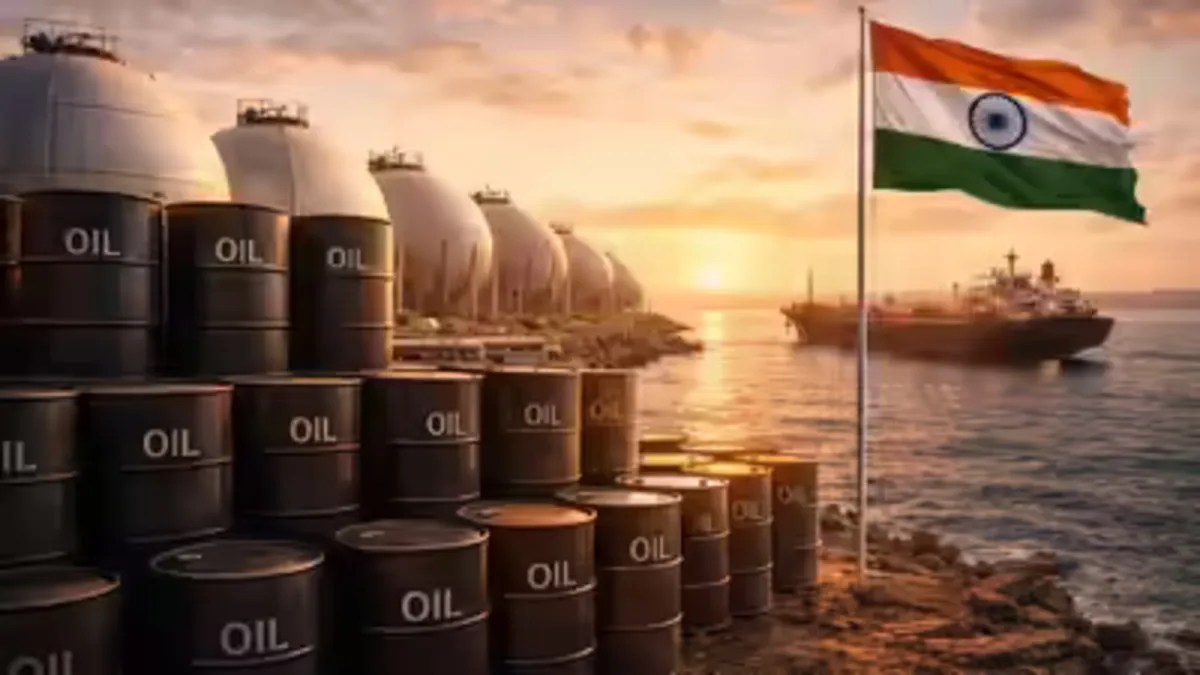
India has quietly activated its emergency backup plan. As geopolitical instability in the Middle East threatens the steady flow of energy from Iran and neighboring suppliers, New Delhi is tapping into its Strategic Petroleum Reserves (SPR). These are not mere storage tanks. They are massive, unyielding caverns carved deep into the salt and rock of the Indian coastline, designed specifically for this moment. While the headlines scream about a crude oil crisis, the reality is a calculated deployment of a multi-billion dollar insurance policy that has been decades in the making.
The Physicality of the Secret Reserves
Most people imagine oil storage as the giant white cylinders seen near refineries. Those are for operational use. The Strategic Petroleum Reserves are something else entirely. They are located in Visakhapatnam, Mangaluru, and Padur. These sites hold roughly 5.33 million metric tonnes of crude oil. That is enough to power the country for about nine days.
The engineering behind these caverns is a feat of geological mastery. They utilize the principle of "hydrostatic containment." By storing oil in unlined rock caverns deep underground, the pressure of the surrounding groundwater keeps the oil from escaping. It is a primitive yet sophisticated way to hide millions of barrels of energy from both the elements and potential aerial threats.
Why the Iran Factor Hits Different
India and Iran have a complicated energy history. For years, Iran was a top three supplier. Then came the sanctions. While India officially stopped importing Iranian crude to comply with international pressure, the logistical shadow of Iran remains the most significant variable in the Indian energy equation. The Strait of Hormuz is the world’s most important chokepoint.
Approximately one-fifth of the world’s total oil consumption passes through this narrow stretch of water. If a conflict involving Iran shuts down the Strait, it doesn't just stop Iranian oil; it stops Saudi, Iraqi, and Kuwaiti oil too. This is why the government has moved from a "wait and see" approach to an active "drawdown" strategy.
The Economics of a Forced Drawdown
Tapping the reserves is a double-edged sword. On one hand, it stabilizes domestic prices at the pump, preventing a sudden inflationary spike that could derail the national economy. On the other hand, the government is selling off its "cheap" oil.
Most of the oil currently sitting in those caverns was purchased when global prices were significantly lower. By releasing it now, the Indian Strategic Petroleum Reserves Limited (ISPRL) is essentially cashing in an insurance policy. The problem? Eventually, those caverns must be refilled. If the crisis persists and prices stay high, the cost of replenishing the reserves could create a massive hole in the fiscal deficit.
Diversification Is No Longer Optional
The current crisis has exposed the fragility of relying on a single geographic region. For the last two years, Russia became India's primary supplier, offering steep discounts as Western markets closed their doors. However, the logistical costs of shipping Siberian crude are high, and the political costs are mounting.
The government is now aggressively looking toward the United States, Guyana, and Brazil. The goal is to create a "permanent buffer." This isn't just about having oil in the ground; it's about having a supply chain that doesn't rely on a single narrow waterway in the Middle East.
The Phase II Expansion
The current nine-day buffer is anemic compared to the 90-day reserve held by countries like the United States or Japan. The government knows this. Construction has already been greenlit for Phase II, which aims to add another 6.5 million metric tonnes of capacity at Chandikhol and Padur.
This expansion will bring the total strategic storage to roughly 22 days. When combined with the storage held by public sector oil companies (OMCs), India’s total emergency cover would hover around 87 days. That is the magic number required to meet International Energy Agency (IEA) standards.
The Problem with Salt vs Rock
India’s current reserves are primarily in hard rock caverns. These are stable but expensive to build. The next frontier is salt caverns. Rajasthan has been identified as a potential site for salt cavern storage. These are significantly cheaper and allow for faster injection and withdrawal of oil. If India can master the technology to create salt-based storage, the cost of energy security will drop significantly.
The Geopolitical Chessboard
Energy security is a hard power asset. When a country can prove it can survive a three-month blockade, its diplomatic leverage increases. By opening the "secret reserves" now, India is signaling to the global market that it will not be bullied by supply chain disruptions or price manipulation.
However, the move also signals a level of desperation. You don't break the glass on the fire extinguisher unless you see smoke. The decision to tap the SPR suggests that the internal projections for Middle Eastern stability are far grimmer than what is being shared in press releases.
Private Sector Involvement
In a significant shift in policy, the government is now allowing foreign oil majors to rent space in these caverns. The Abu Dhabi National Oil Company (ADNOC) was the first to jump in. They store their oil in the Mangaluru cavern, with the agreement that a portion of it belongs to India in case of a national emergency.
This "commercialization of strategy" allows India to fill its caverns without spending its own foreign exchange reserves. It turns a liability—the high cost of storage—into a recurring revenue stream. But it also means that in a true global shortage, there could be a legal tug-of-war over who owns the molecules in the ground.
Refining the Strategy
The crude stored in the caverns isn't a one-size-fits-all product. India’s refineries are calibrated for specific types of "sour" and "sweet" crude. If the SPR is filled with the wrong grade, it becomes a useless sludge during a crisis. The ISPRL has to constantly rotate the stock, selling old oil to refineries and buying fresh barrels to ensure the chemical integrity of the reserve.
This rotation is a logistical nightmare. It requires synchronized movements across the Indian Navy, the port authorities, and the internal pipeline networks. Any hiccup in this chain makes the "secret reserves" a moot point.
The Hidden Cost of the Shield
The maintenance of these sites is staggering. You are fighting against natural seepage, pressure changes, and the corrosive nature of crude oil itself. The security protocols alone involve elite paramilitary forces and 24/7 subterranean monitoring. This is the price of sovereignty in an age where energy is used as a weapon of war.
As the situation in Iran evolves, the pressure on these underground vaults will only increase. The government's decision to reveal and utilize these assets is a definitive statement on the state of global energy. The era of cheap, easy, and certain oil is over.
The Next Step for Energy Sovereignty
The immediate focus remains on the expansion of the Padur site. The government must secure the land and the technical partnerships required to double its capacity before the next major geopolitical shift. Investors and analysts should watch the tender process for Phase II closely, as it will dictate the pace at which India can truly decouple its economy from the volatility of the Persian Gulf. Check the ministry's upcoming quarterly report on the "National Strategic Petroleum Reserve Program" to see if the fill-rate targets for the Chandikhol site are being met.