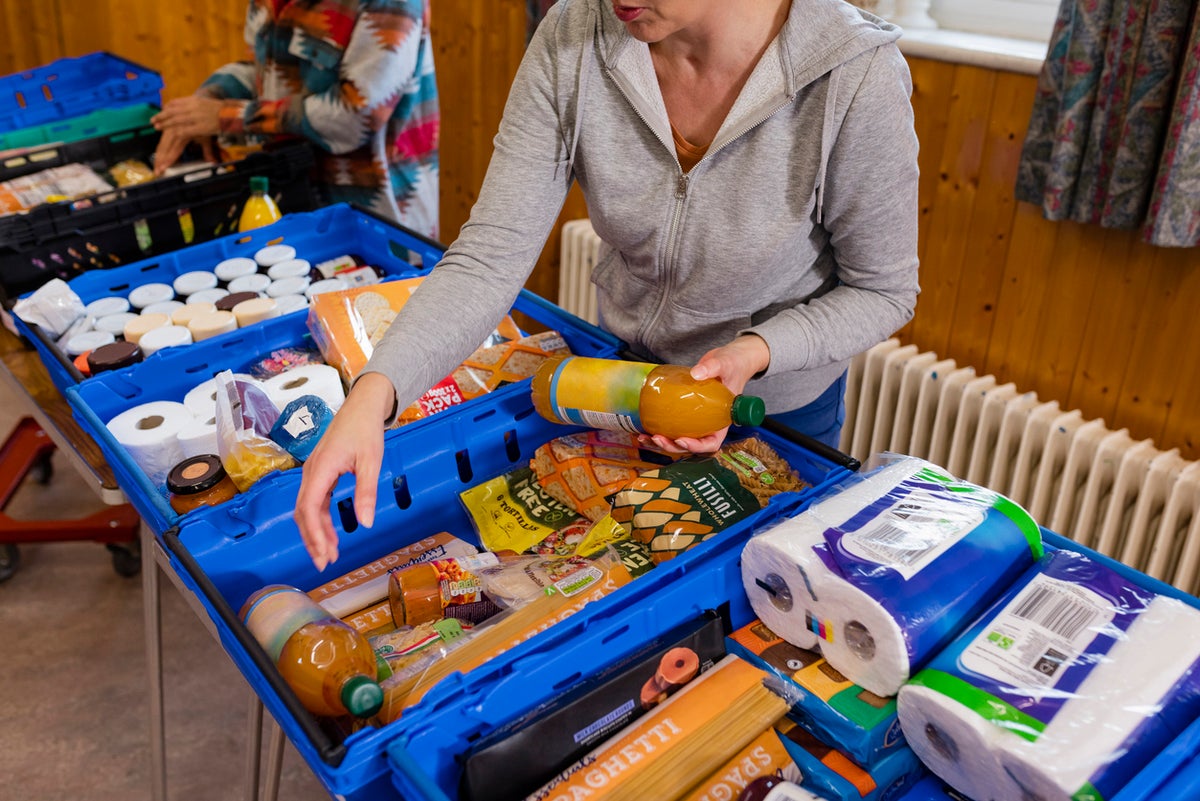
American grocery stores throw away millions of tons of edible food every year while local food banks face chronic supply shortages. It is an industry-wide paradox. While retail chains publicly pledge to eliminate hunger, the reality is that less than 15 percent of surplus grocery store food actually reaches food banks and distribution networks. The rest is discarded. This systemic failure is not driven by a lack of charity, but by a complex web of cold corporate economics, logistics bottlenecks, legal misunderstandings, and the rigid aesthetics of modern retail management.
To understand why so much food rots in dumpsters behind supermarkets, one must look past corporate public relations campaigns. The math governing retail operations actively penalizes the preservation of surplus inventory. If you liked this piece, you should look at: this related article.
The Cold Economics of the Dumpster
For a standard supermarket manager, every operational decision filters through the lens of labor costs and margin preservation. Donating food requires labor. Employees must sort through expiring or cosmetically flawed inventory, verify its safety, pack it into boxes, log the data, and store it in temperature-controlled environments until a food bank truck arrives.
Throwing food away requires almost no effort. A worker tosses the items into a rolling bin, pushes it to the back dock, and dumps it into a compactor. For another perspective on this event, refer to the latest update from Business Insider.
[Cost comparison of retail food disposal methods]
In a business with razor-thin profit margins ranging from 1 to 2 percent, labor is the most controllable variable. Managers are routinely judged on their labor-to-sales ratios. Spending employee hours on an activity that generates zero direct revenue is a fast way for a store manager to miss their quarterly bonus. Waste disposal fees are treated as a fixed cost of doing business, whereas extra labor hours appear as a red flag on a corporate balance sheet.
Federal tax incentives exist to offset these corporate costs, but they are heavily weighted toward large corporate entities with sophisticated accounting departments. The PATH Act allows businesses to claim an enhanced tax deduction for food donations, but the administrative burden of tracking every single dented can or expiring carton of milk prevents many regional operators from leveraging the law. For the average store, the tax write-off rarely covers the immediate cost of the labor required to secure the donation.
The Myth of Liability
Talk to any supermarket employee on the loading dock, and you will likely hear a familiar refrain. They will tell you that the store cannot donate expiring meat or prepared foods because they might get sued if someone gets sick. This is a pervasive myth.
The Bill Emerson Good Samaritan Food Donation Act, signed into federal law in 1996, provides sweeping civil and criminal liability protection for companies that donate apparently wholesome food in good faith to non-profit organizations. In the three decades since its passage, there has not been a single documented case of a food donor facing a major civil lawsuit over donated food items.
Yet, corporate legal teams remain hyper-conservative. Compliance departments frequently draft internal policies that far exceed statutory requirements. They look at the theoretical brand damage of a public food safety scare and decide that zero risk is the only acceptable risk. As a result, perfectly safe, nutrient-dense food that has bypassed its arbitrary "sell-by" date is permanently flagged for destruction rather than donation.
The Arbitrary Calendar of Expiration Dates
The confusion around food safety is exacerbated by the total lack of federal standardization regarding product dating. With the exception of infant formula, dates like "Best By," "Sell By," and "Use By" are placed on packaging by manufacturers to indicate peak quality, not safety.
[Graph showing the difference between food quality degradation versus actual safety thresholds]
Supermarket inventory systems are automated to flag these dates aggressively. Once an item hits its "Sell By" date, the automated system removes it from the commercial ecosystem. Because store-level staff are rarely trained on the biological difference between a decline in product crispness and an actual pathogen risk, the default action is to discard. Food banks are capable of distributing food that is past its peak quality date but still entirely safe to consume, but they cannot distribute what they are never allowed to collect.
The Logistics Broken Link
Even when a grocery store chain signs a national donation agreement with a major hunger-relief organization, the physical reality of the supply chain frequently derails the effort. Food banks operate on shoe-string budgets and rely heavily on volunteer labor and donated vehicles. They are poorly equipped to handle the erratic, unpredictable nature of retail rescue.
A grocery store might call a local pantry at 4:00 PM to report that they have three pallets of chilled dairy products that must be removed from the warehouse by sunset.
The pantry may not have a refrigerated truck available. They may not have volunteers scheduled who can lift heavy pallets. They may lack the immediate cold-storage infrastructure to store hundreds of gallons of milk before it spoils. When the food bank drops the ball due to capacity limits, the store reverts to its default option: the dumpster.
- Cold Chain Failure: Perishable items require uninterrupted refrigeration from the retail shelf to the consumer's kitchen. Most small pantries cannot guarantee this.
- Geographic Mismatch: Large distribution centers are clustered near major shipping hubs, while rural and suburban food deserts lack the infrastructure to receive large shipments.
- Volume Imbalances: Retailers donate what they cannot sell, which often results in hundreds of pounds of a single item, like sheet cakes or specialty condiments, rather than balanced, shelf-stable nutritional staples.
This creates a structural mismatch. The food bank needs predictable, high-volume shipments of staples like rice, beans, and lean proteins. The grocery store offers unpredictable, low-volume streams of mixed produce, bakery items, and near-expiry dairy.
The Aesthetics of Overabundance
Modern grocery store merchandising relies on the psychology of abundance. Consumers are conditioned to expect mountain-like displays of perfectly uniform, unblemished fruits and vegetables at all hours of the day. A half-empty produce display signals a failing store to the average shopper.
To maintain this illusion, stores intentionally over-order. They build massive displays of avocados, apples, and tomatoes, knowing full well that the items at the bottom of the pile will be crushed or will spoil before they can be purchased. This planned waste is built directly into the cost structure of consumer goods.
When a new shipment arrives, the older, slightly wilted produce is culled to make room for the pristine new stock. This cosmetic culling happens long before the food is actually inedible. However, because these items require rapid sorting and immediate consumption, the window for a food bank to collect and redistribute them is incredibly narrow. The industry calls this "shrink," treating it as a natural, unavoidable byproduct of consumer psychology rather than a fixable failure of supply chain management.
The Failure of Voluntary Programs
For years, the grocery industry has favored voluntary, internal goals to address this issue. Major conglomerates issue annual sustainability reports filled with photos of clean warehouses and oversized checks presented to local charities. These initiatives look impressive on paper but lack external accountability.
Voluntary programs allow retailers to pick and choose which data points they publicize. A chain might brag about donating five million pounds of food globally, while completely withholding data on the fifty million pounds of food it sent to landfills during the same fiscal year. Without mandatory, standardized reporting of food waste metrics at the store level, there is no real incentive for executive leadership to alter corporate behavior.
In contrast, regions that have implemented strict regulatory mandates have seen immediate, structural shifts in how food is handled.
France passed legislation in 2016 that banned supermarkets from throwing away or destroying unsold food, forcing them to sign donation contracts with charities or face heavy fines. The law forced French retailers to invest in the very logistics, sorting, and storage infrastructure that American grocers claim is too expensive to maintain. The result was a massive, sustained increase in the quality and quantity of food available to French charities.
Reengineering the Retail Supply Chain
Solving the retail food waste issue requires shifting the economic incentives inside the grocery store itself. Relying on the goodwill of corporate executives has proven insufficient for decades.
First, the accounting treatment of food waste must change. If municipal governments increased tipping fees at commercial landfills or banned organic waste from commercial dumpsters entirely—as states like Massachusetts and California have begun to do—the financial calculus for store managers would instantly flip. Suddenly, the labor required to sort and pack donations becomes cheaper than the penalty fees for throwing things away.
Second, technology must bridge the communication gap between loading docks and local pantries. Standardizing real-time inventory tracking systems would allow food banks to see exactly what products are approaching their expiration dates days in advance, rather than hours. This would allow logistics networks to pre-allocate assets and schedule pickups efficiently.
Ultimately, the 13 percent capture rate is a choice. It is the natural outcome of a system that prioritizes cheap waste disposal over disciplined resource management. Until the cost of discarding edible food exceeds the cost of rescuing it, the back-alley dumpsters of American supermarkets will remain full.