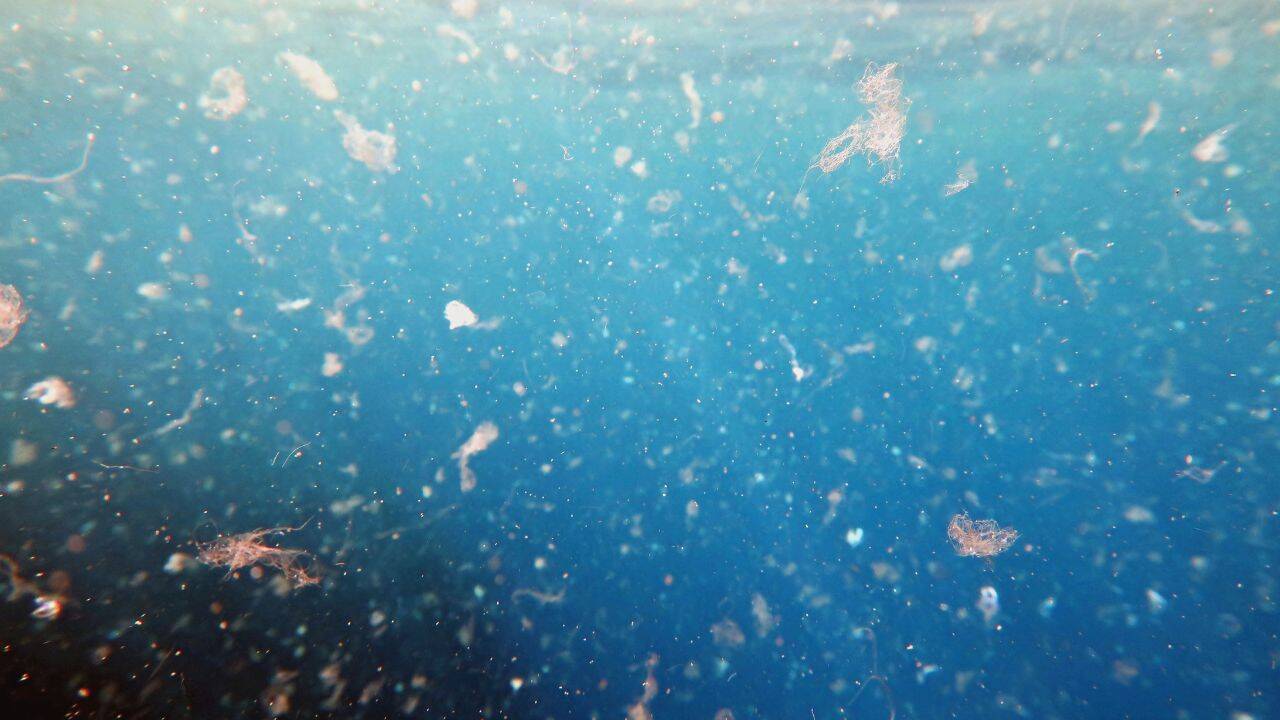
Municipal water treatment facilities are quietly losing their grip on public safety because microscopic plastic debris is acting as a physical armor for deadly pathogens. For decades, the global standard for purifying drinking water has relied on chemical disinfectants like chlorine to rupture the cell walls of harmful bacteria. However, the surging concentration of microplastics in raw water supplies has fundamentally altered the mechanics of fluid dynamics and microbial survival during the treatment process. When bacteria attach to these tiny synthetic particles, they form dense biological films that shield them from chemical exposure. As a result, viable, drug-resistant pathogens are slipping through municipal infrastructure and flowing straight to consumer taps.
The threat extends far beyond the mere ingestion of inert plastic fragments. It represents a systemic failure of current environmental engineering.
The Mechanics of the Synthetic Shield
To understand how traditional infrastructure fails, one must look at the surface chemistry of weathered plastics. In a natural aquatic environment, a piece of discarded polyethylene or polystyrene does not remain clean. Solar radiation and mechanical friction break the material down into fragments measuring less than five millimeters. This degradation process creates a highly textured, porous surface area that acts as a magnet for organic matter.
Bacteria do not simply float alongside these particles. They actively colonize them. Within hours of exposure, free-swimming microbes secrete a sticky matrix of extracellular polymeric substances. This matrix glues the bacteria to the plastic substrate, creating a mature biofilm.
When chlorine or chloramine is introduced at a treatment plant, the disinfectant must penetrate this dense organic shield to reach the target pathogens. It rarely succeeds. The outer layers of the biofilm sacrifice themselves, neutralizing the chemical agent before it can reach the core of the colony. Consequently, the bacteria buried deep within the plastic pore spaces survive the disinfection phase entirely unharmed.
Accelerated Genetic Mutation in the Pipeline
The danger compounds when these colonized particles enter the distribution network. Water treatment plants do not just face the challenge of surviving microbes; they are inadvertently creating breeding grounds for antibiotic resistance.
When bacteria are stressed by sub-lethal doses of chlorine within a biofilm, their survival mechanisms trigger. This stress response accelerates the rate of horizontal gene transfer. In this process, different species of bacteria huddled together on the same microplastic particle exchange pieces of DNA, including genes that grant resistance to medical antibiotics.
Consider a hypothetical scenario where a harmless environmental bacterium carrying a natural resistance gene shares a microplastic surface with a human pathogen like Escherichia coli. Under the selective pressure of low-level chlorine exposure, the resistance gene moves from the harmless microbe to the pathogen. The resulting superbug is now uniquely equipped to survive both the water plant and the human stomach.
Furthermore, the plastic particle provides a stable raft. In typical conditions, suspended bacteria might starve or succumb to environmental pressures over time. The plastic matrix concentrates nutrients from the surrounding water, keeping the bacterial colony fed and viable during its journey through miles of municipal piping.
The Failure of Current Regulatory Metrics
Public health agencies remain dangerously behind the curve because they measure water safety using outdated metrics. Regulatory compliance typically relies on testing for "free chlorine" levels and counting colony-forming units of indicator bacteria in bulk water samples.
This methodology contains a massive blind spot.
Standard testing protocols involve filtering out suspended solids or looking only at the bacteria suspended freely in the liquid. When a technician checks a sample, the water itself may appear perfectly sterile. The free chlorine levels might sit exactly within the legally mandated parts-per-millillion range. Yet, hidden within the microscopic plastic sediment drifting through that same sample are thousands of viable, shielded pathogens. The metrics show safety, while the reality presents a clear hazard.
Compounding the issue is the physical nature of the water distribution grid. Many cities rely on cast iron or unlined water mains that are over half a century old. The interior walls of these pipes are already coated in scale and tuberculation. When microplastics carrying chlorine-resistant biofilms enter these aging networks, they integrate into the existing pipe scale. This creates a permanent, self-sustaining reservoir of pathogens within the urban infrastructure, completely insulated from the treatment plant’s efforts.
Upgrading the Physical Barriers
Solving this crisis requires a complete overhaul of how treatment facilities handle physical filtration before any chemical disinfectants are introduced. Relying on sand filters and sedimentation basins is no longer sufficient to capture the smallest tier of synthetic particles.
Advanced Filtration Alternatives
- Ultrafiltration Membranes: Utilizing hollow-fiber membranes with pore sizes down to 0.01 micrometers physically strips microplastics and their associated biofilms from the water stream prior to chlorination.
- Ozonation and Advanced Oxidation: Replacing or supplementing chlorine with ozone gas destroys the structural integrity of both the microplastic surface and the protective biofilm matrix.
- Biologically Active Carbon: Employing granular carbon beds encourages beneficial native bacteria to consume the organic matrix binding pathogens to the plastic, stripping away their defense before the final disinfection phase.
These upgrades require significant capital investment. Many municipalities, strapped for cash and struggling to maintain basic operations, resist these expenditures because they are not yet legally mandated to test for or remove microplastics.
The Financial Inertia Delaying Action
The transition to advanced filtration faces intense bureaucratic and financial resistance. Adding ultrafiltration arrays or ozonation systems to an existing plant can double the operational energy budget.
Political leaders often hesitate to approve rate hikes for invisible upgrades. A new bridge or a paved road offers clear visible value to voters; upgraded membrane filters inside a restricted-access utility building do not. This political inertia keeps water authorities stuck in a cycle of reactive maintenance, applying more chlorine to combat rising bacterial counts, which only worsens the selection pressure for resistant strains.
Meanwhile, the volume of synthetic debris entering raw water sources increases every year. Runoff from urban streets, tire wear particles, and poorly managed wastewater effluent constantly feed the system. Treatment plants are essentially fighting a twenty-first-century contaminant using nineteenth-century logic.
The belief that chemical dosing guarantees safety is dead. Until federal regulations mandate the physical removal of microplastic substrates as a primary public health metric, the water flowing into millions of homes will carry an invisible, shielded biological threat. The infrastructure is not broken; it is obsolete.