The National Mall was supposed to be a neutral zone of national reverence for the United States Semiquincentennial. Instead, the 250th anniversary of the Declaration of Independence became the ultimate stage for a manufactured, deeply partisan political rally. President Donald Trump used the July 4, 2026 milestone to weaponize institutional planning, push campaign-style rhetoric, and alienate half the country during a moment historically reserved for unified patriotism. By systematically dismantling a decade of bipartisan preparation and replacing it with an administration-controlled entity called Freedom 250, the White House engineered a celebration designed not to unite a fractured nation, but to consolidate a political brand.
This was not a casual blunder or a standard political miscalculation. It was a calculated institutional takeover.
While everyday citizens braved a brutal east coast heatwave and delayed schedules to glimpse fireworks, the real story of the 250th birthday lay in the corporate and administrative machinery running behind the scenes. The multi-year planning process reveals a stark trajectory from an inclusive national celebration to an aggressive partisan spectacle.
The Disenfranchisement of America 250
Congress began preparing for this moment a decade ago. In 2016, the United States Semiquincentennial Commission was established by law as a strictly non-partisan body operating under the public banner of America 250. Its mandate was to craft educational initiatives, coordinate with all fifty states, and build a commemorative infrastructure that reflected the entirety of the American experiment.
That framework was derailed.
Following the return of the Trump administration, federal resources and planning authority were aggressively diverted away from the original commission. Executive power was leveraged to establish a parallel organization, the White House Task Force on Celebrating America's 250th Birthday, operating as Freedom 250. This move effectively sidelined the original, congressional body.
With this shift in control came an immediate pivot in focus. The initial plans for the anniversary included currency and commemorative coin designs recognizing milestones of shared progress, such as abolition, women’s suffrage, and the civil rights movement. The new task force stripped those recommendations away, branding them as capitulations to progressive culture. In their place came a curation of historical narratives tailored strictly to nationalist tropes.
A Tale of Two Speeches
The tone of the celebrations became unmistakable during the holiday weekend, starting with an address at Mount Rushmore. Standing beneath the carved granite faces of past leaders, Trump delivered an aggressive broadside against what he termed the domestic communist menace. Rather than appealing to shared democratic values, the text explicitly framed political opponents as existential enemies of the state.
The pattern repeated itself the following night in Washington DC.
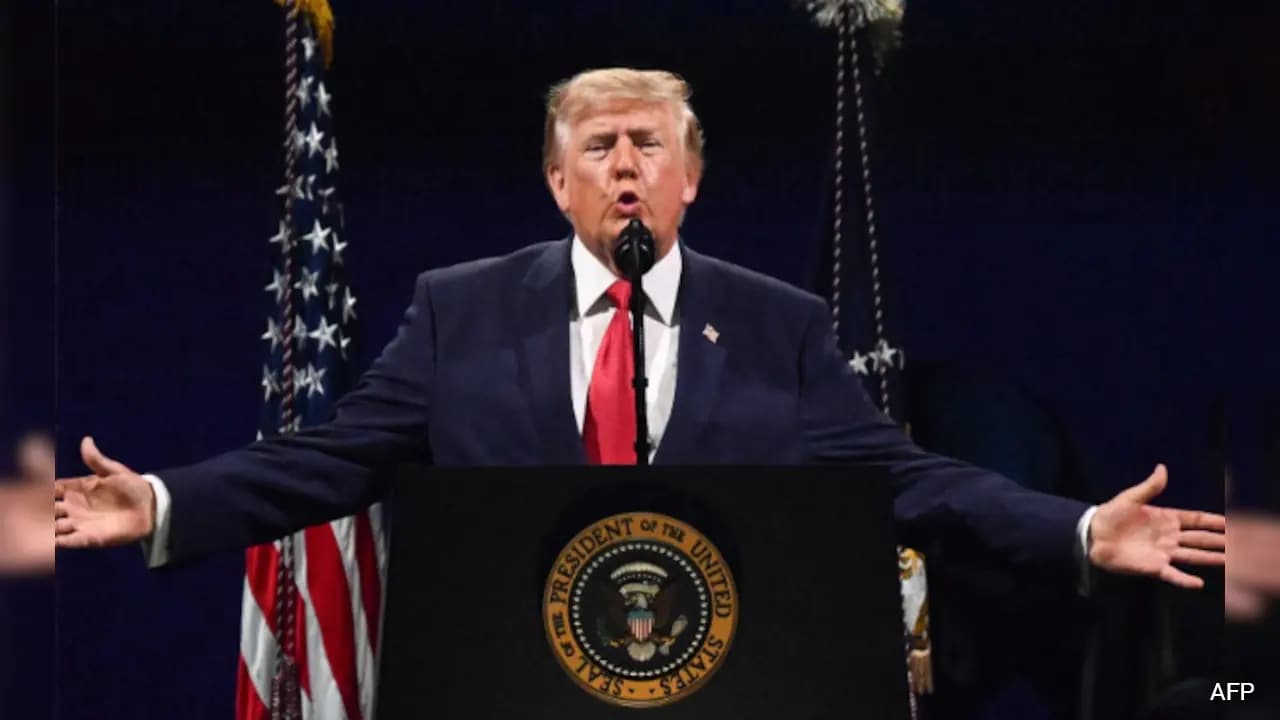
Delayed until nearly midnight by severe thunderstorms and a heatwave that spiked temperatures above 100 degrees Fahrenheit, Trump finally took the stage before a thinned but loyal crowd on the National Mall. The address quickly veered away from traditional civic history. The president used the platform to stump for the SAVE America Act, a highly contentious voting bill currently stalled in Congress, and openly joked about seeking an unconstitutional third term.
Historical Comparison: Presidential Landmark Anniversary Addresses
-------------------------------------------------------------------------
Year   President       Occasion           Core Rhetorical Focus
-------------------------------------------------------------------------
1976   Gerald Ford     Bicentennial       Reconciliation, post-Watergate unity
1926   Calvin Coolidge Sesquicentennial   The enduring philosophy of the Constitution
2026   Donald Trump    Semiquincentennial Partisan legislative pushes, anti-communism
True, the speech featured genuine moments of traditional patriotism. World War II veterans were brought on stage, and the crew of the Artemis II lunar mission was rightly honored. Yet these elements were constantly overshadowed by campaign-style grievances. Lee Greenwood opened the proceedings, and the organizing staff was pulled directly from the administration's political apparatus.
The immediate result of this overt politicization was a visible lack of national participation. Landmark events like the Independence Day parades in Philadelphia and Washington were canceled due to extreme weather, but even the ongoing festivities suffered from low engagement. The Great American State Fair, a massive 16-day installation sprawling across the National Mall, saw consistently sparse crowds. Beyond the core base of political supporters, wide swaths of the public simply chose to stay away from an event that felt more like a political convention than a national birthday party.
Operational Failures and Financial Shadows
The administrative pivot from public non-profit management to a closed White House task force created a massive vacuum in financial transparency. Millions of dollars in federal funds and corporate sponsorships were shuffled between agencies to realize highly specific presidential requests.
A prime example of this was the multi-million-dollar rush to renovate the Lincoln Memorial Reflecting Pool. The White House ordered an emergency $14.7 million treatment project to turn the water an optimized shade of American Flag blue in time for the July 4 broadcast. The operation backfired completely. A severe algae bloom triggered by the intense summer heat wave turned the water a murky, stagnant green. Officials quickly blamed unknown vandals for the failure, but environmental engineers pointed directly to the rushed, superficial nature of the chemical treatment.
Safety was similarly compromised by political grandstanding across the country. During a live-fire amphibious military demonstration at Camp Pendleton in late 2025—organized as an early promotional event for the 250th anniversary—the California Highway Patrol was ordered to close a 17-mile stretch of Interstate 5 to accommodate the spectacle. Federal safety officials explicitly warned against the closure. The warnings were ignored, and debris from an exploding artillery shell ultimately rained down on parked law enforcement vehicles assigned to Vice President JD Vance’s security detail.
The Cost of Shattered Tradition
The long-term damage of the 2026 celebrations does not lie in the sparse crowds or the green water of the reflecting pool. It lies in the destruction of a vital civic norm.
Milestone anniversaries have historically served as rare moments of political truce. When Gerald Ford spoke in 1976, he addressed a nation deeply scarred by the Vietnam War and the Watergate scandal, yet his rhetoric focused strictly on institutional healing and shared democratic continuity. By choosing instead to use the Semiquincentennial as a cudgel to punish political rivals and reward loyalists, the current administration has set a dangerous precedent.
When a nation loses the ability to celebrate its foundational moments without falling into partisan warfare, it loses a piece of its civic core. The fireworks over the Washington Monument were record-breaking in size, but they illuminated a capital city entirely divided against itself.