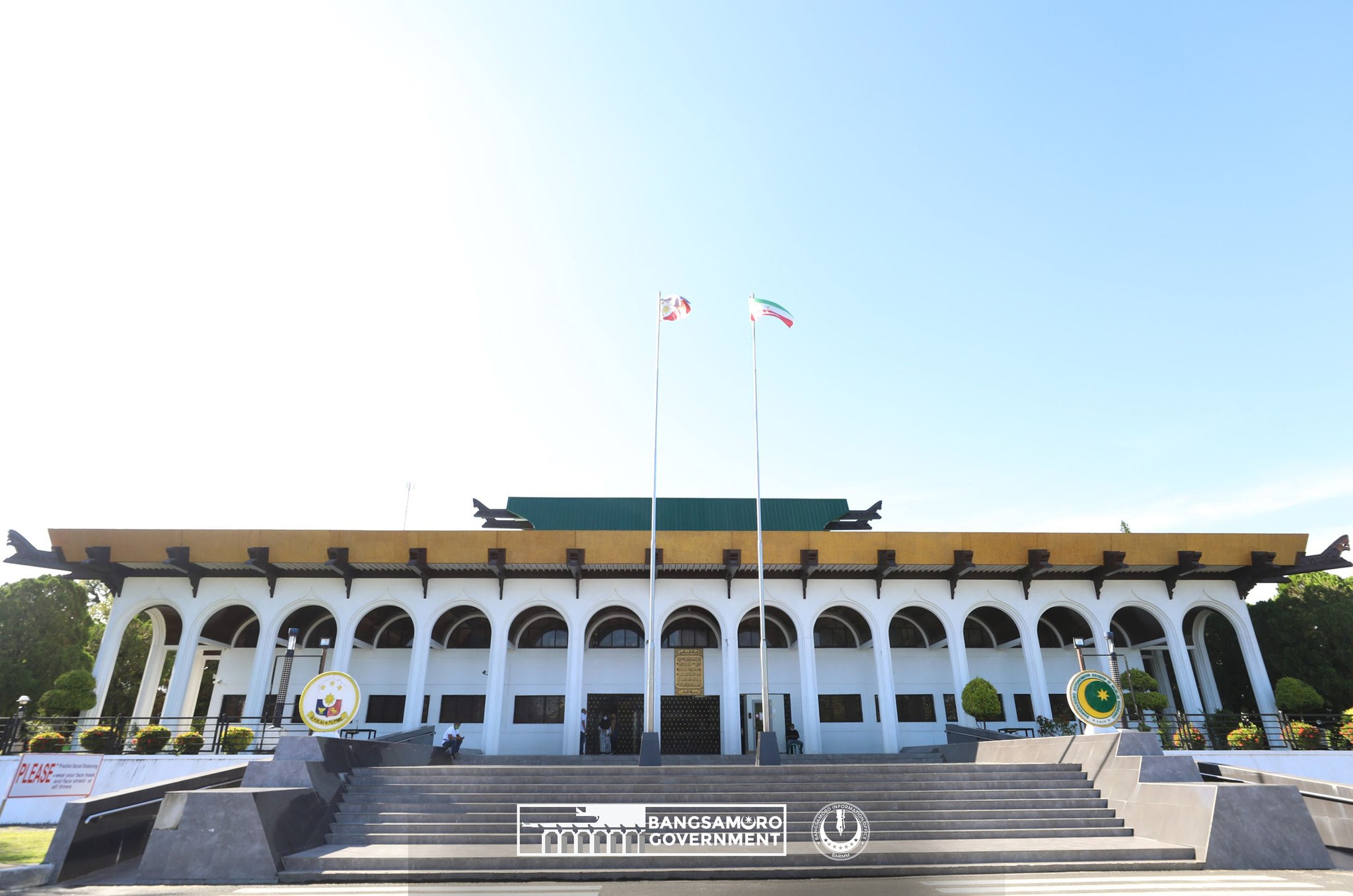
Mainstream coverage of the Bangsamoro Autonomous Region in Muslim Mindanao (BARMM) casting ballots for its inaugural regular parliament reads like a press release from a diplomatic cocktail party. Every major outlet is recycling the exact same lazy consensus: ballots have replaced bullets, a decades-long insurgency is officially over, and democracy has finally triumphed in the southern Philippines.
It is a neat, comforting narrative. It is also dangerously naive.
If you actually understand the mechanics of Mindanao politics, clan patronage, and transitional justice, you know that holding an election does not magically erase fifty years of armed conflict. In fact, premature democratization in a post-conflict zone with unresolved territorial disputes, uncollected firearms, and entrenched political dynasties often does the exact opposite. It freezes wartime power structures into permanent, state-funded monopolies.
I have spent years watching international observers and Manila technocrats pat themselves on the back over peace agreements that look brilliant on paper while rotting from the inside out on the ground. We saw it in Timor-Leste. We saw it in post-accord Liberia. Now, we are watching the exact same blind spot play out in Cotabato City.
The Lie of the Ballot Over Bullet Binary
The dominant media framing treats the BARMM parliamentary election as a clean finish line. The Moro Islamic Liberation Front (MILF) traded their assault rifles for campaign posters, the Bangsamoro Transition Authority (BTA) handed over the keys, and the voters chose their leaders.
This binary—war versus elections—is a textbook misunderstanding of how political power actually operates in the southern Philippines.
In BARMM, an election is not a neutral mechanism for civic expression. It is a high-stakes auction for control over the Annual Block Grant, a massive automatic appropriation from the Philippine national treasury guaranteed under the Bangsamoro Organic Law (BOL). Whoever wins seats in this 80-member parliament controls billions of pesos in public funds, infrastructure contracts, and local patronage networks.
When you drop an electoral contest onto a region where private armies still exist and clan feuds (rido) remain unresolved, the ballot does not replace the bullet. The bullet simply becomes a campaign tool. Look at the historical data from the Philippine National Police and independent election watchdogs like the Parish Pastoral Council for Responsible Voting (PPCRV) across previous Mindanao cycles. Election-related violent incidents spike precisely because local strongmen view losing office as an existential threat to their survival and wealth.
What Everyone Gets Wrong About the Supreme Court Sulu Ruling
You cannot talk honestly about this election without addressing the massive structural fracture that mainstream headlines glossed over: the exclusion of Sulu.
When the Philippine Supreme Court ruled in September 2024 that Sulu is not part of BARMM because its voters rejected the Bangsamoro Organic Law in the 2019 plebiscite, Manila legalists celebrated constitutional precision. Meanwhile, the political architecture of the entire autonomous region suffered a silent heart attack.
- The Geographic Fracture: Sulu was the historical seat of the Sultanate of Sulu and the birthplace of the Moro National Liberation Front (MNLF). Cutting it out of BARMM split the Bangsamoro identity right down the middle.
- The Seat Redistribution Chaos: Losing Sulu forced the postponement of the original May 2025 election date and triggered a frantic scramble to reallocate parliamentary district seats across Maguindanao del Norte, Maguindanao del Sur, Lanao del Sur, Basilan, Tawi-Tawi, and the Special Geographic Area.
- The Legitimacy Deficit: How do you claim a unified Bangsamoro parliament when one of its most historically significant provinces is legally severed from the map?
Most commentators treated the Sulu exclusion as a mere logistical hiccup—a scheduling delay solved by passing a new law to move the election date and redraw districts. That is pure bureaucratic delusion. Sulu’s departure exposed the deepest fault line in Moro politics: the unresolved rivalry between the mainland Maguindanao-Maranao leadership of the MILF and the island-based Tausug constituency historically aligned with Nur Misuari’s MNLF.
By pushing ahead with a parliament minus Sulu, the state did not solve the representation crisis. It institutionalized a mainland monopoly.
Decommissioning Was Never Finished
Ask any policy analyst in Manila if the MILF has decommissioned its forces, and they will quote you the official numbers from the Independent Decommissioning Body (IDB). They will tell you about the thousands of combatants processed and the weapons turned in during staged ceremonies witnessed by foreign diplomats.
Here is the truth nobody wants to print: decommissioning in BARMM is mostly theater.
Under the Comprehensive Agreement on the Bangsamoro (CAB), decommissioning was supposed to move in lockstep with political normalization. In reality, the socioeconomic packages promised to former combatants lagged chronically behind schedule. A former fighter handed a modest cash stipend and a promise of livelihood training does not surrender his primary insurance policy in a region where neighboring clans are still heavily armed.
Independent conflict monitors, including researchers working with International Alert Philippines, have repeatedly documented that the proliferation of loose firearms across BARMM has barely dented the actual capacity for localized violence. Many surrendered weapons were outdated models, while modern assault rifles remain cached in barangays across Lanao and Maguindanao.
Now, imagine a scenario where a dominant MILF-backed political party—specifically the United Bangsamoro Justice Party (UBJP)—faces stiff electoral defeat in traditional strongholds controlled by entrenched provincial governors and mayors. Do you genuinely believe armed commanders who spent thirty years in the jungle are going to politely pack their bags and become a loyal parliamentary opposition because a precinct counting machine printed a receipt?
Of course not.
The Entrenchment of Traditional Political Dynasties
The original dream of the Bangsamoro peace process was moral governance. The MILF leadership preached a clean break from the corrupt, feudal warlordism that kept the old Autonomous Region in Muslim Mindanao (ARMM) trapped as the poorest region in the country. They argued that a parliamentary system—complete with proportional representation for regional political parties—would weaken personality-driven politics and elevate issue-based platforms.
It sounded great in a Kuala Lumpur hotel conference room. On the ground in Cotabato, reality bit back hard.
To win elections in the Philippines, even under a regional parliamentary model, you need ground machinery. You need barangay captains who can deliver bloc votes, mayors who control local security, and governors who command immense personal wealth. Facing the cold math of electoral survival, the revolutionaries did what every pragmatist does: they cut deals with the exact traditional political dynasties they once swore to dismantle.
Let us be brutally clear about what this parliament actually represents:
| The Official Narrative | The Ground Reality |
|---|---|
| A clean break from feudal warlordism | Tactical alliances between former insurgents and entrenched provincial dynasties |
| Issue-based parliamentary party politics | Clan-based patronage rebranded under regional party banners |
| Complete transition from armed struggle to civic rule | Parallel power structures where armed leverage still dictates political negotiations |
| Unified self-determination for all Moro peoples | A fractured territory missing Sulu and alienated island constituencies |
When revolutionaries merge with traditional politicians (trapos), the revolutionaries do not reform the system. The system absorbs the revolutionaries.
Addressing the Questions Voters Are Actually Asking
If you look at what people on the ground in Mindanao and across the Philippines are searching for regarding this historic vote, the gap between elite commentary and street-level anxiety becomes glaringly obvious.
Will the first BARMM parliament finally end poverty in Mindanao?
No. A change in legislative structure does not fix broken supply chains, chronic power outages, or abysmal literacy rates. According to data from the Philippine Statistics Authority (PSA), BARMM consistently posts the highest poverty incidence in the country, hovering around a third of the population even after years of massive block grant inflows. Pouring billions of pesos into a regional government without strict, independent audit mechanisms simply creates a wealthier political class while ordinary families in Marawi or Basilan still struggle for clean water and reliable electricity.
Is the parliamentary system better for the Bangsamoro region?
In theory, yes. A regional parliament forces executive accountability and gives marginalized sectors—indigenous non-Moro peoples (Lumads), women, youth, and settler communities—guaranteed reserved seats. In practice, reserved sectoral seats are routinely captured by proxies loyal to the dominant political families. A parliamentary system is only as clean as the rule of law enforcing it. Without an independent regional judiciary and depoliticized law enforcement, a parliament just concentrates executive and legislative power into the exact same hands.
Could violence erupt again after the election results are announced?
The risk is not a return to full-scale war against the Armed Forces of the Philippines. Neither Manila nor the MILF leadership wants that. The real danger is horizontal conflict—vicious, localized clan wars fought over municipal and district territory, disguised as political disputes. When election winners try to claim turf previously held by rival families, rido ignites. Those local firefights displace tens of thousands of civilians every single year, yet they rarely make international headlines because they do not fit the neat narrative of a "collapsed peace process."
The Hard Truth About My Own Skepticism
I will admit the obvious flaw in my critique: there was no viable alternative to holding this election.
Extending the unelected Bangsamoro Transition Authority a third time would have been political suicide. Appointed leaders cannot govern indefinitely without a popular mandate; doing so breeds resentment, accusations of authoritarianism, and deep cynicism among ordinary voters who were promised self-determination. At some point, the training wheels had to come off. Democracy is messy everywhere, and expecting a post-conflict region to overnight resemble a Scandinavian parliament is absurd.
Holding the vote was necessary. Pretending the vote solved the underlying rot is where the danger lies.
Stop Celebrating and Start Auditing
If policymakers in Manila, international donors from the European Union and Japan, and civil society leaders in Cotabato want this parliament to survive its first term without descending into paralysis or bloodshed, they need to drop the celebratory rhetoric immediately.
- Follow the Block Grant, Not the Speeches: Stop measuring success by voter turnout percentages. Measure it by public infrastructure audits. Every peso of the annual block grant must be tracked down to the municipal level by independent third-party auditors, not internal committees controlled by the sitting Chief Minister.
- Tie Regional Funds to Disarmament: Stop treating decommissioning as an honor system. Local government units and parliamentary districts that fail to surrender loose firearms or dismantle private armed groups should face automatic freezes on discretionary development funds.
- Rebuild the Bridge to Sulu: Pretending Sulu does not exist is a strategic disaster. The new parliament must immediately establish formal economic, cultural, and security coordination councils with Sulu’s provincial leadership before political alienation turns into a permanent ideological split.
- Protect the Electoral Losers: Peace agreements collapse when the losing side believes defeat means total annihilation. Manila must guarantee the physical security and political rights of opposition figures inside BARMM so losing a parliamentary seat does not become a death sentence.
Ballot boxes do not stop bullets. Institutions do. And right now, Bangsamoro has an election, a flag, and a massive budget—but it still does not have the institutions strong enough to restrain the men with the guns.


