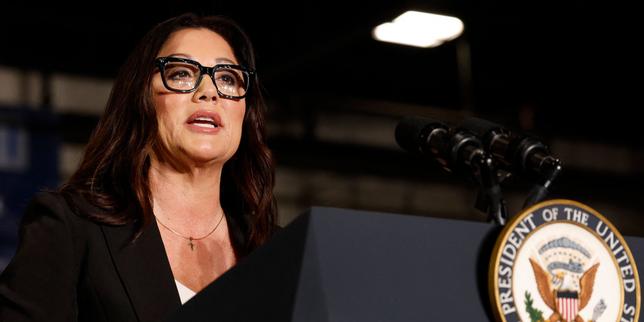
The hallways of the Department of Labor usually smell of floor wax and old paper. It is a building designed for the grind—the steady, unglamorous work of ensuring that when a person puts in forty hours, they get paid for forty hours. It is supposed to be the quiet heartbeat of the American workforce. But for Lori Chavez-DeRemer, the silence in those halls didn't signal productivity. It signaled an ending.
She didn't just leave a job. She retreated from a storm of her own making.
When a cabinet member departs under the heavy shadow of scandal, we often look at the headlines as if they are weather reports—distant, cold, and inevitable. We read about "ethical lapses" or "policy disagreements" and our eyes glaze over. But behind every resignation letter is a person who realized the chair they were sitting in had become far too hot to handle. Chavez-DeRemer’s exit wasn't a graceful hand-off. It was a fracture.
To understand why this matters to the person punching a clock in an Oregon warehouse or the nurse pulling a double shift in Florida, you have to look past the bureaucratic jargon. The Department of Labor is the thin line between a fair wage and exploitation. When the person at the top is distracted by the sound of gavels and the whispers of investigators, that line starts to blur.
The Weight of the Badge
Imagine a small business owner named Sarah. She’s real enough, even if she’s a composite of the thousands who look to D.C. for guidance. Sarah wants to do right by her employees, but the rules are complex. She needs a Department of Labor that acts as a steady North Star. Instead, she got a leadership team mired in controversy.
Chavez-DeRemer entered the scene with the kind of momentum that usually defines a rising star. She had the political pedigree, the local success, and a seat at the table where the big decisions are made. But power has a way of magnifying cracks that are already there. The scandals that eventually forced her hand weren't just about money or perks; they were about the erosion of trust.
When a leader is accused of misusing the very system they are sworn to protect, the damage isn't just political. It’s psychic. It tells the average worker that the rules are for the small people, while the ones at the top play by a different, much more flexible set of instructions.
The allegations that trailed her like a persistent shadow involved a series of ethical missteps that made her position untenable. It wasn't one single explosion. It was a slow, agonizing leak. In Washington, you can survive a mistake. You can even survive a policy failure. What you cannot survive is the perception that you have become a liability to the person who gave you the job in the first place.
The Mechanics of a Collapse
Pressure in the capital city doesn't feel like a physical weight. It feels like a dial being turned up, one notch at a time, until the air in the room becomes unbreathable. First, there are the internal memos. Then, the "unnamed sources" speaking to the press. Finally, the silence from your allies.
Chavez-DeRemer found herself in a room where the doors were slowly locking from the outside.
Her tenure was supposed to be a bridge. As a Republican leading a department often seen as a bastion of Democratic interests, she had a chance to redefine how the government views the American worker. She could have focused on the changing nature of the "gig economy" or the looming threat of automation. Instead, the narrative became about her.
Consider the irony of a Labor Secretary struggling with their own professional conduct while overseeing the conduct of millions of employers. It’s like a judge being caught shoplifting; the irony is so thick it chokes the actual work. Every time she stood up to announce a new initiative or a crackdown on workplace safety, the questions from the back of the room weren't about the policy. They were about the scandals.
The administrative machinery of the United States is vast, but it is fueled by credibility. Without it, the gears grind to a halt. Laws are still on the books, and inspectors still go out into the field, but the moral authority required to lead those efforts evaporates.
What Happens to the Empty Office
When a minister leaves in disgrace, the media focuses on the "who's next" of the political horse race. They talk about shortlists and senate confirmations. But they rarely talk about the folders left on the desk.
In Chavez-DeRemer’s wake, there is a pile of unfinished business. There are rules regarding overtime pay that remain in limbo. There are safety standards for heat-stressed workers that are waiting for a signature. There are thousands of people who don't care about her scandals, but desperately care about whether their pension is secure.
The real tragedy of a scandal-ridden term isn't the political career that gets derailed. It’s the time lost. You cannot get back the months spent on damage control. You cannot recover the energy wasted on legal defenses. While the headlines were screaming about her latest controversy, the actual work of protecting the American worker was moving at a snail's pace.
This is the hidden cost of a failed leadership. We pay for it in the form of stagnant policy and a government that feels increasingly distant from the people it serves. We watch the revolving door spin and we wonder if anyone actually cares about the person at the end of the line.
The atmosphere in D.C. shifted the moment the news broke. There was a brief flurry of activity—the frantic typing of press releases, the hurried phone calls to donors—and then, a strange, hollowed-out peace. The storm had passed, but the landscape was littered with debris.
The Quiet Exit
She didn't leave with a bang. She left with a statement that tried to frame her departure as a personal choice, a move toward "new opportunities." But everyone knew the truth. You don't leave a cabinet position at the height of a term unless the ground beneath you has turned to sand.
Walking out of that building for the last time, Chavez-DeRemer must have felt the immense silence of the place. The security detail, the constant hum of the motorcade, the feeling of being at the center of the world—it all vanishes in an instant. You go from being the person who signs the checks to being a footnote in a political science textbook.
But for the rest of us, the story isn't over. We are left with a department that needs a reboot and a workforce that is increasingly skeptical of anything coming out of Washington. The scandals didn't just hurt her; they bruised the very idea of public service.
There is a specific kind of loneliness that comes with a public fall from grace. It’s not the loneliness of being alone; it’s the loneliness of being watched by everyone while you have nowhere to hide. As she cleared out her desk, the items she packed probably felt heavier than they did when she brought them in. A framed photo, a personalized pen, a few mementos of a career that once seemed limitless.
The lights in the office of the Secretary of Labor eventually go out, even if only for a night. The cleaning crews come in, the same floors get waxed, and the smell of old paper remains. The building doesn't care who sits in the chair. It only cares that the work continues, or at least tries to.
But the people outside that building, the ones who don't have titles or security clearances, they feel the gap. They feel the lack of a steady hand. They are the ones who ultimately pay the price for a leader who forgot that the job isn't about the person holding it, but about the millions of people who will never even know their name.
The chair is empty now. The scandals will fade into the background of a news cycle that moves too fast to dwell on yesterday’s disgraced official. But the lesson remains, etched into the limestone of the capital: power is a gift on loan from the people, and it can be revoked at any moment by the very same hand that gave it.
Somewhere in the country, a worker is waking up for a shift that starts before the sun. They aren't thinking about Lori Chavez-DeRemer. They are thinking about their bills, their kids, and the safety of their workplace. They are doing their part. They are showing up. They are waiting for a leader who will finally do the same.


:strip_icc()/pic2513216.jpg)