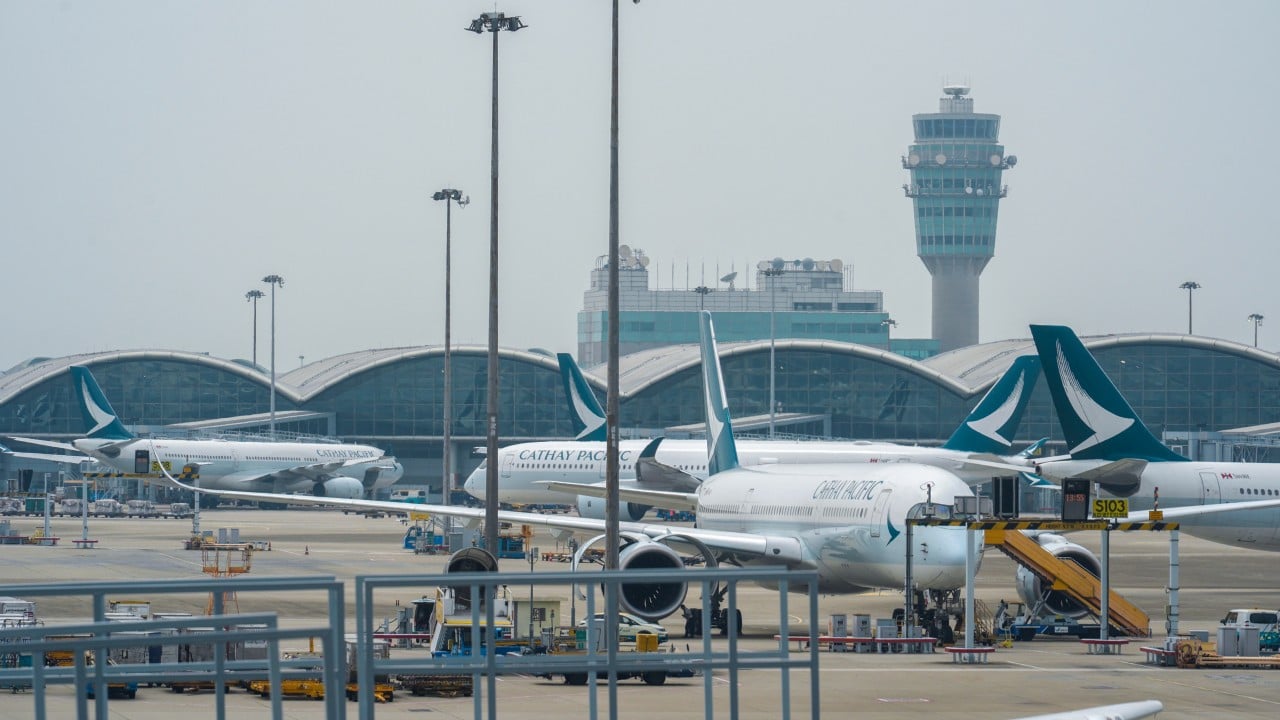
The Hong Kong Airport Authority is betting HK$300 million that the future of aviation isn't just about moving people, but about housing the world’s most expensive mobile assets. By constructing a dedicated, high-security art storage facility within the airport’s restricted zone, the city is attempting to reclaim its status as Asia’s premier wealth hub. This isn't a simple warehouse project. It is a strategic play to integrate the art market directly into the logistics of one of the world’s busiest transit points, bypassing the friction of traditional urban transport and customs delays.
The timing is far from accidental. While critics have spent the last three years questioning Hong Kong’s grip on the regional financial crown, the "art-and-wealth" sector has remained a stubborn stronghold. By placing this facility behind the airport’s customs line—effectively creating a "free-port" environment for Picassos and Basquiats—the government is offering a level of security and tax efficiency that traditional mainland or downtown galleries cannot match. Recently making headlines in related news: The Jurisdictional Boundary of Corporate Speech ExxonMobil v Environmentalists and the Mechanics of SLAPP Defense.
The Logic of the Tarmac Vault
Most people see an airport as a point of departure. For the ultra-high-net-worth individual, it is an entry point for capital. The planned facility, spanning roughly 4,000 square meters, targets a specific pain point in the art world: the "last mile" risk. When a painting sells for $50 million at a London auction and needs to reach a buyer in Asia, the most dangerous part of the journey isn't the 12-hour flight. It is the offloading, the trucking through humid city streets, and the transition into a third-party storage unit.
By building the vault on airport grounds, the Airport Authority removes those variables. The art stays in a temperature-controlled, high-security environment from the moment it leaves the cargo hold. This reduces insurance premiums—a massive overhead for collectors—and keeps the asset "in transit" for tax purposes. If the piece never technically clears customs to enter the city, it remains in a fiscal limbo that is highly attractive to international speculators. Additional details regarding the matter are explored by Harvard Business Review.
Why 300 Million Dollars is Only the Down Payment
On the surface, HK$300 million seems like a significant investment for a storage shed. However, in the context of global art logistics, it is a modest entry fee. To compete with established hubs like the Singapore FreePort or the long-standing vaults in Geneva, Hong Kong must provide more than just thick walls and air conditioning.
The Engineering of Invisible Assets
Art storage is an engineering nightmare disguised as real estate. The facility requires redundant climate control systems capable of maintaining a constant temperature and humidity regardless of Hong Kong’s notorious tropical heat. A fluctuation of even two degrees can cause canvas tension or micro-cracking in centuries-old pigments.
Then there is the security. We are moving past simple cameras and armed guards. Modern facilities of this caliber utilize biometric access, vibration sensors, and fire suppression systems that use inert gas rather than water, which would ruin the very assets they are meant to save. The $300 million price tag covers the specialized infrastructure needed to convince an overseas collector that their investment is safer in a Lantau Island vault than in a Swiss mountain.
Reclaiming the Regional Crown from Singapore
Singapore has long been the primary thorn in Hong Kong's side regarding specialized logistics. The Singapore FreePort, located next to Changi Airport, set the gold standard for this model over a decade ago. It became a "Fort Knox for art," drawing in billions in private wealth that wanted to stay close to Asia’s growth while remaining shielded from regional volatility.
Hong Kong's late arrival to this specific party is a calculated counter-move. While Singapore has the infrastructure, Hong Kong still has the market proximity. The city remains the headquarters for the Asian operations of Sotheby’s and Christie’s. By building this facility, the Airport Authority is finally aligning the city’s logistics capabilities with its auction house dominance. It is a move to stop the "leakage" of assets to Singaporean vaults after the hammer falls at a Hong Kong auction.
The Geopolitical Insurance Policy
There is an underlying tension that no official press release will mention. Collectors are inherently nervous. The shift in Hong Kong’s political climate over the last five years has made some international investors hesitant to keep physical assets in the city center.
The airport facility serves as a literal and figurative exit strategy. Assets stored at the airport are, by definition, ready for immediate export. This proximity to the runway provides a psychological safety net. If a collector feels the winds of regulation or political instability shifting, their collection can be on a cargo plane to London or New York in under four hours. It is "liquidity" in its most literal sense.
Beyond Storage the Rise of the Airport Art Ecosystem
The plan involves more than just shelving. The Airport Authority has signaled that the facility will include spaces for viewing, appraisal, and potentially even private auctions. This transforms the site from a passive warehouse into an active commercial node.
Imagine a scenario where a Japanese buyer and an American seller meet in a private lounge at the Hong Kong International Airport. The artwork is wheeled out from the vault into a secure viewing room. The deal is signed, the funds are transferred via a Hong Kong bank, and the artwork is wheeled back into the vault under new ownership. The piece never left the airport, never touched Hong Kong soil in the eyes of the tax office, and the entire transaction was completed during a six-hour layover.
This is the "frictionless" commerce that the city is desperate to cultivate. It turns the airport into a sovereign-like zone for high-value trade, independent of the congestion and bureaucracy of the city proper.
The Risks of the Art-Logistics Bubble
Every aggressive investment has a downside. The art market is notoriously opaque and prone to sudden cooling. If global interest rates remain high and discretionary spending among the global elite continues to pivot toward AI or green energy over physical "old world" assets, the demand for high-end storage could plateau.
Furthermore, there is the issue of competition from mainland China. Ports like Hainan are rapidly developing their own free-trade zones with aggressive tax incentives. If Beijing decides to pivot the art-hub focus toward a mainland port, Hong Kong’s $300 million vault could find itself underutilized.
However, the "Hong Kong brand" still carries weight in the art world. The city’s legal framework, despite recent changes, remains more familiar to international lawyers than the systems in Hainan or Shanghai. For now, the Airport Authority is counting on that familiarity to fill its vaults.
The Infrastructure of Trust
At its core, this project isn't about art. It is about the infrastructure of trust. When a government or an authority invests this heavily in a niche sector, they are signaling to the global market that they intend to protect that sector's interests.
The success of the facility will be measured not by the rent it collects, but by the volume of high-value transactions it facilitates. If the world’s top collectors start listing "HKIA Vault" as their preferred delivery point, the $300 million will have been a bargain. It would cement the airport as a critical piece of the global wealth management machine, rather than just a place to catch a flight.
A New Definition of Port of Entry
The construction of this facility marks a shift in how global cities view their borders. We are seeing the rise of the "Aerotropolis," where the airport is the center of the economy, not the periphery. By housing the world’s most precious objects, Hong Kong is attempting to ensure that even as the world changes, the money stays on the tarmac.
The next time you fly through Hong Kong, consider that beneath or adjacent to your terminal, there may be a billion dollars in Impressionist masterpieces sitting in the dark, waiting for the next market cycle. The airport is no longer just moving people; it is anchoring the volatile wealth of the 21st century.
Ensure your logistical partnerships are prepared for this shift in asset movement; the transition from traditional city-center warehousing to integrated airport-free-port models is no longer a luxury—it is the new baseline for high-value asset management.