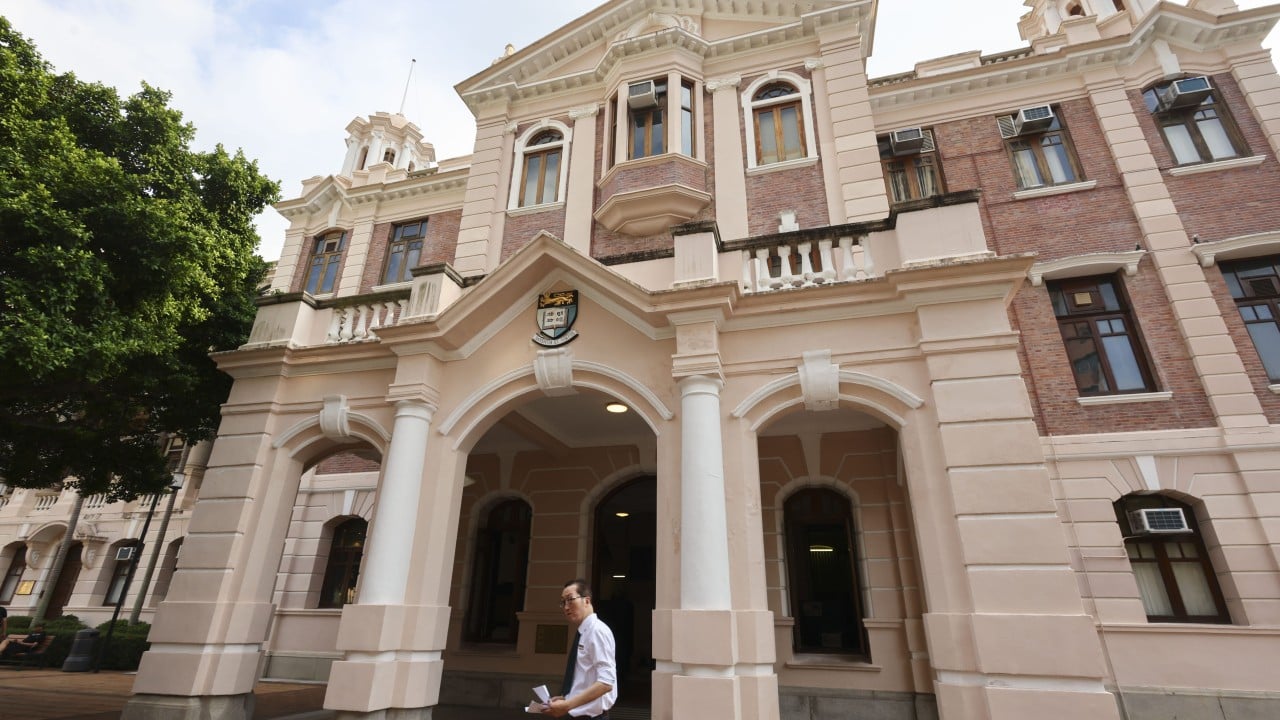
For the first time in history, every single publicly funded university in Hong Kong has secured a spot within the top 100 of the latest Asian league tables. On paper, this is a clean sweep for a city that brands itself as "Asia’s World City." The data suggests a powerhouse of research and internationalization that rivals any global academic hub. However, behind these polished metrics lies a complex machine fueled by aggressive talent poaching, a narrowing scope of academic freedom, and a reliance on citation-heavy metrics that may not reflect the actual quality of education on the ground.
While the headlines celebrate a regional victory, the reality is that Hong Kong’s universities are locked in an expensive, high-stakes arms race to maintain these positions. To understand how every institution—from the century-old University of Hong Kong (HKU) to the younger, specialized campuses—crossed this threshold, we have to look past the scores. We have to look at the money, the migration of scholars, and the specific ways these rankings are gamed.
The Mechanics of a Statistical Sweep
The inclusion of all eight University Grants Committee (UGC) funded institutions in the top 100 isn't an accident of organic growth. It is the result of a calculated, decade-long strategy to optimize for specific performance indicators. Most major Asian rankings, including the QS and Times Higher Education (THE) variants, heavily weight international faculty ratios and research citations.
Hong Kong has a structural advantage here. Its universities operate with a level of financial autonomy and government backing that few in the region can match. By aggressively recruiting "star" researchers from overseas and Mainland China—often with compensation packages that dwarf those in the UK or Australia—Hong Kong institutions buy instant citation boosts. When a top-tier scientist moves their laboratory to Hong Kong, they bring their entire publication history with them. The university’s ranking climbs before that professor has even graded a single undergraduate paper.
This isn't just about prestige; it's about survival. In the global education market, rankings dictate everything from international student tuition revenue to the ability to secure private endowments. For the smaller institutions, hitting the top 100 is a shield against budget cuts and a magnet for the lucrative Mainland Chinese student market, which now makes up the vast majority of the non-local student body.
The Mainland Pivot and the New Student Demographic
We are witnessing a fundamental shift in who these universities serve. As Western students and faculty show increasing hesitation toward the city’s changing political environment, institutions have leaned heavily into the Greater Bay Area integration.
- The Inflow: Applications from Mainland China have surged, often replacing the diversity once sought from Europe and North America.
- The Outflow: Local students, particularly those in the humanities and social sciences, are increasingly looking at undergraduate options in Taiwan, the UK, or Canada, citing concerns over the campus atmosphere.
- The Research Focus: Grant funding is increasingly tied to technology and hard sciences that align with national development goals, often at the expense of liberal arts.
This demographic shift is a double-edged sword. While it ensures a steady stream of high-achieving students and keeps the "Internationalization" metric high (since Mainland students are technically counted as non-local), it homogenizes the campus experience. A university in the top 50 that primarily serves one specific geographic region risks losing the very "world city" edge that built its reputation in the first place.
The Citations Trap and the Death of Local Relevance
Rankings prioritize global impact, which usually translates to publishing in English-language, high-impact journals. This creates a perverse incentive for scholars to ignore local Hong Kong issues. If an urban planner conducts a deep-dive study on Hong Kong’s unique "cage home" crisis or the sustainability of the city’s iconic wet markets, they may find it harder to get published in a global journal than if they wrote a generic paper on "Global Urban Density Trends."
The result is a widening gap between a university’s ranking and its utility to the local community. We see institutions climbing the charts while the city's own social problems—housing, mental health, and economic inequality—remain underserved by the academic elite. The professors are winning the citation war, but the local populace is losing its intellectual vanguard.
The Faculty Exodus and the Quiet Replacement
Numbers don't tell you about the mood in the staff common room. Since 2020, Hong Kong’s universities have seen a notable turnover in faculty. While the total number of professors remains stable, the composition has changed. Veteran academics, particularly those in sensitive fields like law, history, and journalism, have quietly taken early retirement or moved to positions in Singapore or Europe.
Replacing them are younger, highly productive researchers primarily from Mainland China who have been educated at Ivy League or Oxbridge institutions. They are brilliant, and they are prolific. They are exactly what a university needs if its goal is to maximize its ranking score. But they often lack the historical memory and deep local ties of the faculty they replace. This "replacement effect" is the secret engine behind the stable or rising rankings; the institutions are becoming more efficient research factories, even as their role as centers of critical local thought diminishes.
Measuring What Matters Beyond the League Tables
If we want to see the true health of Hong Kong's higher education sector, we have to look at the metrics the rankings ignore. Employment outcomes for local graduates, for instance, are becoming more polarized. While graduates from the top-tier business and medical programs remain highly sought after, those from the newly "top 100" mid-tier universities face a stagnant job market where their degree’s prestige hasn't caught up with its rank.
We must also consider the cost of this prestige. The "publish or perish" culture in Hong Kong is now on steroids. Junior faculty are under immense pressure to produce volume, leading to a rise in safe, incremental research rather than bold, risky inquiries. When your university's funding and global standing depend on a 2% shift in a ranking score, you don't encourage your staff to spend five years writing a single, definitive book. You tell them to churn out five journal articles a year.
The Singapore Comparison
Singapore is the only real rival in this space, and the comparison is revealing. While National University of Singapore (NUS) and Nanyang Technological University (NTU) consistently outrank Hong Kong's best, they do so through a much more centralized, state-directed investment in specific "moonshot" technologies. Hong Kong’s success is more fragmented and market-driven.
Hong Kong's universities are currently benefitting from a "safe harbor" effect. As tensions between the US and China make it harder for Chinese researchers to work in America, many are choosing Hong Kong as a middle ground. This provides an artificial boost to the city’s academic metrics. It is a windfall of talent, but it is one born of geopolitical friction rather than Hong Kong’s own inherent draw.
The Illusion of the Perfect Score
The danger of a "clean sweep" in the rankings is that it breeds complacency. When every university is in the top 100, the government and university administrations can point to the data as proof that everything is fine. They can dismiss concerns about academic freedom, student mental health, or the erosion of the humanities by simply gesturing at the latest chart from London or Washington.
But rankings are a lagging indicator. They reflect the investments and the environment of three to five years ago. The changes occurring in Hong Kong’s lecture halls today—the self-censorship, the shift in student demographics, the focus on "safe" research—won't show up in the rankings for several more years. By the time the scores reflect a decline, the institutional culture will have already shifted beyond repair.
Infrastructure Versus Intellect
Walking across the campuses of the Hong Kong University of Science and Technology (HKUST) or the Chinese University of Hong Kong (CUHK), the wealth is evident. New labs, gleaming dormitories, and state-of-the-art sporting facilities suggest a sector in its prime. This physical infrastructure is the easiest part of a university to build and maintain.
The harder part is maintaining an environment where dissent is tolerated and where the "unpopular" truth is pursued. A top 100 ranking is a measure of prestige, not necessarily a measure of soul. As the city’s universities become more integrated into the national framework of China, they will likely maintain their high rankings because their research output will remain massive and their funding will remain secure. But the version of HKU or CUHK that sits in the top 100 in 2030 will be a very different beast than the one that sat there in 2010.
The Narrow Path Forward
For Hong Kong to turn these ranking wins into actual social and economic value, it needs to break its addiction to the metrics. This starts with:
- Diversifying Funding: Moving away from a pure citation-count model for research grants and toward "local impact" assessments.
- Protecting the Humanities: Ensuring that subjects which don't "rank well" (like philosophy, literature, and local history) are given the same protections and resources as AI and biotech.
- Broadening the International Base: Actively recruiting from Southeast Asia, Central Asia, and the Global South to ensure the "Internationalization" score isn't just a proxy for Mainland integration.
The fact that all eight public universities are in the top 100 is a testament to the city's resilience and its deep pockets. It is a remarkable achievement that shouldn't be dismissed. However, a university's greatness isn't found in a spreadsheet compiled by a media company in London. It is found in the ability of its graduates to think critically and the courage of its faculty to challenge the status quo.
If Hong Kong loses that, it doesn't matter if its universities are ranked number one or number one hundred. They will have become nothing more than high-end vocational schools for the regional elite, efficient at processing data but incapable of producing the kind of transformative ideas that once defined the city. The rankings are a win, but they are also a warning. Stop looking at the scoreboard and start looking at the classroom.