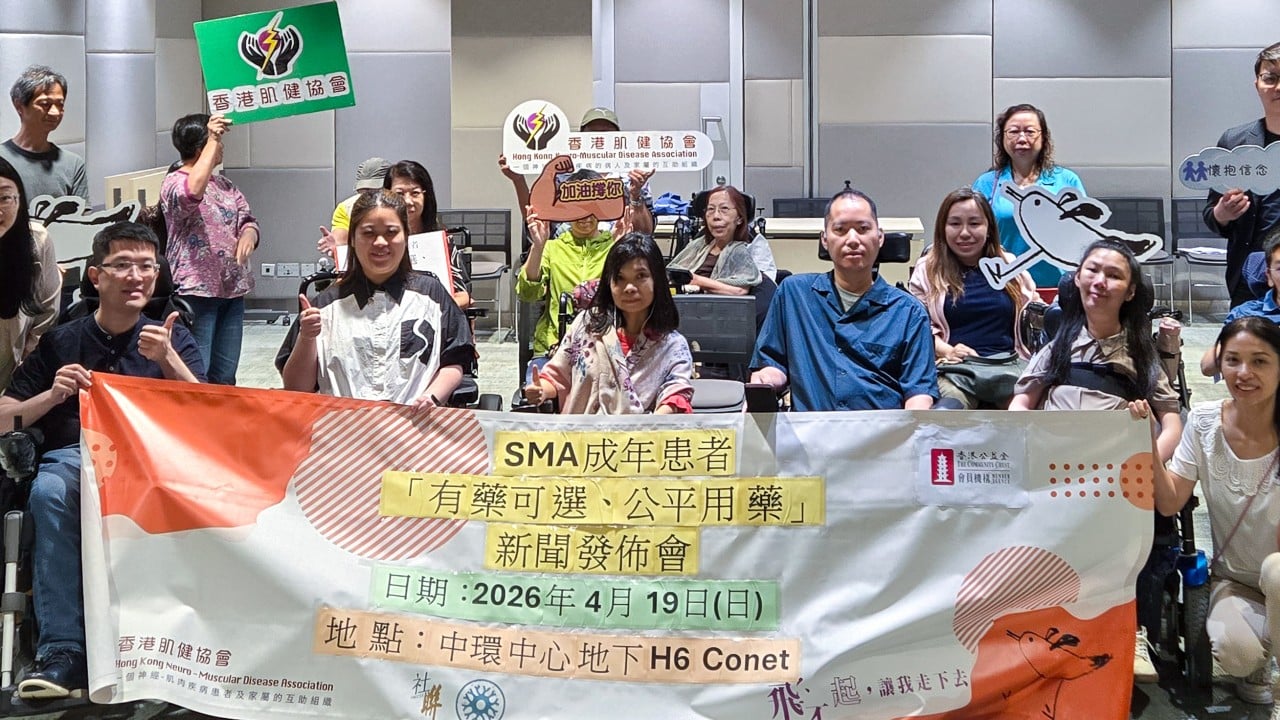
The narrative around Spinal Muscular Atrophy (SMA) in Hong Kong is stuck in a loop of sentimental tragedy and bureaucratic begging.
The media loves the script: a patient suffers, a drug exists, the price tag is "astronomical," and the government is the cold-hearted villain for not signing the check. It makes for great headlines. It makes for terrible healthcare policy.
When advocates demand subsidies for nusinersen or other blockbuster "miracle" injections, they aren't just fighting for lives. They are inadvertently propping up a broken pharmaceutical extortion racket and ignoring the massive technological shift that makes these specific injections look like expensive relics from a dying era of medicine.
We need to stop asking the government to buy more band-aids and start asking why we are still using 2018 solutions for 2026 problems.
The Mathematical Fallacy of Compassion
Everyone wants to save the child with SMA. Nobody wants to talk about the Opportunity Cost of a $2 million USD treatment cycle.
In a public healthcare system like Hong Kong’s, resources are finite. This is a cold, hard truth that most "patient advocates" refuse to acknowledge. When you force a government to subsidize a single, ultra-high-cost injection for a handful of patients, you aren't "finding" money. You are taking it from somewhere else.
You are taking it from early-stage screening. You are taking it from the thousands of elderly citizens waiting years for hip replacements. You are taking it from mental health services that are currently understaffed and overwhelmed.
The "lazy consensus" says that every life is priceless. In the boardroom of a multinational pharmaceutical giant, that isn't a moral stance; it's a pricing strategy. They know that if they tug on the heartstrings of the public long enough, the government will fold and pay whatever "value-based" price they’ve pulled out of thin air.
By demanding subsidies without demanding price transparency and local manufacturing rights, advocates are essentially acting as unpaid lobbyists for Big Pharma.
The Injection Obsession is Obsolete
The current push in Hong Kong is focused heavily on intrathecal injections. This involves a lumbar puncture—literally sticking a needle into the spine—every few months, forever.
It is invasive. It is risky. And frankly, it is yesterday's tech.
While Hong Kong activists are busy fighting for more injection centers, the rest of the medical world is moving toward oral small-molecule therapies and one-time gene replacements.
The obsession with "getting the injection" creates a bottleneck in our hospitals. We don't have enough specialized neurologists to perform these procedures at scale. By focusing the entire SMA conversation on one specific delivery method, we are building an infrastructure for a therapy that will be irrelevant in five years.
Why Small Molecules Win
- Distribution: You don't need a surgical suite for a pill or a liquid.
- Cost: The manufacturing of chemical compounds is orders of magnitude cheaper than the biologic synthesis required for antisense oligonucleotides.
- Compliance: Taking a daily dose at home beats a traumatic hospital visit every quarter.
If we want to "aid" SMA patients, we shouldn't be begging for more injection funding. We should be fast-tracking the approval of oral alternatives and demanding that they be priced at a fraction of the cost.
The False Promise of the Community Care Fund
The Hong Kong government often points to the Community Care Fund (CCF) as the "solution" for rare disease patients. This is a PR stunt masquerading as a safety net.
The CCF is a discretionary fund. It’s a "maybe." It forces patients to undergo humiliating means tests, proving they are sufficiently impoverished to deserve to live. It is a system designed to say "no" while appearing to say "yes."
The real fix isn't "more aid." It’s a total overhaul of the Orphan Drug Act equivalent in Hong Kong. We need a legal framework that treats rare disease drugs as public utilities, not as luxury goods.
I have seen companies spend millions on "patient engagement" programs that are nothing more than smoke screens to keep prices high. They offer a few "free" doses to a couple of photogenic kids, get the media to celebrate their "generosity," and then use that leverage to lock the government into a ten-year, multi-billion dollar contract.
Don't fall for the "Access Programs." They are a marketing expense, not a charity.
The Bio-Ethical Blind Spot: Screening Over Treatment
If we actually cared about SMA as a society—rather than just reacting to individual tragedies—we would stop talking about injections and start talking about Pre-implantation Genetic Testing (PGT) and universal carrier screening.
SMA is a recessive genetic disorder. We have the technology to virtually eliminate it within a generation.
- Cost of universal carrier screening per couple: Approximately $3,000 HKD.
- Cost of treating one SMA patient over a lifetime: $20,000,000+ HKD.
The math is brutal. For the price of treating one child with an injection that provides only incremental improvement, we could screen tens of thousands of couples and prevent the suffering from occurring in the first place.
But screening isn't "inspiring." It doesn't make for a good 6:00 PM news segment. So, we ignore the cure (prevention) and fight over the expensive, mediocre treatment.
The Myth of "Life-Saving" vs. "Life-Extending"
We need to be brutally honest about what these therapies actually do.
In many adult-onset or Type 2/3 SMA cases, these "miracle" injections don't make people walk again. They stop the decline. They stabilize. That is valuable, yes. But the way it is sold to the public is often a lie.
Patients are led to believe that if the government just pays up, they will be "cured." When the results are more modest—a slight increase in grip strength or a slower loss of lung function—the psychological toll on the patient is devastating.
We are bankrupting the public health system for incremental gains because we are too afraid to have a conversation about the limits of medicine and the reality of genetic conditions.
Stop Asking for Aid, Start Demanding Equity
If the Hong Kong government wants to solve this, they need to stop playing the "aid" game.
Instead of subsidizing a $2 million drug, the government should use its massive fiscal reserves to:
- Fund Local Bio-Equivalent Research: Challenge the patents. Asia has the talent to create biosimilars that cost 90% less.
- Regional Bulk Purchasing: Join forces with mainland China and the rest of the Greater Bay Area to force Big Pharma to the table. A single city of 7 million has no leverage. A region of 86 million is a superpower.
- Mandatory Screening: Make SMA carrier testing a standard part of prenatal care, fully funded and non-optional.
The current "advocacy" model is a failure. It relies on pity. It relies on the government feeling bad. It relies on a "charity" mindset that treats patients like beggars.
Patients don't need "aid." They need a healthcare system that isn't a puppet for Swiss and American pharmaceutical margins.
The next time you see a headline about an SMA patient "seeking aid," realize that the "aid" they are seeking is actually a ransom payment. And as long as we keep paying it without questioning the system, the price will only go up.
Stop being a pawn in the pharmaceutical pricing war. Demand the tech, skip the injections, and fix the system before it goes broke trying to save face.