The headlines are screaming about a "milestone." They want you to believe that Hong Kong’s decision to hand out stablecoin licenses to giants like HSBC and Standard Chartered is the moment crypto finally "grows up." The narrative is neat, tidy, and completely delusional.
Most analysts are treating this as a victory for institutional adoption. They see the sandbox participants—including the Zand Bank and JD Technology cohorts—as the vanguard of a new financial era. They are wrong. This isn't the start of a revolution; it’s the construction of a high-walled garden that will likely suffocate the very innovation it claims to protect. Meanwhile, you can explore other stories here: The Price of a Cold Radiator.
By forcing stablecoins into the rigid, expensive, and slow-moving infrastructure of traditional banking, Hong Kong isn't making crypto safer for the masses. It is making crypto useless for the degens, the innovators, and the cross-border merchants who actually drive the volume.
The Liquidity Mirage
The fundamental misunderstanding in the competitor's coverage is the belief that "regulation equals trust, and trust equals volume." In the real world of digital assets, volume follows liquidity and utility. To see the full picture, we recommend the excellent analysis by Investopedia.
Established banks are experts at compliance, not at building permissionless protocols. When HSBC issues a stablecoin, it won't be the "digital dollar" of your dreams. It will be a highly restricted, KYC-heavy digital representation of a bank deposit. It will exist on a private or semi-private rail where every transaction can be frozen, reversed, or blocked by a middle manager in a suit.
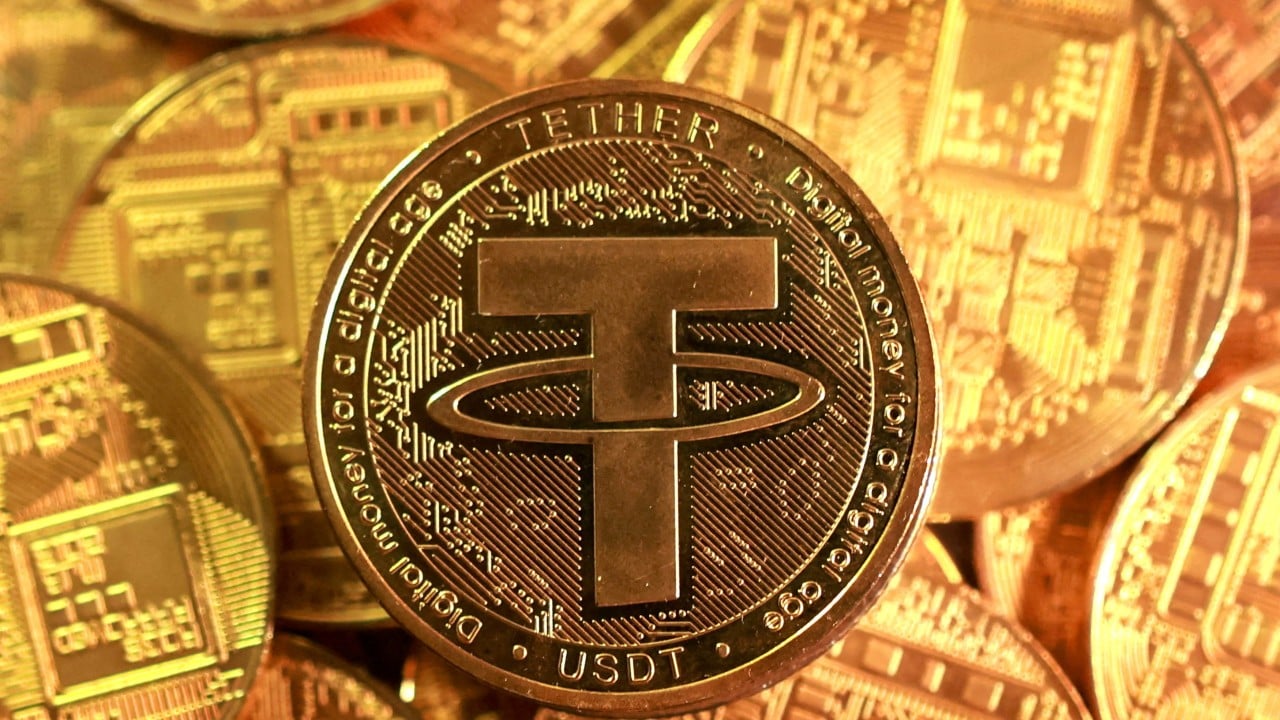
Compare this to Tether (USDT). Despite years of FUD regarding its reserves and constant sniping from US regulators, Tether remains the undisputed king. Why? Because it works everywhere. It is the blood in the veins of the global crypto economy.
Hong Kong’s licensed stablecoins will be localized, neutered versions of USDT. They will be "safe" in the same way a tricycle is safer than a motorcycle—but you can't ride a tricycle on the highway. The "lazy consensus" says that institutions are waiting for these regulated tokens to enter the market. The truth is that institutions have already been using USDT and USDC for years via offshore entities. They don't need a "licensed" version that comes with 10x the paperwork and 1/10th the utility.
The Hidden Cost of the Sandbox
The HKMA (Hong Kong Monetary Authority) sandbox is being framed as an "innovation hub." In reality, sandboxes are where good ideas go to be regulated into oblivion.
To play in this sandbox, companies have to prove they have the capital, the reporting structures, and the legal teams to satisfy a central bank. This immediately disqualifies the lean, aggressive startups that actually move the needle. What you’re left with is a group of incumbents trying to figure out how to put a blockchain "sticker" on their 40-year-old ledger systems.
I’ve seen firms waste millions of dollars trying to satisfy sandbox requirements only to realize that by the time they get the "green light," the market has moved on. The tech stack they built is obsolete, and their competitors—operating in more agile jurisdictions—have already captured the users.
If you are a builder, the Hong Kong license is a golden cage. You get the prestige of the HKMA logo, but you lose the ability to iterate at the speed of code. You are now a shadow bank, subject to the same capital requirements and risk-aversion that make traditional banking a nightmare for modern commerce.
Why Banks are the Wrong Issuers
There is a reason why the most successful stablecoins to date have not been issued by commercial banks. It’s called a conflict of interest.
A bank’s primary business is fractional reserve lending. They take your $1, lend out $9, and hope nobody asks for their money back at the same time. A true stablecoin—at least the kind that users trust—should be 1:1 backed by highly liquid assets, usually short-term T-bills or cash.
When a bank like Standard Chartered issues a stablecoin, the temptation to treat those reserves as part of their broader balance sheet is immense. Even if the regulation mandates segregated accounts, the internal culture of a bank is geared toward maximizing the spread on deposits.
Furthermore, banks are allergic to "censorship resistance." The entire point of a stablecoin for many global users is the ability to move value without asking for permission from a centralized gatekeeper. A bank-issued stablecoin is the ultimate gatekeeper. It is a digital leash.
The Myth of "Bridging the Gap"
The competitor article waxes poetic about "bridging the gap" between traditional finance (TradFi) and decentralized finance (DeFi). This is a category error.
DeFi was built to replace TradFi, not to be a sub-department of it. If you put a KYC/AML wrapper around every single transaction—which is what these licenses require—you aren't "bridging" to DeFi; you are just building a digital version of the current banking system.
Let's look at the mechanics. If I want to use an HSBC stablecoin in a liquidity pool on a decentralized exchange, I can't. Not really. The smart contract would need to be "authorized" by the bank. The other participants in the pool would need to be "cleared." At that point, it’s not a decentralized exchange anymore. It’s just a slow database with extra steps.
The Real Winner: Tether
Here is the counter-intuitive reality: Hong Kong’s strict licensing regime is the best thing that ever happened to Tether and its offshore peers.
By creating a rigid, expensive, and restrictive "legal" market, the HKMA is effectively segmenting the user base. They are pushing the compliant, low-volume institutional "tourists" into the licensed tokens, while leaving the high-volume, high-frequency "natives" to the offshore providers.
Tether doesn't care about a Hong Kong license. It has the liquidity. It has the network effect. It has the trust of the people who actually use crypto for trade in emerging markets—people who don't care about a "sandbox" in a gleaming skyscraper in Central.
Every time a regulator adds a new layer of friction to the "official" channels, the "unofficial" channels become more valuable. It’s the Prohibition effect. When you make it hard for people to get what they want through legal means, you don't stop the demand; you just hand the market to the incumbents who are willing to ignore the rules.
The Surveillance State Subtext
We need to be honest about what a "regulated stablecoin" actually is: it is a Programmable Surveillance Tool.
The HKMA’s interest in stablecoins isn't just about financial stability. It’s about data. In a world where cash is disappearing, the stablecoin is the perfect way to track the velocity of money in real-time. By licensing banks to issue these tokens, the government ensures that every transaction is logged, categorized, and searchable.
This isn't a bug; it's a feature. But for users who value financial privacy—a core pillar of the crypto movement—this is a non-starter. The "superior" article would tell you that these licenses are the first step toward a Retail Central Bank Digital Currency (rCBDC) by proxy. The banks are doing the government's dirty work, building the infrastructure for total financial oversight under the guise of "innovation."
The Liquidity Trap Thought Experiment
Imagine a scenario where the market experiences a sudden, violent deleveraging event—a "Black Thursday" for the 2020s.
In this scenario, where would you want your money?
- In a "licensed" bank stablecoin that requires a manual compliance review to withdraw to an external wallet, and where the bank might freeze withdrawals to "protect the system"?
- In a battle-tested, liquid token like USDT or USDC that can be swapped on a dozen different chains in milliseconds without a human in the loop?
Regulation provides the illusion of safety during the quiet times. But in a crisis, regulation is just another word for "bottleneck." The "safe" licensed tokens will be the first to lose their peg or become illiquid because they lack the massive, global, 24/7 arbitrage ecosystem that supports the offshore giants.
Stop Asking if it’s "Regulated" and Start Asking if it’s "Liquid"
The industry is obsessed with the wrong question. People ask, "Is this coin legal?" They should be asking, "Can I sell $100 million of this in three seconds without moving the price?"
For the licensed tokens in Hong Kong, the answer to the second question will be a resounding "no" for the foreseeable future. They are building a boutique product for a mass-market problem.
If you want to actually use stablecoins for what they were intended for—global, borderless, instant settlement—ignore the bank-led cohorts. They are building a museum of what finance used to look like, just with faster settlement times.
The real action remains in the "unauthorized" wild west. That is where the liquidity lives. That is where the innovation happens. And that is where the real money is made.
Hong Kong hasn't opened the door to the future; it has just installed a more expensive turnstile on the past.
Banks don't want to disrupt themselves. They want to tokenize the status quo so they can charge you a fee for a service that code can now do for free. Don't fall for the "milestone" hype. The sandbox is just a pile of dirt until proven otherwise.