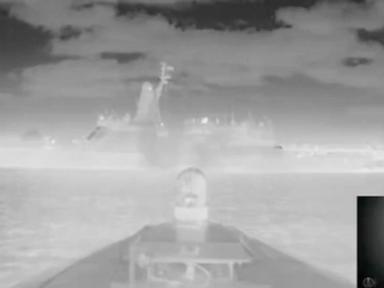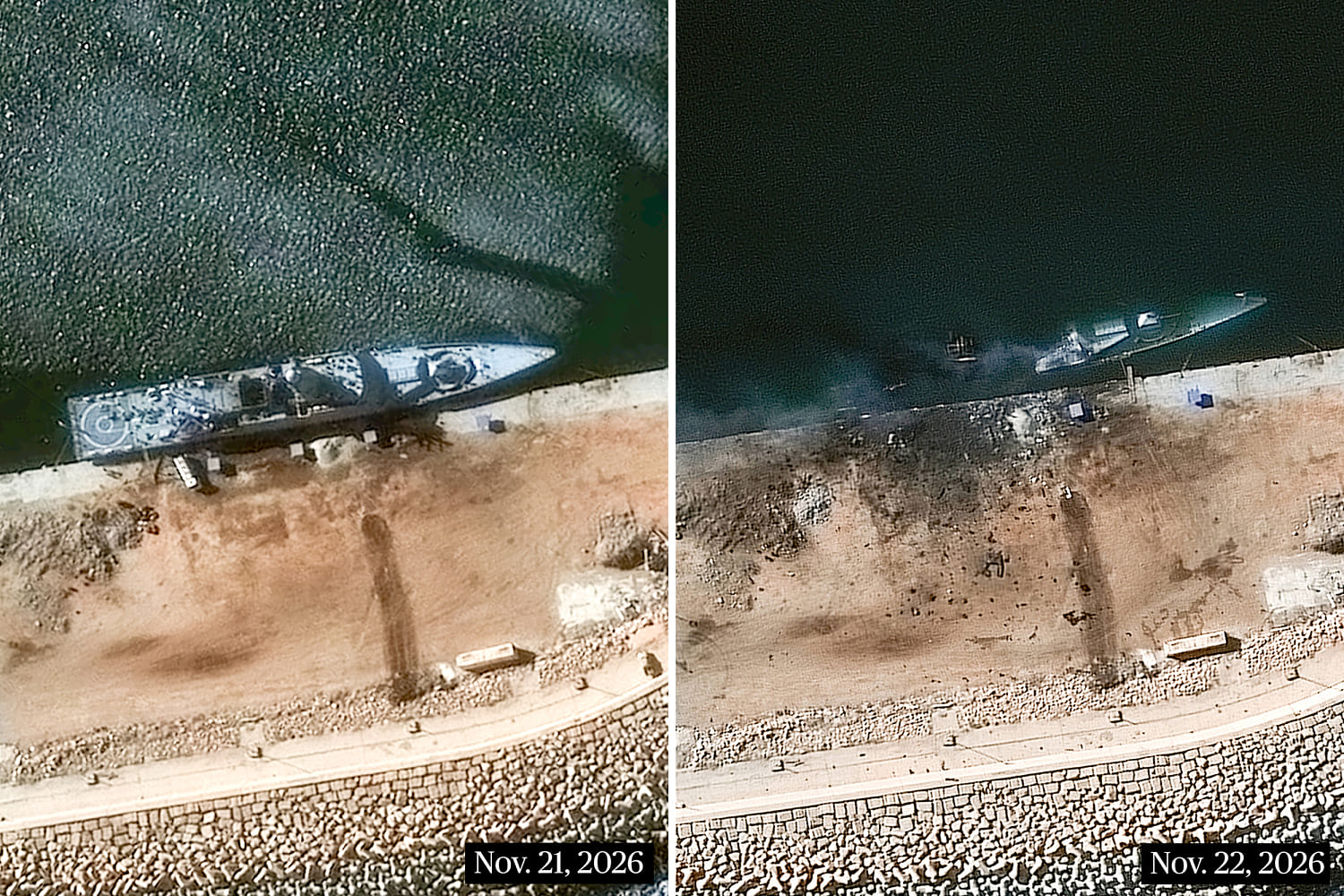
The reported sinking of a Russian naval vessel off the coast of Libya marks the operationalization of horizontal escalation, a strategic doctrine designed to force an adversary to defend assets outside the primary theater of conflict. By projecting strike capabilities into the Central Mediterranean, Ukrainian forces have invalidated the assumption that Russian military infrastructure operating in the Middle East and North Africa enjoys sanctuary from kinetic targeting. This engagement demonstrates that asymmetric maritime denial—previously confined to the semi-enclosed littoral waters of the Black Sea—is now an expeditionary reality capable of severing Moscow’s logistical bridges to its African proxy networks.
The Architecture of Horizontal Escalation
Conventional military doctrine relies on geographic containment to manage resource allocation. Moscow’s naval planning assumed that assets deployed to the Mediterranean Squadron, operating primarily out of Tartus, Syria, and transiting toward Libyan ports such as Tobruk, operated under a de facto immunity threshold. The underlying logic was straightforward: Kyiv lacked the blue-water fleet, forward airbases, and long-range logistics required to contest waters over two thousand kilometers from its territory. For a deeper dive into this area, we suggest: this related article.
Horizontal escalation breaks this calculus by introducing asymmetric reach into non-contiguous theaters. Rather than attempting to match the Russian Navy hull-for-hull in the Mediterranean—a strategic impossibility—Ukrainian planners targeted the economic and operational utility of the vessels themselves.
The mechanism relies on three interlocking operational components: For broader information on this topic, extensive reporting can also be found on NPR.
- Pre-Positioned Asymmetric Assets: Utilizing commercial or covert maritime launch platforms to transport unmanned surface vessels (USVs) or loitering munitions close to known shipping lanes, bypassing the need for traditional naval transit through the Turkish Straits, which remain closed to belligerent warships under the Montreux Convention.
- Distributed Intelligence, Surveillance, and Reconnaissance (ISR): Exploiting open-source maritime tracking data, commercial satellite imagery, and allied intelligence-sharing frameworks to pinpoint the transit schedules of Russian auxiliary and combatant vessels that frequently disable their Automatic Identification System (AIS) transponders.
- Asymmetric Cost-Exchange Ratios: Deploying expendable strike platforms costing hundreds of thousands of dollars to neutralize capital ships, landing vessels, or intelligence-gathering platforms valued in the hundreds of millions, while simultaneously forcing the adversary to expend scarce air-defense and anti-submarine resources on escort duties.
Deconstructing the Libyan Maritime Corridor
To understand why a strike off Libya carries disproportionate strategic weight, one must examine the logistics of Russia’s African footprint. Following the restructuring of the Wagner Group into the Ministry of Defense-controlled Africa Corps, Moscow’s operations in Mali, Burkina Faso, Niger, and the Central African Republic became entirely dependent on a fragile maritime-to-air logistical chain.
Heavy equipment, armored vehicles, ammunition, and fuel cannot be moved efficiently by airlift alone from mainland Russia due to airspace closures across Europe and the limited payload capacities of the Il-76 and An-124 transport fleets. Instead, Russia relies on the "Syrian Express"—a continuous rotation of Ropucha-class landing ships, Sparta-class merchant vessels, and naval escorts moving from Baltic and Northern Fleet ports, through the Strait of Gibraltar, into the Eastern and Central Mediterranean.
Eastern Libya, controlled by Khalifa Haftar’s Libyan National Army (LNA), serves as the primary transshipment hub for this network. Ports like Tobruk and Benghazi function as the unloading terminals where heavy materiel is transferred from sea hulls to cargo aircraft bound for the Sahel.
By striking a Russian warship in these waters, Ukraine disrupts the middle link of this supply chain. Even the loss of a single hull creates an immediate cascading effect across three distinct operational domains:
- Hull Scarcity: With the Montreux Convention barring Russia from reinforcing its Black Sea Fleet with vessels from the Baltic or Northern Fleets, every surface combatant or landing ship lost in the Mediterranean represents a permanent reduction in Moscow’s global sealift capacity.
- Escort Diversion: Unescorted merchant vessels carrying military cargo are now vulnerable to interdiction. Moscow must either halt shipments or divert high-value frigates and corvettes from deterrence patrols in the Atlantic and Baltic to provide continuous close escort in the Mediterranean.
- Port Denial Risk: Host authorities in Tobruk face heightened diplomatic and security costs. Permitting Russian naval vessels to dock becomes a direct liability if those ports risk becoming adjacent to active kinetic engagements, potentially compromising local infrastructure and commercial shipping lanes.
The Mechanics of Expeditionary Asymmetric Strike
Because exact operational details of covert maritime strikes remain classified or obscured by electronic warfare, analysts must evaluate the strike through the lens of known technical capabilities. Executing a kinetic engagement off the North African coast without a local naval base requires solving two primary engineering problems: range and terminal guidance.
Standard Ukrainian USVs, such as the Magura V5 or Sea Baby, possess an operational range of roughly 800 to 1,000 kilometers. While sufficient to cross the Black Sea from Odesa to Novorossiysk, this range cannot bridge the distance from Ukrainian territory to the Libyan coast. Therefore, the engagement hypothesis narrows to two distinct delivery vectors.
The first vector is Mothership Deployment. A civilian-flagged cargo vessel or converted fishing trawler, operating within the dense commercial shipping traffic of the Mediterranean, carries containerized USVs or long-range strike drones to a release point within 100 nautical miles of the target’s predicted transit corridor. Once released, the unmanned systems operate at low-observable profiles—riding low in the water with minimal radar cross-sections—until acquiring the target.
The second vector is Air-Launched or Special Operations Infiltration. Special forces teams operating from permissive or semi-permissive littoral zones launch compact, high-explosive aerial or surface drones. In both scenarios, terminal guidance relies on a combination of inertial navigation, optical/infrared seekers for final target lock, and satellite communication links (such as Starlink or alternative commercial constellations) to allow human-in-the-loop operators in Ukraine to steer the munition into vulnerable sections of the hull, such as the waterline amidships or the steering gear.
The vulnerability of legacy Russian naval designs exacerbates the lethality of these strikes. Many vessels operating in the Mediterranean Squadron were designed during the Cold War to counter high-altitude bombers, anti-ship cruise missiles, and NATO submarines. Their radar suites struggle to differentiate small, fiberglass-hulled surface drones from sea clutter, while their close-in weapon systems (CIWS) often possess blind spots or insufficient depression angles to engage targets skimming the surface meters from the hull.
Strategic Second-Order Effects on Global Naval Posture
The implications of this engagement extend far beyond the immediate loss of personnel and tonnage. It establishes a precedent in modern naval warfare: geographic distance no longer guarantees force protection for state-owned maritime assets.
First, it imposes a severe insurance and commercial friction tax on Russian state-affiliated shipping. Moscow relies heavily on a "shadow fleet" of aging, opaquely owned tankers and cargo ships to bypass Western sanctions and transport military hardware. Maritime insurers, already hesitant to underwrite vessels linked to Russian state entities, will raise war-risk premiums across the Central and Eastern Mediterranean. Civilian crews contracted to operate these auxiliary vessels will demand hazard pay or refuse contracts, slowing turnaround times at ports like Tartus and Tobruk.
Second, it exposes the overextension of Russian naval logistics. Maintaining a persistent naval presence in the Mediterranean requires continuous replenishment of fuel, fresh water, and spare parts. With the Baltic and Northern Fleets already strained by maintenance backlogs and sanctions-induced shortages of Western marine engines and electronics, the loss of a warship in the Mediterranean forces the Russian Admiralty into a zero-sum allocation dilemma. Reinforcing the Mediterranean Squadron requires stripping capability from the Arctic or Pacific theaters, weakening deterrence posture elsewhere.
Third, it alters the diplomatic leverage Moscow holds in Africa. Russia’s primary value proposition to authoritarian regimes in the Sahel is the provision of regime security—mercenaries, air defense systems, and small arms delivered reliably without Western governance conditions. If Ukraine demonstrates the ability to sever the maritime artery feeding these operations, African client states will question Moscow’s reliability as a security guarantor, creating openings for competing powers to reassert influence.
Analytical Limitations and Operational Constraints
While the strategic shock of a Mediterranean strike is substantial, analysts must avoid overstating its immediate tactical permanence. Asymmetric expeditionary warfare faces severe structural limitations that prevent it from achieving total sea control.
- Sustainment Bottlenecks: Unlike the Black Sea, where Ukrainian forces can launch dozens of drones simultaneously from domestic coastlines to overwhelm Russian defenses through saturation, expeditionary strikes in the Mediterranean are logistically complex, expensive, and infrequent. They function as high-impact raids rather than a continuous blockade.
- Counter-Adaptation Cycles: The Russian Navy will rapidly adapt its transit protocols in the Mediterranean. Vessels will alter shipping lanes, enforce strict emission control (EMCON) policies, utilize civilian vessels as physical shields, and deploy dedicated electronic warfare suites to jam satellite control links.
- Geopolitical Friction with Neutral States: Operating covert launch platforms in international waters carries high diplomatic risk. If a strike inadvertently damages a neutral commercial vessel, triggers an environmental disaster near European or North African coastlines, or violates the territorial waters of a Mediterranean state, Kyiv risks alienating crucial Western partners who prioritize regional stability and freedom of navigation.
The Strategic Imperative for Maritime Force Protection
The sinking of a Russian warship off Libya confirms that the operational boundaries of the Russo-Ukrainian war have dissolved wherever Russian state assets project power without adequate local air and naval superiority. For defense planners and maritime security operators, the engagement dictates an immediate overhaul of force protection protocols in non-combat zones.
Navies operating expeditionary fleets can no longer rely on peacetime transit postures in waters thousands of miles from active frontlines. Force protection must shift from perimeter defense around fixed bases to dynamic, multi-layered screening of individual hulls throughout their entire transit lifecycle. This requires integrating low-altitude, surface-skimming radar detection systems onto auxiliary and logistics vessels, deploying acoustic and electro-optical sensor networks capable of detecting small unmanned craft in high sea states, and establishing strict electromagnetic discipline to deny adversaries open-source targeting data. Failure to adapt capital ships and logistics fleets to counter low-cost, long-range asymmetric threats renders any global naval presence a depreciating liability rather than an instrument of power projection.