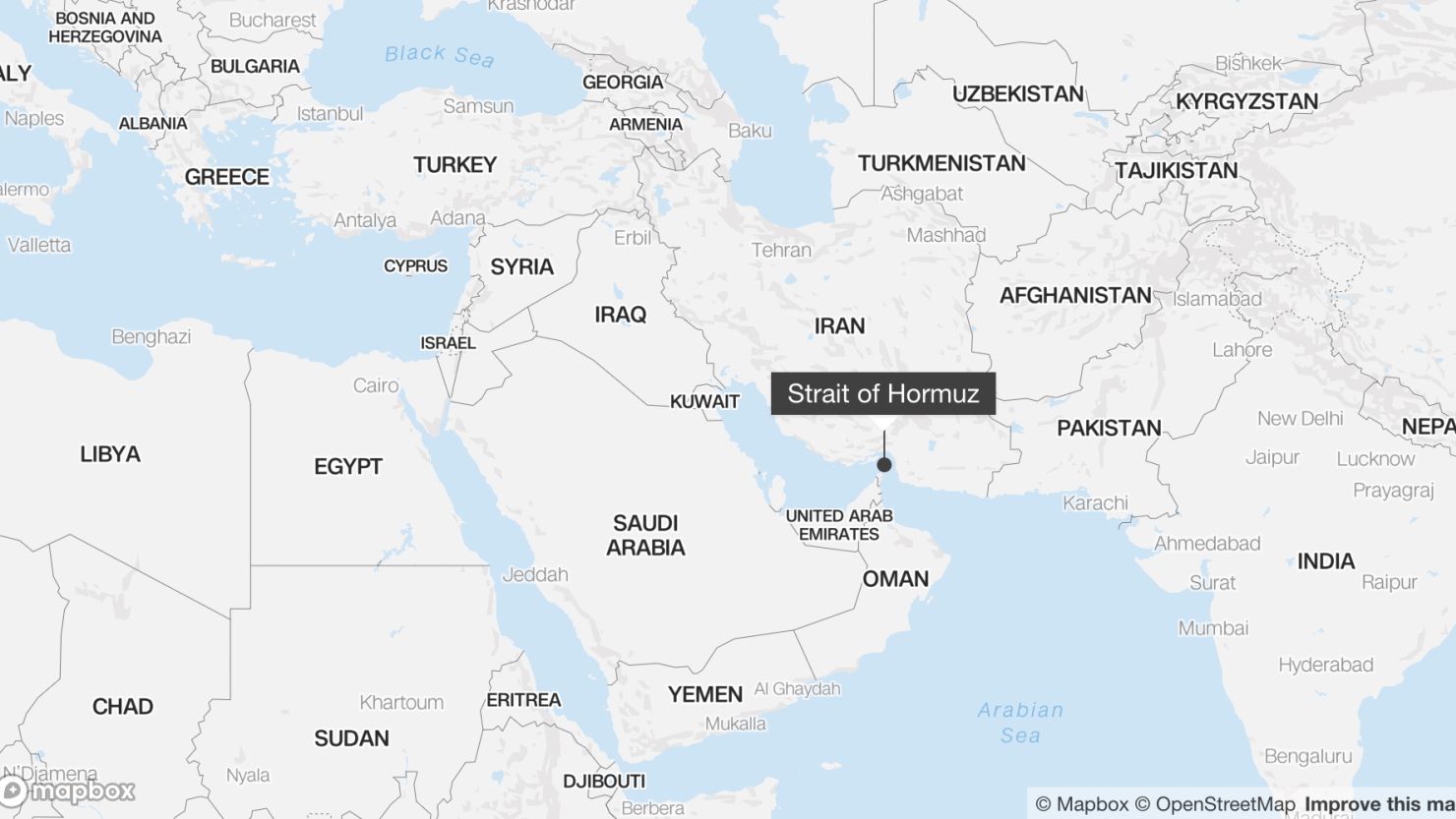
The Theatre of the Strait
The mainstream media loves a "blockade" narrative. It sells clicks. It fuels panic. It makes the world feel like it's teetering on the edge of an abyss. The recent reports of the US enforcing a blockade in the Strait of Hormuz and ordering vessels to turn back are, quite frankly, a masterclass in missing the forest for the trees.
If you believe the Strait of Hormuz is a simple choke point that could end the modern world, you’ve been sold a bill of goods. The reality is far more cynical and much more interesting. This isn’t about "securing sea lanes." It’s about price discovery, regional dominance, and the maintenance of a very specific kind of global order that relies on the threat of disruption rather than the disruption itself. For another look, check out: this related article.
The Geography of Fear
The Strait of Hormuz is roughly 21 miles wide at its narrowest point. But the actual shipping lanes—the deep-water paths where the massive VLCCs (Very Large Crude Carriers) move—are only two miles wide in each direction, separated by a two-mile buffer zone.
Conventional wisdom says this makes it easy to close. I’ve heard "defense experts" claim a few well-placed mines or a handful of Iranian speedboats could shut down 20% of the world's petroleum flow overnight. This is nonsense. Related coverage on the subject has been published by MarketWatch.
History tells a different story. During the "Tanker War" of the 1980s, over 400 ships were attacked. Global oil supplies didn't vanish. The price didn't stay at $500 a barrel. Shipping companies adapted. They got better at damage control. They changed their routes. They hired private security. The "blockade" is a ghost story told to keep defense budgets high and insurance premiums higher.
The Blockade that Isn't
When the US "warns a vessel to turn back," it isn't a blockade. A blockade, by definition, is an act of war. It involves a total cutoff of commercial and military traffic. What we are seeing is targeted interdiction.
The distinction is vital.
The US is targeting specific vessels—often those suspected of carrying Iranian oil in violation of sanctions. They aren't stopping global trade; they are managing a shadow market. By calling it a blockade, outlets like Moneycontrol play into a narrative of imminent catastrophe that doesn't exist.
Why the US Won't Actually Close the Strait
- China’s Response: China is the primary customer for the oil moving through that waterway. A true blockade isn't a strike against Iran; it's a direct attack on Beijing's energy security. The US isn't looking for a kinetic war with a nuclear-armed peer over a few million barrels of crude.
- The Price Floor: High oil prices aren't always a bad thing for the US. With the Permian Basin and the rise of American shale, the US is a massive producer. A little "tension" in the Gulf keeps the price of WTI high enough to keep North American rigs profitable.
- The Insurance Racket: Chaos is good for the Lloyd's of London set. War risk premiums generate billions. This isn't a conspiracy; it's just how the system is built.
The Logistics of a "Closure"
Let’s look at the math.
Total daily oil flow through the Strait: ~21 million barrels.
Global consumption: ~100 million barrels.
People think if Hormuz closes, the lights go out. They forget about the East-West Pipeline in Saudi Arabia, which can bypass the Strait and move oil directly to the Red Sea. They forget about the Abu Dhabi Crude Oil Pipeline. They forget about the massive strategic reserves held by the IEA nations.
$P_{price} \propto \frac{S_{actual} + S_{perceived}}{D}$
The price of oil isn't just about supply ($S_{actual}$) and demand ($D$). It’s about perceived supply ($S_{perceived}$). The US Navy presence in the Strait isn't there to stop Iran from closing it; it's there to manage the perception of risk.
The Myth of the "Rogue State"
We are taught to view Iran as an irrational actor, a "rogue state" that might lash out and destroy the global economy on a whim. This is a fundamental misunderstanding of Persian geopolitics.
Tehran is many things, but it is not suicidal.
The Iranian economy is heavily dependent on the very sea lanes it supposedly wants to close. They use the Strait to export their own oil (sanctioned or not) and to import essential goods. Closing the Strait would be like a man burning down his own house because he doesn't like the neighbors.
Instead, they engage in "gray zone" tactics. A limpet mine here. A drone flyover there. A seized tanker as a bargaining chip. It’s a dance. And the US Navy knows the steps perfectly.
The Real Winner: American Energy
While the news cycle focuses on the drama in the Gulf, the real shift is happening in places like the Delaware Basin.
Every time a headline screams about a blockade, the valuation of US energy assets goes up. The US has used the "instability" of the Middle East as a primary justification for its energy independence for decades.
I've watched companies sink billions into exploration based on the "risk premium" associated with the Middle East. If the Strait of Hormuz were as safe and boring as the English Channel, the US shale revolution might never have received the capital it needed to explode.
The Failure of Modern Reporting
Why do articles continue to use terms like "blockade" when they know it's inaccurate?
Because the truth is boring. The truth is that the US and Iran are engaged in a long-term, low-intensity conflict that neither side wants to escalate into a full-blown war. The truth is that global oil markets have already "priced in" the occasional tanker seizure.
By framing it as a "blockade," media outlets create a false sense of urgency. They want you to think we are one stray missile away from $10 gas. We aren't. We are living through a choreographed performance designed to maintain the status quo.
The "Shadow Fleet" Reality
A huge portion of the oil moving through the Strait today travels on what is known as the "shadow fleet"—older vessels with opaque ownership, often operating without standard insurance.
When the US "warns a vessel to turn back," they are usually targeting a specific ship in this shadow fleet. This isn't a blockade of the Strait; it's a policing action of the sanctions regime.
- The Tactic: Identify a vessel with "spoofed" AIS (Automatic Identification System) data.
- The Action: Deploy a destroyer or a littoral combat ship to make a visible show of force.
- The Result: The tanker reroutes, the oil is eventually sold elsewhere at a steeper discount, and the US reinforces its role as the global maritime cop.
Dismantling the "What if" Scenarios
"What if Iran sinks a carrier?"
"What if the US bombs the Iranian coast?"
These are the questions people ask when they watch too many movies. In the real world, the US Navy is the most powerful force in maritime history, and Iran knows it. Iran has the most sophisticated anti-access/area-denial (A2/AD) capabilities in the region, and the US knows it.
The result? A stalemate that benefits both.
Iran gets to tell its domestic audience it is standing up to the "Great Satan." The US gets to justify its massive naval presence and its control over global energy prices.
The Unconventional Truth
The real threat to global energy isn't a blockade in the Strait of Hormuz. It’s the slow, steady shift toward regionalized energy grids and the decoupling of the global economy.
When the US enforces these "blockades," it accelerates this decoupling. It forces countries like China and India to find workarounds. It encourages the development of pipelines that bypass the Strait.
In twenty years, the Strait of Hormuz won't be the "artery of the world." It will be a backwater, a relic of a time when the world was obsessed with a single geographic point.
The US isn't protecting the world from a blockade. It's managing the decline of an era.
Stop Asking if the Strait Will Close
Instead, ask why we are still pretending it matters as much as it did in 1973.
The "blockade" is a ghost. The "warning" is a script. The "crisis" is a commodity.
If you want to understand the global economy, stop looking at the maps of the Persian Gulf and start looking at the balance sheets of the companies that benefit from the fear. The next time you see a headline about the US "enforcing a blockade," remember: it's not a war; it's a trade negotiation with bigger guns.
The US is not the "guardian" of the Strait. It is the architect of its volatility. And as long as that volatility serves American interests, the "blockade" stories will never stop.
Don't buy the fear. Buy the reality that the world has already moved on, even if the news cycle hasn't.