The mainstream media loves a predictable script. Every time tensions flare in the Persian Gulf, the headlines practically write themselves. A US official makes a sweeping claim about securing global energy supply lines. Tehran immediately fires back, promising a "forceful response" to western military interference. The pundit class wrings its hands over an impending global economic meltdown, and oil traders spike the price of crude by three dollars a barrel.
It is a beautifully choreographed theater production. And almost everyone is buying it.
The lazy consensus dominating current geopolitical analysis views the Strait of Hormuz as a fragile hair-trigger. The narrative insists that Iran is a rogue actor desperate to choke off 20% of the world's petroleum liquids, while Washington acts as the noble, albeit exhausted, guardian of free trade.
This view is fundamentally flawed. It misunderstands the cold, calculated economic realities that govern both Washington and Tehran.
The truth is far more cynical. Neither side actually wants a conflict that closes the strait. In fact, both regimes rely on the perpetual threat of conflict to maintain their internal leverage and global relevance. The bluster is the point. The friction is the product.
The Myth of the Vulnerable Chokepoint
Let’s dismantle the foundational lie of this entire discourse: the idea that Iran can easily and indefinitely close the Strait of Hormuz.
Geopolitics analysts treat the strait like a simple valve that Tehran can turn off with the flip of a switch. I have spent decades analyzing energy supply chains and maritime choke points. The physical reality on the water does not match the panic in the newsrooms.
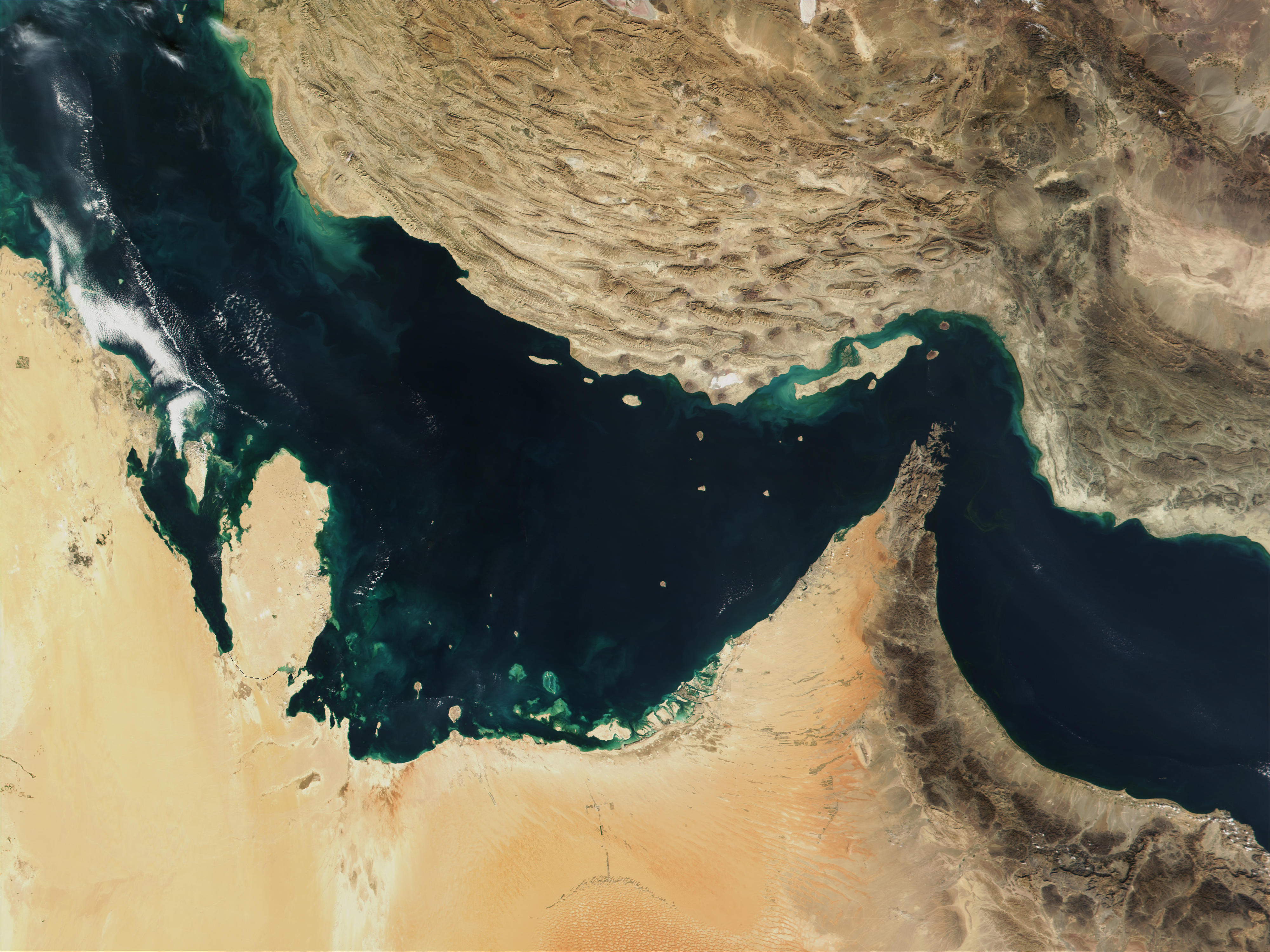
The Strait of Hormuz is not a narrow canal; it is a twenty-one-mile-wide body of water at its narrowest point. More importantly, the actual shipping channels used by supertankers consist of a two-mile-wide inbound lane, a two-mile-wide outbound lane, and a two-mile-wide separation zone. These lanes lie entirely within Omani and Iranian territorial waters.
To genuinely close the strait, Iran would have to execute a sustained, high-intensity conventional military campaign. They would need to mine the shipping lanes continuously, deploy anti-ship cruise missiles effectively against heavily defended naval convoys, and utilize their fleet of fast attack craft to board and seize commercial vessels daily.
Imagine a scenario where Tehran attempts this. Within forty-eight hours, the logistical reality sets in. Mining a deep-water channel under active aerial bombardment is virtually impossible. The US Navy’s Fifth Fleet, backed by international coalitions, possesses sophisticated mine-countermeasure capabilities. Furthermore, modern supertankers are massive, double-hulled steel beasts. They do not sink easily. During the "Tanker War" of the 1980s, over 500 ships were attacked, yet global shipping never stopped, and less than 2% of the vessels were actually sunk.
The idea of a total, permanent shutdown is a bogeyman used to scare energy markets and justify massive defense budgets.
Why Iran’s Economy Cannot Afford a Closed Strait
The conventional narrative paints Iran as an ideological wildcard, willing to destroy its own economic standing just to spite the West. This completely misreads how the regime in Tehran actually survives.
Iran is fundamentally a petrostate. Even under heavy international sanctions, the regime relies on illicit and semi-official oil exports to keep its economy afloat. Who buys this oil? Primarily China, via a complex network of dark fleet tankers operating under flags of convenience.
Where do those tankers sail? Directly through the Strait of Hormuz.
+------------------------------------------------------------+
|               THE STRAIT OF HORMUZ DILEMMA                 |
+------------------------------------------------------------+
|                                                            |
|  [ Iran's Economy ] ------------> Needs Open Shipping Lanes|
|         |                                  |               |
|         v                                  v               |
|  Threatens Closure                  Sells Oil to Asia      |
|         |                                  |               |
|         +-----------> [ THE CONFLICT ] <---+               |
|                              |                             |
|                              v                             |
|                 Maintains High Oil Prices                  |
|                                                            |
+------------------------------------------------------------+
If Iran closes the strait, it cuts its own financial throat. It blocks its own export routes. It alienates China, its sole remaining economic superpower patron. Beijing has zero tolerance for energy supply disruptions that threaten its domestic industrial output. The moment Tehran moves from performative threats to actual structural disruption, it loses its vital economic lifeline.
The regime knows this. Their strategy is not operational disruption; it is risk-premium inflation. By keeping the threat level at a simmer, Iran ensures that oil prices remain elevated. For a state selling oil under the table at a discount, a higher global baseline price means more revenue per barrel. Tehran does not want to destroy the market. They want to tax its anxiety.
Washington's Hidden Benefit from Gulf Instability
Now let's look at the other side of the ledger. The standard American rhetoric frames US military presence in the Gulf as a costly public good, a burden borne solely out of a commitment to global stability.
Look closer at the domestic incentives.
The United States is no longer the energy-dependent nation it was during the oil shocks of 1973 or 1979. Thanks to the shale revolution, the US is the world’s largest producer of crude oil and a massive net exporter of petroleum products.
When tension rises in the Middle East and the price of oil climbs, who benefits?
- Permian Basin Producers: American energy companies see immediate margin expansion.
- The Defense Industrial Base: High-profile naval standoffs justify the continued acquisition of multi-billion-dollar carrier strike groups and littoral combat ships.
- Geopolitical Leverage: Constant instability allows Washington to maintain a massive military footprint in the region, effectively keeping its security umbrella over Gulf cooperation states like Saudi Arabia and the UAE.
If the Persian Gulf suddenly became as peaceful and boring as Lake Superior, the strategic justification for America’s massive military presence in the Middle East would evaporate. The US Navy becomes the guarantor of global trade, paid for by American taxpayers, while the primary beneficiaries are actually Asian economies like China, India, and Japan, which import the vast majority of Gulf crude.
Washington complains about playing the "guardian," but the role gives them a veto over the energy security of their primary global competitors.
Dismantling the Premise: The Wrong Questions Being Asked
When analyzing this conflict, the public is constantly fed flawed questions that lead to useless conclusions.
Will Iran close the Strait of Hormuz if the US increases sanctions?
This question assumes Iran operates on a simple action-reaction axis. It is the wrong way to look at the problem. The correct question is: How does Iran use the threat of closure to negotiate sanctions relief? Iran uses its leverage on the water as a bargaining chip for diplomatic theater. They will seize a British or Greek tanker not to start a war, but to force a prisoner swap or unlock frozen assets in foreign banks. It is high-stakes asset repossession, not military strategy.
Can the US military completely secure the region from asymmetric attacks?
No. And they know they can't. The naval architecture of the US military is built around projecting power against peer states. It is incredibly poorly optimized for dealing with hundreds of low-cost, explosive-laden fast boats or swarms of commercial drones. A single successful drone strike on a US destroyer does not change the balance of power, but it generates the exact media coverage both sides desire. The US gets to claim it is facing an existential asymmetric threat, and Iran gets to look like a giant killer on regional television.
The True Cost of the Contrarian Reality
Admitting that this entire conflict is an engineered stalemate comes with a dark realization. The status quo is incredibly stable because it serves the elite factions in both countries.
The downside of my perspective is that it offers no easy policy solution. You cannot "fix" the crisis in the Strait of Hormuz through diplomacy because neither side wants it fixed. Diplomacy requires a mutual desire for resolution. Here, the mutual desire is for contained friction.
The real victims of this theater are the global shipping companies, the merchant mariners who risk their lives sailing through these waters, and the consumer who pays an artificial "geopolitical risk premium" at the gas pump.
Stop reading the statements issued by the Pentagon or the Iranian Revolutionary Guard Corps as actual declarations of intent. They are marketing copy designed to maintain a highly profitable, mutually beneficial state of perpetual panic.
The ships will keep moving. The oil will keep flowing. The threats will keep flying. The show must go on.